自2019年以来,美国成人自雇占比从9.4%升至9.8%,约对应新增130万名创业者;但白人自雇率几乎不变,而黑人上升1个百分点、西班牙裔上升1.8个百分点。美国人口普查局在2025年记录了创纪录的570万份新企业设立申请,显示疫情后创业热潮仍在延续。
研究显示增长高度集中在少数族裔:对2019和2020年280万份商业注册的分析发现,黑人居民占比更高的社区企业形成增长更快。美联储家庭财务调查被用于估算,2019至2022年黑人企业拥有家庭占比从5%升至8%,西班牙裔和拉丁裔从4%升至7%,而白人从80%降至73%。
就业层面的贡献有限且在走弱:不足5年的企业仅占总就业的14%,不足1年的仅占3%。自2021年以来,雇用有薪员工的初创企业平均雇员数为4.7人,低于此前十年的5.4人,同时在2020年末黑人失业率为10%,接近白人的两倍,提示“必要型创业”因素。
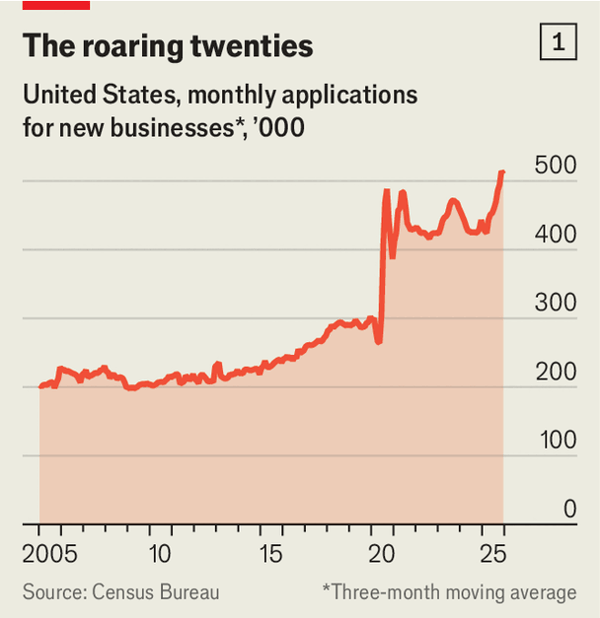
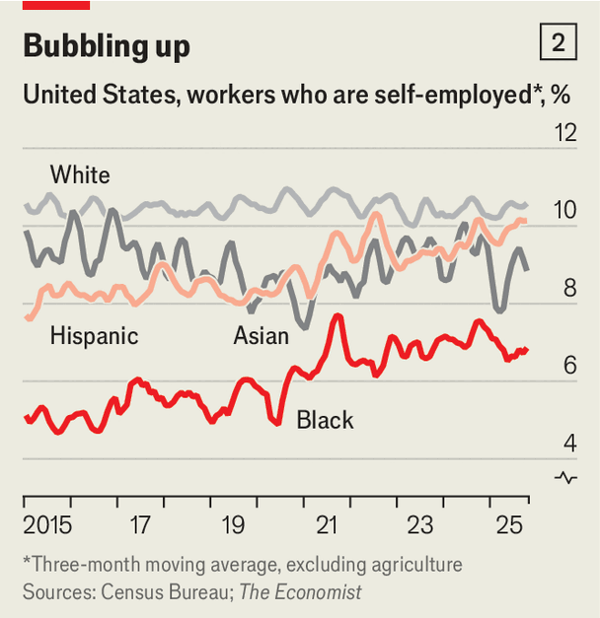
Since 2019, the share of American adults who are self-employed has risen from 9.4% to 9.8%, equivalent to about 1.3m new entrepreneurs; the white self-employment rate has barely moved, while the black rate is up 1 percentage point and the Hispanic rate is up 1.8 percentage points. The Census Bureau counted a record 5.7m applications to establish new businesses in 2025, indicating the post-pandemic startup boom is still running.
The increase is disproportionately minority-led: analysis of 2.8m business registrations in 2019 and 2020 found faster formation growth in neighbourhoods with more black residents. Using Federal Reserve survey-of-consumer-finances data, the share of business-owning families that were black rose from 5% to 8% between 2019 and 2022, Hispanics and Latinos rose from 4% to 7%, and whites fell from 80% to 73%.
Job creation impact is limited and weakening: firms under five years old account for only 14% of total employment, and those under one year old just 3%. Since 2021, startups with paid employees have averaged 4.7 workers, down from 5.4 in the preceding decade, while late-2020 black unemployment was 10%, nearly twice the white rate, pointing to a “necessity entrepreneurship” component.
Source: Ethnic minorities are driving America’s startup boom
Subtitle: The covid-19 pandemic set entrepreneurial spirits surging—for some
Dateline: 2月 12, 2026 05:49 上午