北极地面站需求随中美太空竞争与极地卫星激增而快速扩张。Deadhorse(阿拉斯加)因具备光纤传输能力成为关键节点,RBC Signals已从1座天线扩展到多座,并新增3.9米天线;在高纬度可每日观测同一卫星14次以上,而中纬度仅约4次。气候变化推动“北极航道”开通,中国计划夏季常态化航运并大幅增加极地卫星数量。美国则通过巨额军费加强北极部署:Northrop Grumman获逾41亿美元合同用于2031年前建造两颗极轨卫星,波音则获28亿美元合同并拥有参与120亿美元计划的更多选项。
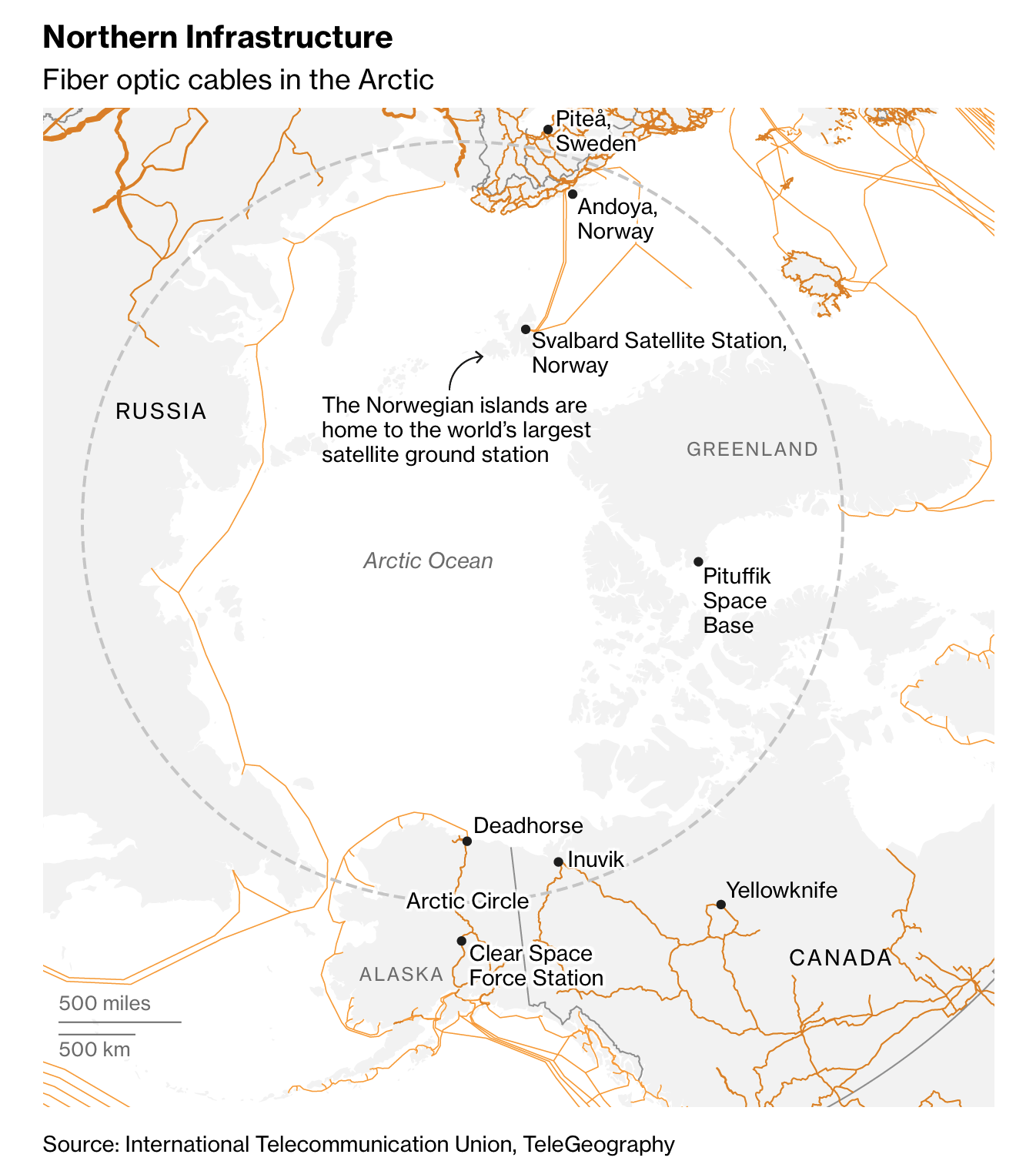
北极多个地点正快速扩容。Svalbard为全球最大极地地面站,但1920年条约限制其军事用途,加之海底电缆脆弱性(2022年曾断电事件),推动替代站点增长。瑞典Piteå的Arctic Space Technologies自2022年首建天线以来已扩展至35座,预计明年达40座。加拿大北部的Inuvik(人口约3300)今年新增5座天线,总数达13座,由法、德、瑞典等政府使用,并持续扩建以减少对美依赖。中国与俄罗斯卫星每小时飞越当地,被视为增长动力。
尽管星间链路未来可能削弱部分地面站需求,但行业认为高数据量业务仍需“高纬度、大口径、直连光纤”的地面节点以避免带宽瓶颈。美国加强自有北极设施,如Clear Space Force Station用于导弹监测,而格陵兰Pituffik基地虽战略重要但属非美领土且依赖易受攻击的海缆。总体趋势显示,北极地面站在太空军事化、商业通信与地缘政治重组中呈持续扩张态势。
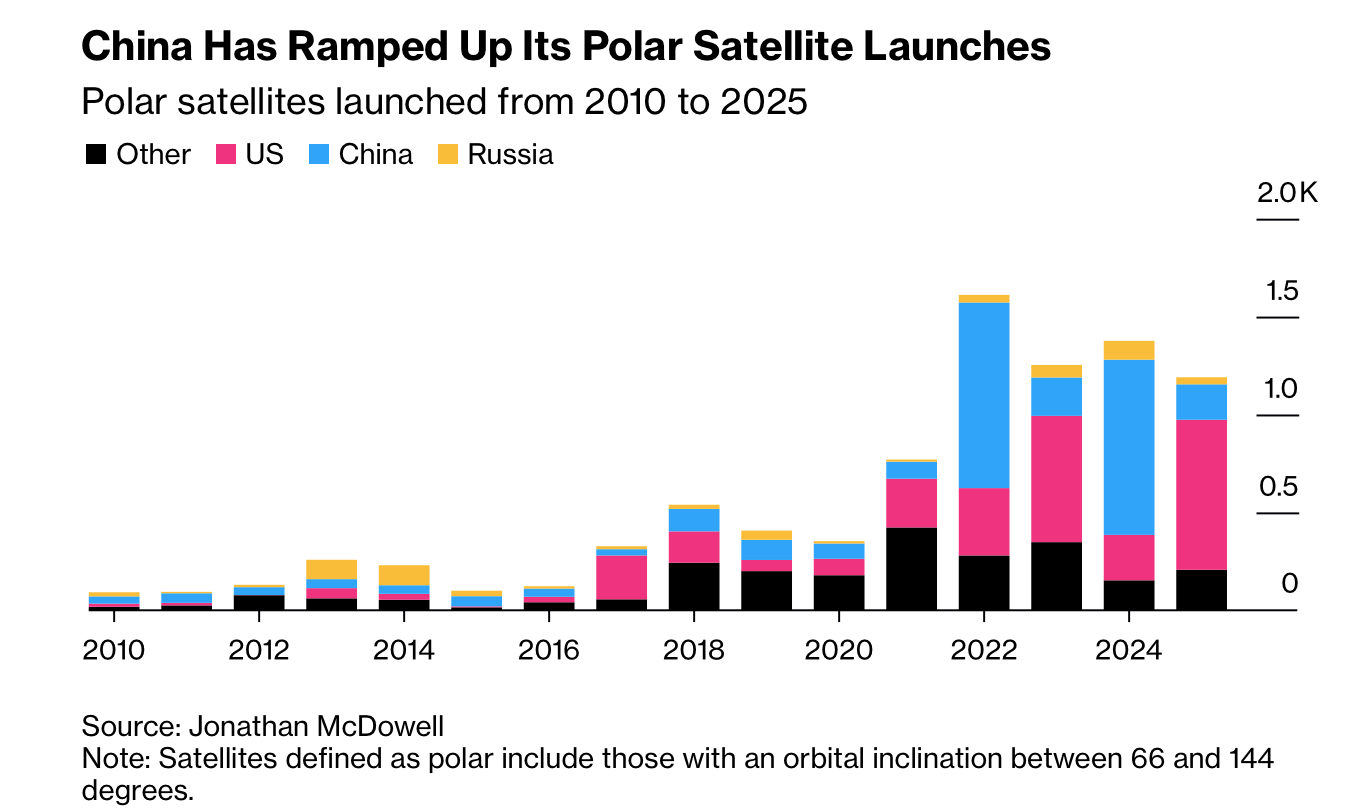
Satellite ground-station demand in the Arctic is accelerating due to US–China competition and rising polar-orbit satellite volumes. Deadhorse, Alaska, has become a key hub because of fiber connectivity; RBC Signals has expanded from a single antenna to multiple units, including a new 3.9-meter dish, and can see the same satellite 14+ times per day versus roughly four at mid-latitudes. Climate-driven Arctic shipping growth supports China’s plan for regular summer routes and increased polar satellites. The US is investing heavily: Northrop Grumman has a contract worth over USD 4.1 billion for two polar-orbit satellites by 2031, and Boeing won USD 2.8 billion with options in a USD 12 billion program.
Multiple Arctic locations are expanding rapidly. Svalbard hosts the world’s largest polar ground station but is constrained by a 1920 treaty banning military use and by subsea cable vulnerabilities, such as a 2022 outage. Sweden’s Piteå site, launched in 2022, now operates 35 antennas with plans for 40. Inuvik, Canada (population ~3,300), added five antennas this year, bringing its total to 13, serving French, German, and Swedish governments. Expansion aims to reduce reliance on the US as Chinese and Russian satellites pass overhead hourly.
Although inter-satellite links may reduce some ground-station dependence, operators maintain that high-volume data still requires high-latitude, large-dish, fiber-connected facilities. The US is expanding its Arctic footprint, including the Clear Space Force Station for missile tracking, while Greenland’s Pituffik base remains strategically critical but cable-dependent and outside US territory. Overall, Arctic ground stations are entering a sustained growth phase driven by militarization, commercial demand, and shifting geopolitical alignments.