日本正进行四十年来最大规模的军事扩张,以快速强化横跨约160座琉球群岛的飞弹、雷达与弹药设施,其中与台湾仅相隔110公里的与那国岛成为前线焦点。自2022年中国飞弹落入岛附近后,日本加速部署电子战部队、反空与反舰系统,并在九州增设F-35与长程飞弹。此举伴随频繁的中日军事接触,包括近期中国战机对日机使用武器导引雷达锁定,反映误判风险上升。岛上约1,500名居民中,有80人出席政府说明会,面对军事化带来的忧虑,但亦有人因侦测到疑似中国无人机而支持加强自卫。
军事强化引发国内辩论,包括反对党提出「飞弹群岛」指控,但防卫省称部署符合国际常态。历史争议再度升温,中国引用1945年《波茨坦宣言》质疑日本对琉球的主权,而日美台则依据1951年《旧金山和平条约》反驳。解放军在台海周边的压力,使东京在2015年扩大「集体自卫权」的法理背景更受关注;分析界普遍预期若美国介入台湾防卫,日本将被迫支持。中国媒体亦试图挑动琉球族群不满,特别是在美军基地最密集、也是日本南部军力核心的冲绳。
民意分歧跨越世代:18–29岁中有83.2%支持增强防卫,远高于70岁以上族群。与那国岛部队将从既有约230名人员再增加约30人,并拟成为提供精准目标资讯的「kill chain」节点,使其成为中国早期攻击的高优先目标。岛上的市长选举反映此张力,新任市长接受现行部署但警告更多飞弹可能造成心理负担,而前任市长则要求加速与美台的联合威慑。防卫省强调部署纯属自卫,支持者则认为唯有日美同盟才能遏阻中国在台湾及琉球方向的行动。
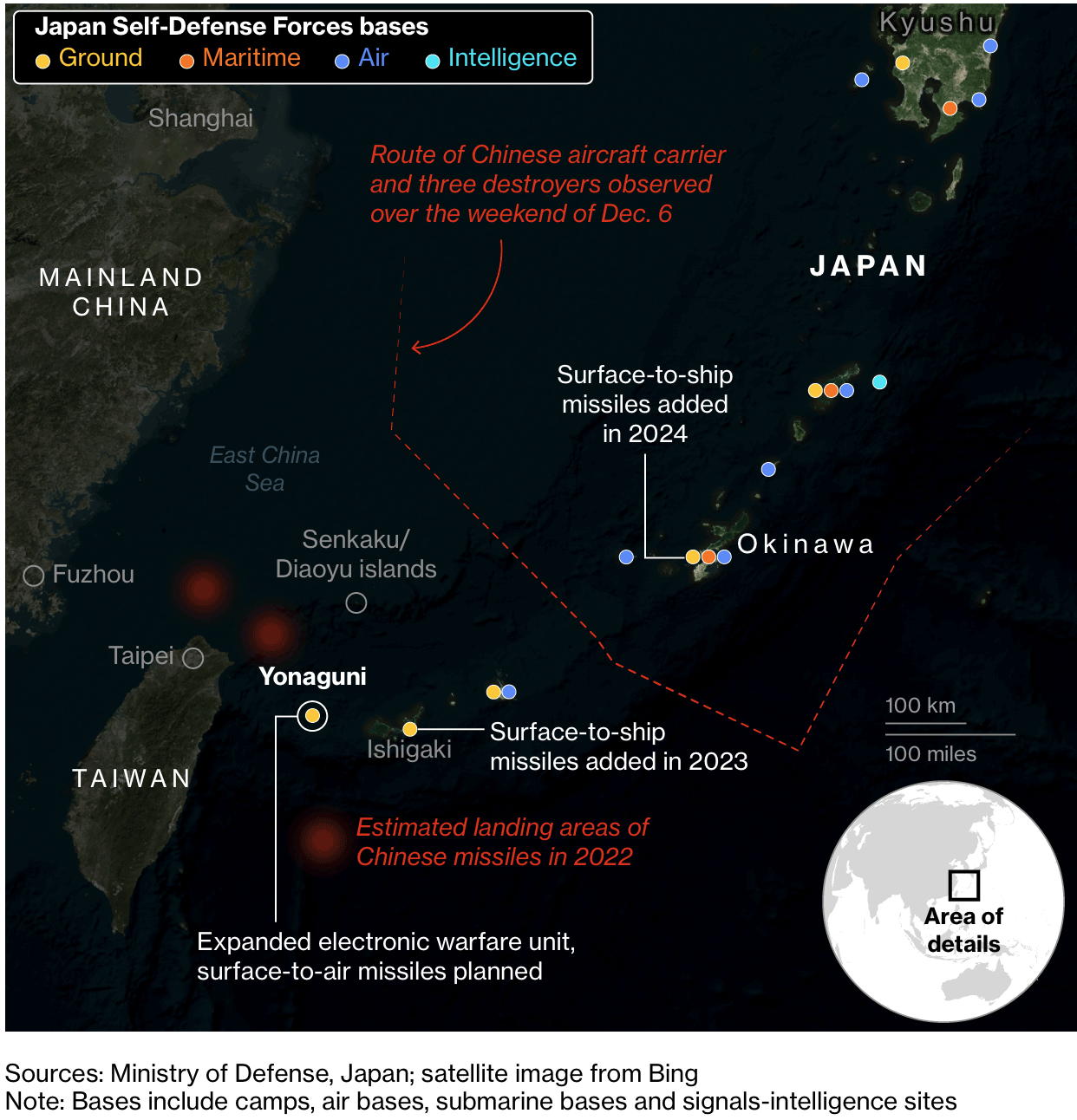
Japan is undertaking its largest military expansion in four decades, rapidly reinforcing missile, radar, and ammunition infrastructure across the roughly 160-island Ryukyu chain, with Yonaguni—just 110 kilometers east of Taiwan—emerging as a front-line hub. After Chinese missiles fell near the island in 2022, Japan accelerated deployments including electronic-warfare units and air- and ship-defense systems, while adding F-35s and long-range missiles in Kyushu. Friction has intensified, highlighted by a recent Chinese fighter locking targeting radar on Japanese aircraft. Among Yonaguni’s roughly 1,500 residents, 80 attended a government briefing amid rising anxiety, though some supported the buildup after Japan spotted a suspected Chinese drone.
The expansion has fueled domestic controversy, with opposition claims of a “missile archipelago” rejected by the Defense Ministry. Historical disputes resurfaced as China cited the 1945 Potsdam Declaration to question Japan’s sovereignty over the Ryukyus, while Japan, the US, and Taiwan rely on the 1951 San Francisco Peace Treaty. PLA pressure around Taiwan has renewed focus on Japan’s 2015 reinterpretation of collective self-defense, as analysts note Japan would likely aid a US-led Taiwan defense. Chinese media have also sought to exploit tensions among indigenous island communities, particularly in Okinawa, the region hosting the densest concentration of US bases and serving as Japan’s southern military core.
Public opinion divides sharply by age: 83.2% of respondents aged 18–29 support stronger defense, nearly double the approval among those over 70. Yonaguni’s garrison will add about 30 personnel to the existing 230 and may become a “kill chain” node supplying precise targeting data, making it a high-priority target for China. A recent mayoral election underscored local strain, with the new mayor accepting current plans but opposing further missile deployments, while his predecessor urged deeper cooperation with the US and Taiwan. The Defense Ministry maintains the buildup is purely defensive, while supporters argue only the US-Japan alliance can deter Chinese moves toward Taiwan or the Ryukyus.