监管机构将欧洲批发电力价格下限定为每兆瓦时负500欧元(580美元),该水平在5月1日险些被突破,当时由于高可再生能源发电量和低节日需求,德国的电价达到了负499欧元。尽管零电价或负电价发生在太阳能和风能发电高峰期,但市场正在通过电池储能和转移需求来进行适应。
欧洲电池容量在2025年增加了33,000兆瓦时,达到约90,000兆瓦时,研究预测2026年将再增加55,000兆瓦时。此外,研究表明动态资费正在改变需求,每兆瓦时25欧元的价差促使消费转移了4%,到2030年每年可为欧洲工业节省80亿欧元。
电网扩张也有助于稳定价格,如德国在2025年批准了2,000公里的新输电线路计划,同比增长45%。因此,截至2026年目前为止,德国仅录得40小时电价低于每兆瓦时负50欧元,在欧元区通胀率达到3.2%之际为电网运营提供了缓解。
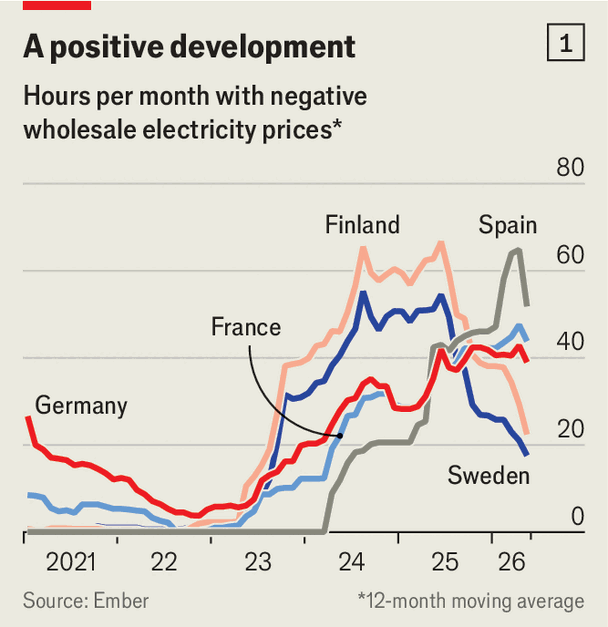
Regulators set Europe’s wholesale electricity price floor at minus €500 ($580) per megawatt-hour, a level nearly breached on May 1st when Germany's price hit minus €499 due to high renewable output and low holiday demand. Although zero or negative prices occur during peak solar and wind generation, market adaptation is underway through battery storage and shifting demand.
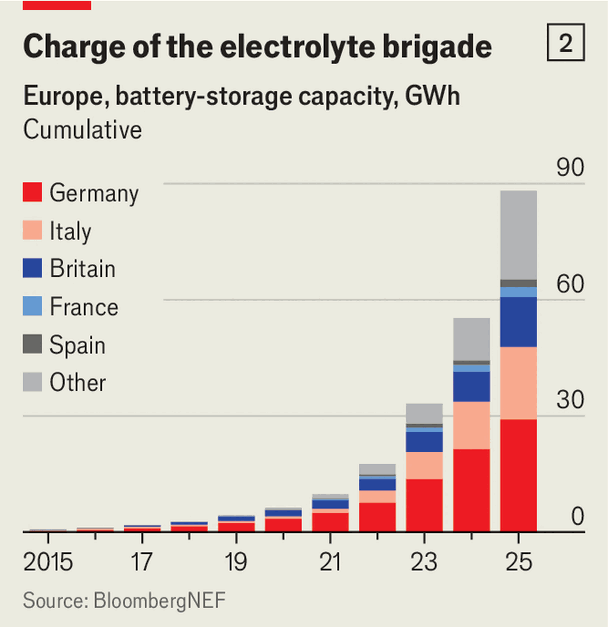
Europe’s battery capacity grew by 33,000 MWh in 2025 to approximately 90,000 MWh, with research forecasting another 55,000 MWh increase in 2026. Furthermore, studies show dynamic tariffs are shifting demand, with price differences of €25 per MWh prompting a 4% shift in consumption, potentially saving European industries €8 billion annually by 2030.
Grid expansions are also helping stabilize prices, as shown by Germany's 2025 approval of 2,000 kilometers of new power lines, representing a 45% annual increase. Consequently, Germany has recorded only 40 hours with prices below minus €50 per MWh so far in 2026, offering grid relief as Eurozone inflation reaches 3.2%.
Source: European electricity markets have too much power
Subtitle: They must learn to deal with it
Dateline: June 4th 2026