在超过二十多种蚂蚁中,观察到从战场救援、清创到截肢的伤口护理;在主要分布于非洲的木匠蚁中,上腿伤后1小时内截肢将存活率从30%提高到80%。这种预防性策略不等待感染迹象,因为一旦感染明显,截肢就不再有效。
在厚角质层、可能无法截肢的Megaponera中,受伤个体被带回巢内清洗伤口,并在接下来的8或9小时内反复复查;一旦感染,腺体分泌的抗菌物质使其存活机会增加到原来的3倍以上。另一些物种呈现分流:感染伤口的工蚁被逐出巢穴,而无菌腿伤者获得持续护理。
这种“社会免疫能力”还包括用药、梳理、社交间距、掩埋尸体、隔离与放逐等行为,并与环境压力相关,例如更温暖气候的群体更频繁舔舐伤口以应对细菌更易繁殖。相关研究还筛得70种化合物(其中20种为蛋白质)具有抗菌与伤口愈合特性,提示对耐药人类病原体的潜在价值。
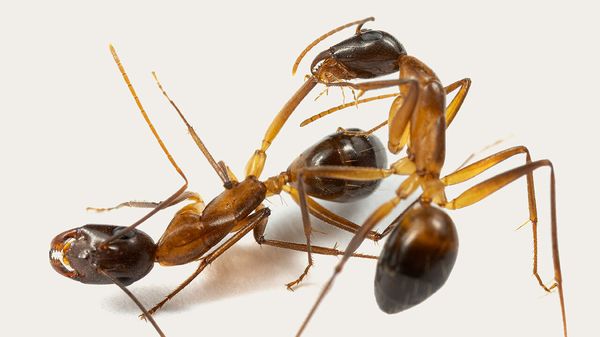
Across more than two dozen ant species, wound care ranges from battlefield rescue and cleaning to limb amputation; in Camponotus carpenter ants found mainly in Africa, amputations within 1 hour of upper-leg wounds raise survival from 30% to 80%. This prophylactic approach does not wait for signs of infection, because once infection is apparent the amputation is no longer effective.
In Megaponera, whose thick cuticle likely precludes amputation, injured nestmates are carried home for wound cleaning and then rechecked for another 8 or 9 hours; if infection develops, an antimicrobial glandular secretion increases the victim’s odds of survival by more than 3 times. Other species show triage: workers with infected wounds are expelled, while those with sterile leg injuries receive continuous care.
These patterns exemplify social immunocompetence and sit alongside behaviors such as pharmaceuticals, grooming, social spacing, burying the dead, quarantine, and exile, with climate acting as selection pressure when warmer habitats that favor bacterial proliferation correlate with more frequent wound licking. A separate screen has yielded 70 compounds, including 20 proteins, with antimicrobial and wound-healing properties, suggesting possible relevance to antibiotic-resistant human pathogens.
Source: Humans are not the only animals that treat each other’s injuries
Subtitle: Many ant species do so too
Dateline: 2月 12, 2026 06:42 上午