在截至2016年6月的一年里,净移民达到321,000——至少半个世纪以来的最高值——此前约十二年里,波兰和其他东欧国家在欧盟自由流动下大量涌入,塑造了2016年公投的情绪。
2020年2月公布的脱欧后制度终止自由流动并降低工作签证的薪资门槛,英国内政部预测欧洲移民每年将减少80,000–90,000,而非欧洲移民将增加30,000;然而欧洲净流动转为负值,而来自欧洲以外的抵达人数激增。
总体净移民在截至2023年3月的一年里攀升至944,000,在香港、乌克兰与小船庇护等冲击下上升,但主要原因是对工人和学生更宽松的规则;民调显示41个百分点差距:9%认为脱欧抑制移民,而50%认为它推高了移民。
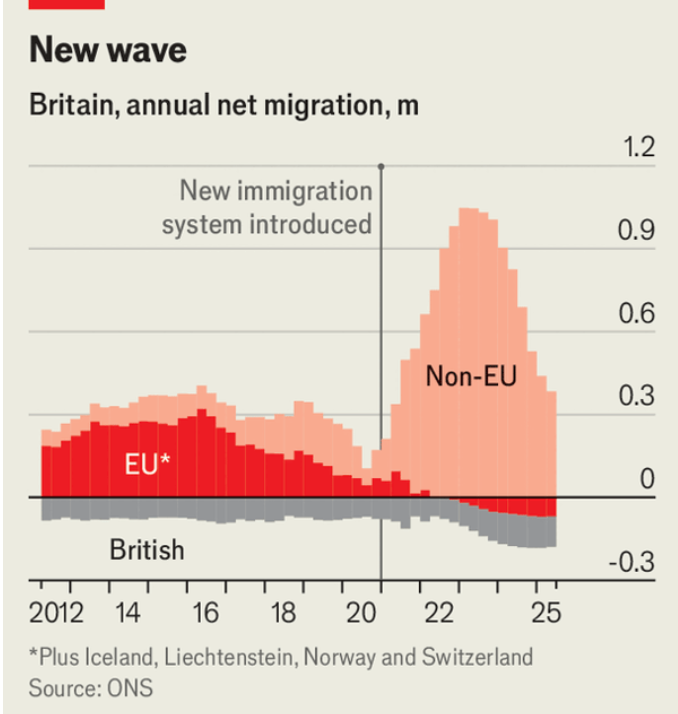
In the year to June 2016, net migration hit 321,000—the highest for at least half a century—after roughly a dozen years of large inflows from Poland and other eastern European countries under EU free movement, shaping the 2016 referendum mood.
A post-Brexit system announced in February 2020 ended free movement and lowered salary thresholds, with the Home Office projecting European migration would fall by 80,000–90,000 a year while non-European migration rose by 30,000; instead, European net flows turned negative as arrivals from outside Europe surged.
Overall net migration climbed to 944,000 in the year to March 2023 amid shocks (Hong Kong, Ukraine, asylum boats) but mainly looser worker and student rules, and opinion data show a 41-point gap: 9% say Brexit suppressed immigration versus 50% who say it boosted it.
Source: How the “take back control” crowd boosted immigration to Britain
Subtitle: Policymaking turns out to be hard
Dateline: 12月 31, 2025 02:51 上午