在《贸易与合作协议》(TCA)签署五周年之际、并临近2016年6月公投十周年,官方与学术估算认为,与“未脱欧”基线相比,脱欧使英国GDP减少约4%甚至更多,而净移民不降反升。民意也明显逆转:52%如今认为离开欧盟是错的、32%认为是对的;若现在再投票,47%会选择重新加入、32%倾向继续留在欧盟之外,多数人还认为移民更高且55%支持与欧盟更紧密的贸易关系,即便这会增加与美国贸易的壁垒。
许多怀疑指向执行而非目标:42%认为脱欧本可运作良好但被政治人物搞砸,而工党虽在2024年大胜后上台,仍坚持“不要单一市场、不要关税同盟、不要人员自由流动”的红线。地缘政治与防务协作(乌克兰战争、中国更强势、特朗普重返白宫,以及英法德E3机制)推动更紧密合作,但分部门的贸易改善多为渐进式。
政府估计这次“重置”到2040年仅把GDP提高约0.3%,且SPS协议最早要到2027年才生效;青年流动安排在“无限制”与“设上限”之间拉锯,重返伊拉斯谟项目也定于2027年,折扣后一年成本约5.7亿英镑(7.63亿美元)。金钱是最硬的数字:加入欧洲防务基金SAFE的争议因最高达60亿欧元(70亿美元)的要价而搁浅,连20亿欧元也被拒,凸显欧盟在一份五年前达成且对其有利的TCA上,软化脱欧影响的动力有限。
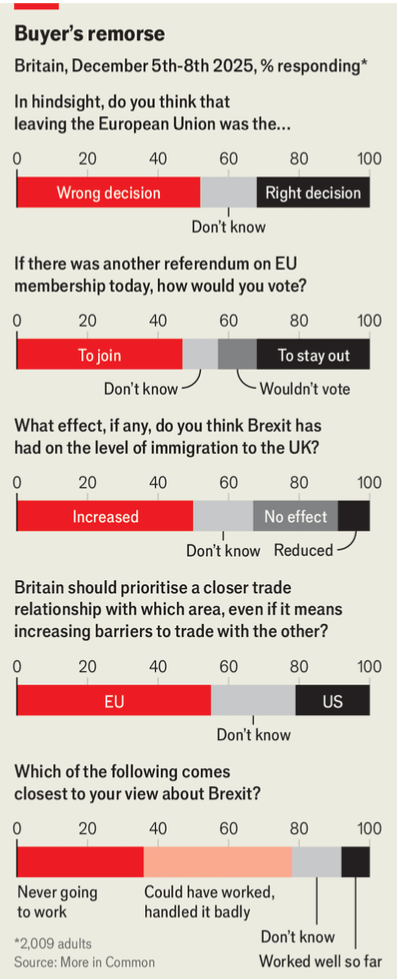
On the TCA’s 5th anniversary and ahead of the 10th year since the June 2016 referendum, official and academic estimates put Brexit’s GDP cost at about 4% or more versus a no‑Brexit baseline, while net immigration rose rather than fell. Public opinion has swung: 52% now call leaving wrong vs 32% right, and in a new vote 47% would rejoin vs 32% stay out; majorities also say immigration is higher and 55% want closer EU trade ties even if it raises barriers with America.
Skepticism is often about execution: 42% think Brexit could have worked but was mishandled, and Labour keeps “no single market, no customs union, no free movement” red lines despite a 2024 landslide. Geopolitics and defence coordination (Ukraine, China, Trump’s return, and an E3 format) push cooperation, but sector-by-sector trade gains are incremental.
The “reset” is forecast to add only ~0.3% to GDP by 2040, with an SPS deal not expected before 2027; youth mobility remains capped vs unlimited proposals, and Erasmus re-entry is set for 2027 at a discounted one-year cost of about £570m ($763m). Money is the hardest number: SAFE access was derailed by demands up to €6bn ($7bn), and even €2bn was rejected, underscoring the EU’s limited incentive to soften a TCA agreed five years ago.
Source: It’s time to rethink Britain’s relationship with the EU
Subtitle: Almost a decade after Brexit, both sides should be more courageous in getting closer together
Dateline: 12月 31, 2025 02:48 上午 | Brussels and London