北韩约 15,000 名士兵被派往俄乌战场,南韩情报部门估计已有逾 2,000 人阵亡。报告显示,自 2023 年以来北韩向俄罗斯提供 56 亿至 98 亿美元等值的军援,包括低技术火炮、迫击炮与短程弹道导弹,并派遣上述兵力,但俄罗斯回报仅 4.57 亿至 11.9 亿美元,主要为粮食、石油、防空系统与可能的战机。此极不对称结构凸显北韩收益有限,经济价值远低于投入规模,合作重点更偏向战略与技术层面,如在真实战场测试武器与借联合国安理会常任理事国的支持缓解孤立。
北韩、俄罗斯与中国持续公开展示政治一致性,包括北韩领导人九月在北京与 Xi Jinping、Vladimir Putin 同台观阅阅兵,以及俄中高层十月出席平壤展示武力的活动。三方共同诉求削弱美国在亚洲的主导地位,试图形成区域新权力格局。尽管北韩劳动力被形容为纪律严密且技术熟练,但其士兵在俄军体系中贡献有限,因语言障碍、训练差距与缺乏战场经验而表现不佳。随着俄军战略可能转向无人机与远程攻击,对北韩弹药与人力的需求可能快速下降,使平壤议价能力进一步减弱。
严酷派遣现实促使部分北韩士兵选择叛逃。个别案例描述长时间劳动、极端饥饿与持续监控,而境外接触到南韩制造的智能手机使部分人意识到来自国内的长期洗脑。对许多派遣人员而言,真实世界的物质差距削弱了对政权宣传的信念,也揭示北韩在俄中结构性联盟中的弱势处境。
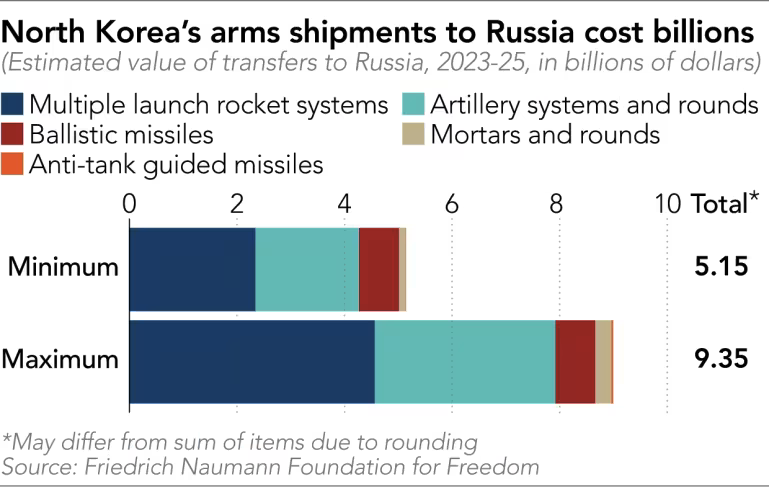
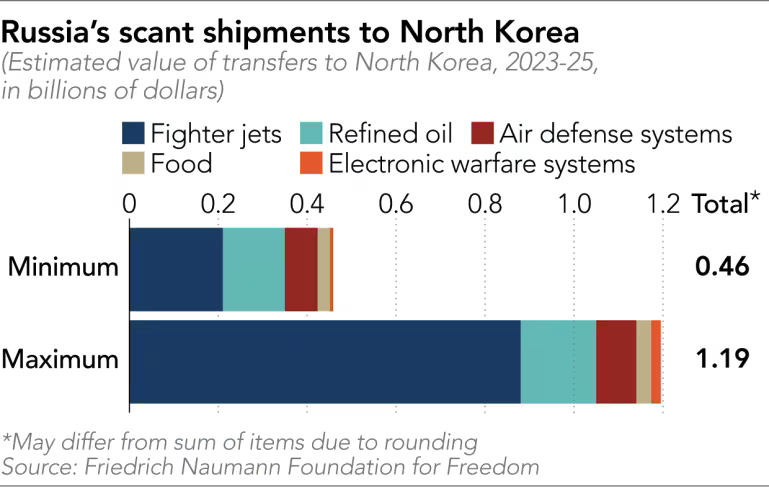
North Korea has sent roughly 15,000 troops to the Russia-Ukraine war, with South Korea’s intelligence agency estimating more than 2,000 killed. Reports indicate that since 2023 North Korea has contributed an estimated USD 5.6–9.8 billion in arms and personnel to Russia — mostly low-technology artillery, mortars, rockets, and short-range ballistic missiles — while Russia’s compensation totals only USD 457 million–1.19 billion in food, oil, air-defense systems, and possibly aircraft. This highly asymmetric exchange shows limited economic benefit for Pyongyang, with gains instead centered on battlefield weapons testing and reduced isolation through alignment with a UN Security Council permanent member.
North Korea, Russia, and China have demonstrated political cohesion through public displays such as Kim Jong Un’s September appearance with Xi Jinping and Vladimir Putin in Beijing and subsequent Russian and Chinese attendance at an October military parade in Pyongyang. The three share an interest in reducing U.S. influence in Asia. Despite claims of North Korea’s disciplined labor force, its soldiers have shown limited battlefield impact due to language barriers, training gaps, and lack of combat experience. As Russia shifts toward drone-centric warfare, demand for North Korean ammunition and troops may fall rapidly, weakening Pyongyang’s leverage.
Harsh deployment conditions have driven some North Korean personnel to defect. Accounts describe extreme hunger, heavy labor, and constant surveillance, while exposure to South Korean smartphones abroad has shattered long-internalized propaganda narratives. For many, the visible technological gap reveals the regime’s distortions and underscores North Korea’s subordinate position within its deepening alignment with Russia and China.