美国在全球安全中的投入比重下降是本段的核心量化背景,其长期经济基础亦在削弱:美国在全球 GDP 中的占比呈持续下滑趋势,使其承担外部安全成本的能力相对减弱。特朗普任期内的区域军事动态呈现分化:尽管整体政策趋向收缩,但在拉丁美洲出现军事活动上升,而对伊朗核设施的打击表明存在有限例外。其假设是盟友增加自我防务投入将强化威慑,使美国以更低成本维持 Pax Americana 的某种替代版本。然而这一策略面临系统性风险,因为全球冲突频率与外部制衡成本具历史相关性。
数据指向战争触发门槛的显著下降。在其第二任期前 10 个月中,泰国与柬埔寨、印度与巴基斯坦、以及以色列与伊朗均爆发数十年来最激烈的冲突,同时欧洲仍处于二战以来最大规模陆战的延续状态。历史模式表明,大国战争通常发生在权力转移阶段,如拿破仑时代与两次世界大战。当前阶段中,俄罗斯可能将北约东翼视为更加暴露,而美国对台湾的模糊承诺使中国更可能“试探边界”。
尽管如此,大国直接冲突的概率依旧偏低,因为经济毁灭与核灾难的巨额代价形成强约束。然而这并不排除更广泛的中小规模冲突上升趋势,美国收缩使地区对抗的外部抑制力减弱,使弱小国家更可能遭受邻国胁迫,从而形成“多战世界”的高风险格局。
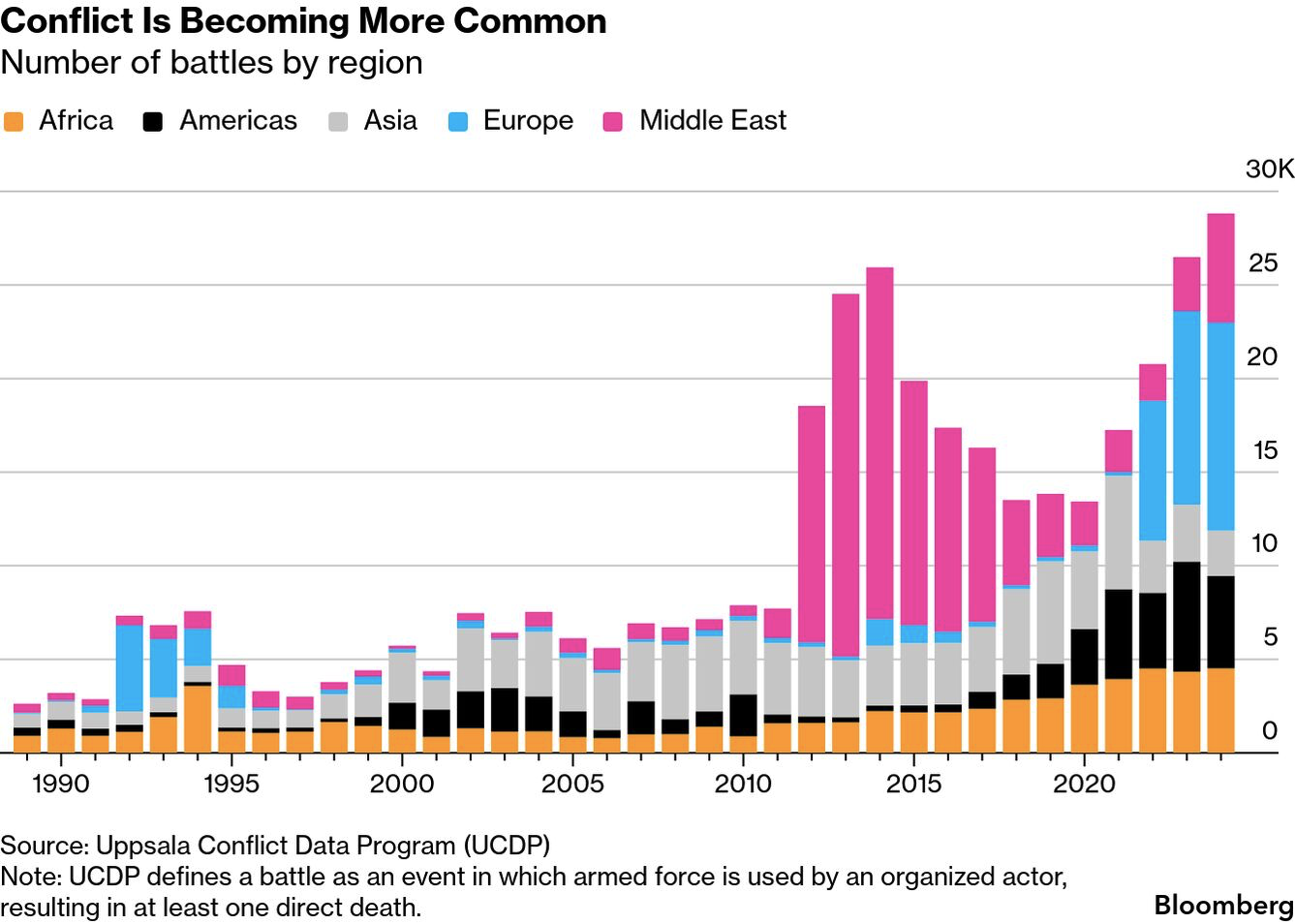
The declining US share of global GDP forms the quantitative backdrop for reduced American capacity to underwrite global security. Regional military patterns under Trump show selective engagement: expanded activity in Latin America and limited exceptions such as strikes on Iranian nuclear facilities, despite an overall retrenchment. His premise is that greater allied burden-sharing would strengthen deterrence and achieve a lower-cost variant of Pax Americana. Yet this strategy carries systemic risk, as conflict incidence historically correlates with reduced external constraints.
Evidence shows a falling threshold for conflict. In the first 10 months of Trump’s second term, Thailand–Cambodia, India–Pakistan, and Israel–Iran experienced their fiercest clashes in decades, while Europe remained mired in its largest land war since World War II. Historical patterns show great-power wars are most likely during transitional periods, as seen in Napoleonic Europe and World Wars I and II. Russia may view NATO’s eastern flank as exposed, while the US’ intentionally ambiguous commitment to Taiwan may invite Chinese probing.
Even so, the probability of direct great-power war remains low because the economic and nuclear costs of escalation impose enormous constraints. But this does not prevent a broader rise in smaller conflicts. US retrenchment reduces external suppression of regional rivalries, increasing the risk that weaker states are coerced by stronger neighbors and creating a high-risk landscape of “many wars.”