中国年度国家劳动奖章并未准确体现其不断变化的劳动力结构,因为拥有180万员工的铁路等传统行业获得了18枚奖章,而拥有1230万员工的庞大金融行业仅获得了16枚。此外,地理分布也存在偏差,广东占全国就业人数的近10%,但获得的省级奖章却不足6%。
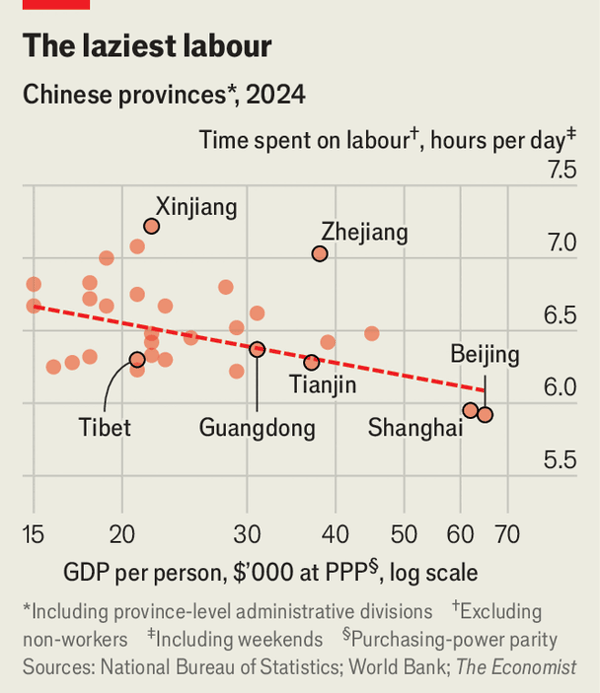
相反,北京、上海和中国东北地区严重超额分配,占奖章配额的五分之一以上,但合起来提供的就业人数却不足总数的十分之一。尽管政府呼吁效仿这些获奖者,但中国工人的日均有偿劳动时间已从2018年的7小时8分钟下降到近期的6小时23分钟。
中国之所以在工作产出上超越西方,并非因为单日工作时间更长,而是因为在18至59岁的公民中,有超过75%的人参与有偿劳动,而美国18至54岁人群的这一比例仅为56%。这一高劳动参与率在一定程度上是由缺乏强大的社会保障网所推动的,迫使许多人留在劳动力市场中。
China's annual national labor medals do not accurately represent its changing workforce, as traditional sectors like the railway industry, with 1.8 million employees, won eighteen medals, while the massive financial sector of 12.3 million employees received only sixteen. Furthermore, the geographic distribution is skewed, with Guangdong accounting for nearly ten percent of national employment but receiving less than six percent of provincial medals.
Conversely, Beijing, Shanghai, and the northeast of China are heavily overrepresented, claiming over one-fifth of the medal quota while providing less than one-tenth of total employment. Despite the government's call to emulate these medallists, average daily paid labor hours in China have actually declined from seven hours and eight minutes in 2018 to six hours and twenty-three minutes recently.
Rather than working longer hours, China outworks the West because over seventy-five percent of citizens aged eighteen to fifty-nine participate in paid labor, compared to just fifty-six percent of those aged eighteen to fifty-four in America. This high participation rate is partly driven by the lack of a strong social safety net, forcing many people to remain in the workforce.
Source: How China still outworks the West
Subtitle: A medal scheme masks the identity of its toughest labourers
Dateline: 6月 18, 2026 03:16 上午 | Hong Kong