中国近5亿规模的庞大中产阶级正转向更健康的“加州式”饮食,这推动了对三文鱼、蓝莓和有机食品的需求。尽管该国以仅占全球9%的耕地养活了世界17%的人口,但日益增长的富裕意味着如今超过50%的中国成年人超重或肥胖。
因此,中国已成为全球第二大三文鱼市场,促使诺迪克水产(Nordic Aqua)等公司计划到2030年将年产量从8000吨扩大到2万吨。此外,国内蓝莓产量去年达到近100万吨,导致一盒125克蓝莓的价格降至约1美元。
这一健康趋势也扩大了有机耕作面积,其面积在过去十年中翻了一番,占中国总耕地面积的0.7%,并在2024年创造了167亿美元的销售额。虽然有机蔬菜价格已降至普通蔬菜的1.5倍,但人们对土壤污染以及全国40%的人口依赖外卖的现状依然存在担忧。
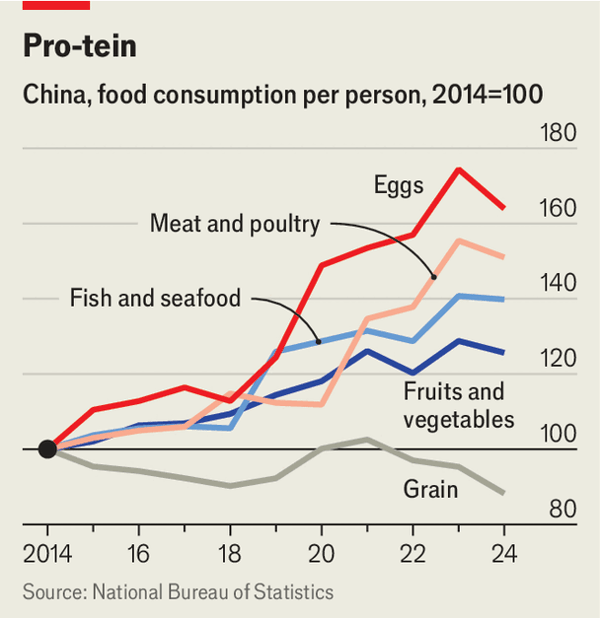
China’s growing middle class of nearly 500 million people is shifting toward healthier, "Californian" diets, driving up demand for salmon, blueberries, and organic foods. While the nation feeds 17% of the world's population on 9% of its arable land, rising prosperity means that over 50% of Chinese adults are now overweight or obese.
Consequently, China has become the world’s second-largest salmon market, prompting companies like Nordic Aqua to expand production from 8,000 tonnes to 20,000 tonnes annually by 2030. In addition, domestic blueberry production reached nearly 1 million tonnes last year, causing prices for a 125-gram punnet to fall to about $1.
This health trend is also expanding organic farming areas, which doubled over the past decade to represent 0.7% of China's total farmland and generated 16.7 billion dollars in sales in 2024. While organic vegetable prices have dropped to 1.5 times the price of ordinary produce, concerns persist about soil pollution and the fact that 40% of the population relies on food delivery.
Source: The Californication of middle-class Chinese diets
Subtitle: China wants more healthy, clean and even foreign food
Dateline: 6月 18, 2026 03:49 上午 | BEIJING, HANGZHOU AND NINGBO