全球逾 6,000 架 A320 系列飞机(占全球机队逾半)受到软件故障影响,需在下一次航班前回退至旧版本程序;数据上传仅需约 2–3 小时,但约 1,000 架老旧机需进行硬件升级并在维护期间停飞。美国方面约 1,600 架 A320 家族在运行,FAA 的指令覆盖其中约 545 架。American Airlines 自 209 架受影响飞机中仅剩 4 架待处理;印度 IndiGo 在 200 架受影响中已在当地周六中午前完成 160 架检查;Wizz Air 在一夜之间完成全部升级。日本 ANA 则取消 95 班次,影响约 13,200 名旅客;哥伦比亚 Avianca 反映其机队逾 70% 受影响并暂停售票至 12 月 8 日,澳纽亦出现取消与延误。
故障溯源于近月 JetBlue 一架 A320 在强烈太阳辐射下发生软件异常并短暂俯冲,触发调查,并导致 Airbus 与 EASA 在 24 小时内发布紧急指令。软件回退旨在避免特定条件下的飞控数据损坏;Thales 制造的飞控计算机已使用二十余年,争议功能所涉代码不在其责任范围内。航空公司需迅速完成处理以避免关键感恩节出行季出现大规模瓶颈,监管机构亦指出英国绝大多数相关飞机已完成更新。
事件发生在航司已面临恶劣天气与美国政府停摆造成的交通扰动之后,行业对软件可靠性的依赖不断上升,使本次事件与波音 737 Max 的软件危机形成对照。尽管部分地区短期受扰,整体航班网络因快速响应而避免系统性瘫痪,A320 与波音 737 这两大主力机型的竞争格局未出现结构性改变。
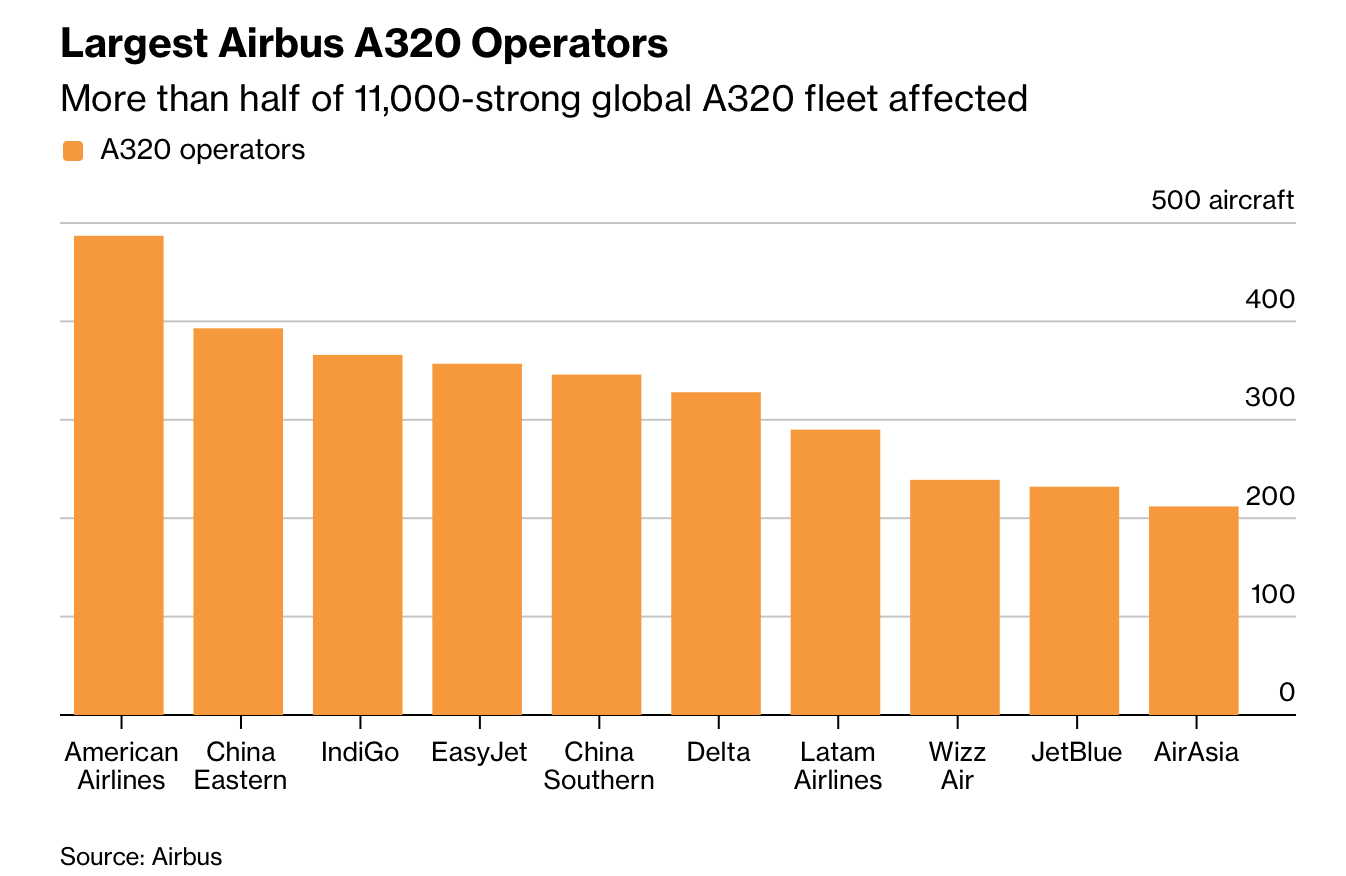
More than 6,000 A320-family jets — over half the global fleet — were affected by the software glitch, requiring reversion to a prior program version before the next flight; the data upload takes roughly 2–3 hours, but about 1,000 older aircraft need hardware upgrades and must be grounded. In the US, roughly 1,600 A320-family jets operate, with the FAA directive covering about 545. American Airlines had only 4 of 209 affected aircraft left to address; IndiGo completed checks on 160 of 200; Wizz Air finished all updates overnight. ANA canceled 95 flights affecting about 13,200 passengers, Avianca said over 70% of its fleet was impacted and halted ticket sales until Dec. 8, and cancellations also occurred in Australia and New Zealand.
The trigger was a JetBlue A320 incident involving intense solar radiation causing a software malfunction and abrupt pitch change, prompting investigation and a rapid Airbus–EASA emergency directive. The rollback prevents potential corruption of flight-control data under certain conditions; the Thales-made flight computer has been in service for over two decades, with the scrutinized software outside its responsibility. Airlines were required to act before the next scheduled flight to avoid major bottlenecks during the peak Thanksgiving travel period, with UK regulators reporting most updates already completed.
The disruption arrives amid weather-related issues and a recent US government shutdown, underscoring rising dependence on stable onboard software and echoing concerns highlighted by Boeing’s 737 Max MCAS failures. Despite localized impacts, fast implementation prevented systemic breakdown, and the competitive balance between the A320 and Boeing 737 workhorses remains unchanged.