自十年前英国以52%对48%投票脱欧以来,英国的脱欧辩论已经急剧转向:文章将那次投票与今天欧洲的战争、较弱的贸易、紧张的北约以及估计达到4%或更高的脱欧相关GDP损失进行对比。工党人物的立场从安迪·伯纳姆对“永久困境”的谨慎,到韦斯·斯特里廷明确的逆转立场不等,而基尔·斯塔默说英国应再次处于欧洲的核心。
民调现在显示出强烈的亲欧转向:YouGov发现58%的人说离开是错误的,而29%说是正确的,一些排除“不知道”的公投模型显示重新加入最多以62%对38%领先。目前的欧英重启涵盖食品、青年交流、碳交易和电力,并可能扩展到汽车、化学品和制药,但其预期经济收益仅为15年内GDP的0.3%。
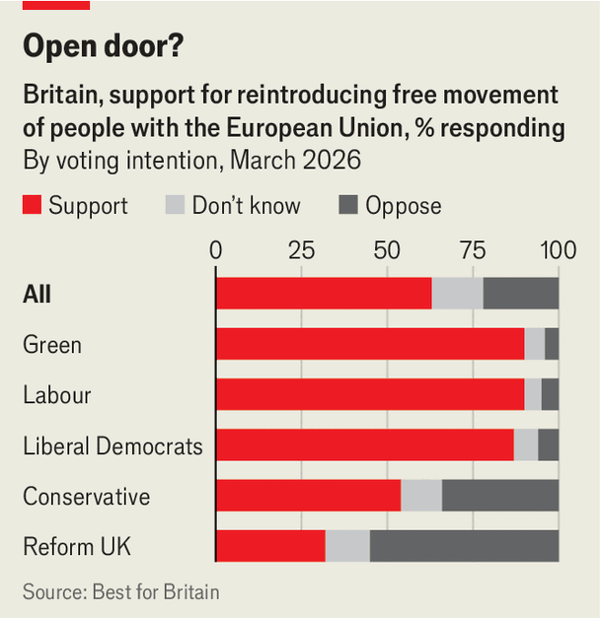
更深层准入面临硬约束:欧盟拒绝挑挑拣拣,要求为电力市场准入支付诸如凝聚基金缴款的费用,而金钱争端已经帮助使英国加入1500亿欧元(1800亿美元、1300亿英镑)SAFE防务基金的努力失败。英国反对单一市场、关税同盟和人员自由流动的红线是主要障碍,尽管Best for Britain的一项民调发现63%支持自由流动,22%反对,在工党、绿党和自由民主党选民中升至90%。
Britain's Brexit debate has shifted sharply since the 52-48% Leave vote a decade ago: the article contrasts that vote with today's war in Europe, weaker trade, strained NATO, and estimated Brexit-related GDP losses of 4% or more. Labour figures range from Andy Burnham’s caution about a “permanent rut” to Wes Streeting’s explicit reversal stance, while Keir Starmer says Britain should again be at Europe’s heart.
Polling now shows a strong pro-EU swing: YouGov finds 58% say leaving was wrong versus 29% right, and some referendum models excluding “don’t knows” put rejoining ahead by up to 62-38%. The current EU-UK reset covers food, youth exchange, carbon trading and electricity, with possible extensions to cars, chemicals and pharmaceuticals, but its expected economic gain is only 0.3% of GDP over 15 years.
Deeper access faces hard constraints: the EU rejects cherry-picking, wants payments such as cohesion-fund contributions for electricity-market access, and money disputes already helped sink UK entry into the €150bn ($180bn, £130bn) SAFE defence fund. Britain’s red lines against the single market, customs union and free movement are the main barrier, although a Best for Britain poll finds 63% support free movement and 22% oppose it, rising to 90% among Labour, Green and Liberal Democrat voters.
Source: Britain is quietly de-Brexiting
Subtitle: But any Labour government will have to soften its red lines to get meaningfully closer to the EU
Dateline: 5月 28, 2026 03:24 上午 | BRUSSELS AND LONDON