中国正在加速部署和测试其由渔船构成的庞大“海上民兵”力量,引发了印太地区地缘政治与军事防务的高度关注。2025年12月,来自舟山及东部沿海的1,000多艘中国渔船在台湾以北海域排成倒 L 字形阵型并保持了12多小时,随后分散。在接下来的数月中,东海海域又连续发生了四次类似的大规模船队集结。这些大规模阵型远超以往南海集结的规模,显示出官方正在系统性测试民兵船队与普通渔船协同执行大规模海上封锁和战术演练的能力。
海上民兵构成了中国海警与海军之外的第三支特殊海上力量。这支部队由普通渔船与经过加固、配备大功率水炮的钢壳船组成,为官方开展“灰色地带”挑衅提供了可否认性。自2012年以来,中国政府通过提供高额补贴(部分船只每日补贴超过24,000元人民币/3,500美元)推进海上民兵的现代化建设。根据战略与国际研究中心(CSIS)的数据,2025年南海争议海域平均每天监测到241艘民兵船只部署,创下自2021年开始监测以来的历史新高。
在潜在的台海冲突中,这种高度组织的民兵舰队可能发挥关键的非对称作战功能。通过卫星追踪与自动化定位系统,中国展现出对民用船队前所未有的行政与政治控制力。在军事封锁或“隔离”场景下,数千艘民兵船只可被用于切断海底通信电缆、执行海域侦察、协助后勤补给,甚至以饱和集群方式干扰敌方对主要作战舰艇的识别与拦截。这种民企与军事体系的无缝结合正急剧增加周边国家的防御难度。
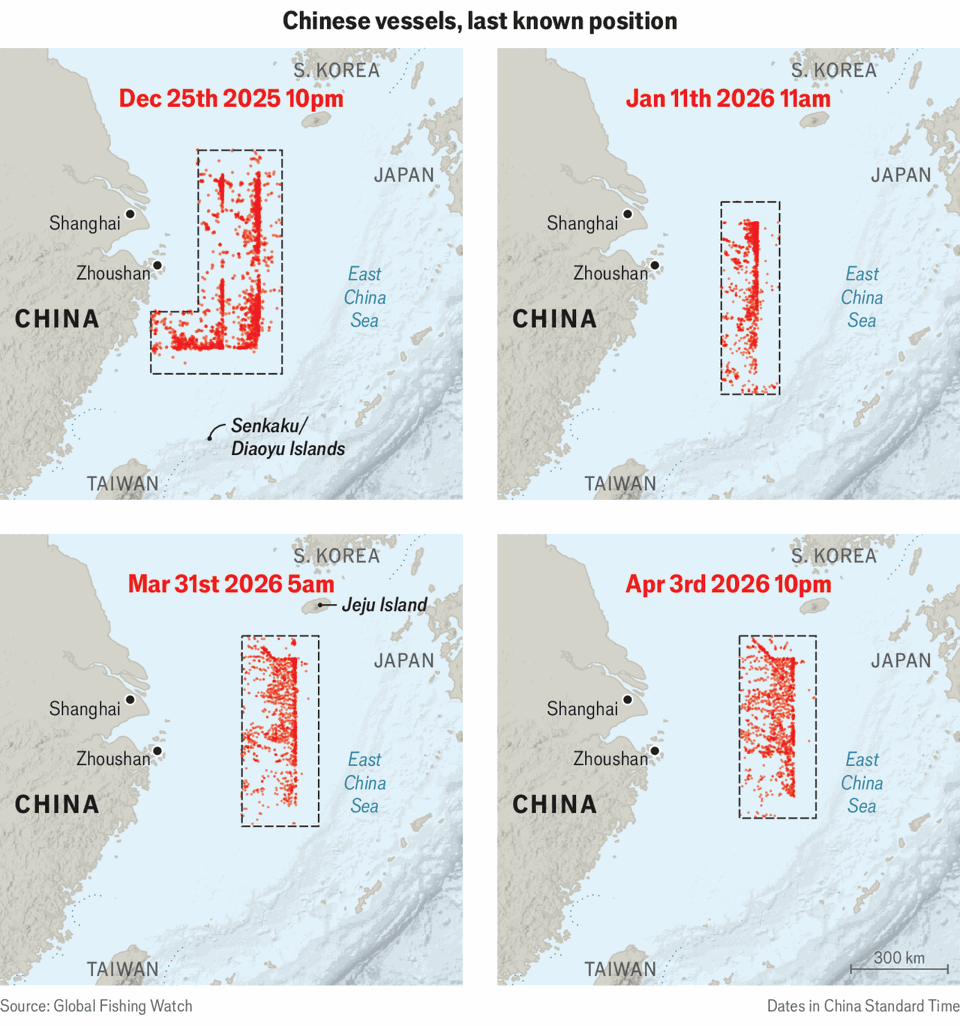
China is expanding the operational testing of its maritime militia across the East China Sea, signaling potential shifts in regional grey-zone warfare. In December 2025, over 1,000 fishing vessels from Zhoushan and eastern ports assembled in an inverted L-shaped formation north of Taiwan, maintaining position for over 12 hours before dispersing. Four subsequent large-scale maritime formations occurred in the following months. These coordinated maneuvers exceed previous maritime gatherings in scale, indicating that military and maritime authorities are actively testing the operational capabilities of civilian fleets for maritime control and blocking scenarios.
Operating alongside the navy and coast guard, China's maritime militia functions as a specialized third maritime force using commercial and purpose-built steel-hulled vessels. This structure provides official plausible deniability during grey-zone sovereignty enforcement operations. State support has expanded since 2012 through financial incentives, with loitering subsidies exceeding 24,000 yuan (,500) per day for participating vessels. Data from the Center for Strategic and International Studies (CSIS) identified an average of 241 militia vessels operating daily in disputed South China Sea areas throughout 2025, representing the highest annual concentration since tracking began in 2021.
In potential Taiwan conflict scenarios, high-density civilian fleet formations could provide critical asymmetric capabilities. Military analysts note that coordinating commercial fleets demonstrates significant central administrative control over civilian maritime assets. In blockade or quarantine operations, large militia deployments could serve to gather intelligence, disrupt undersea communications cables, support military logistics, or overwhelm opposing targeting networks through high-volume fleet saturation across key maritime straits.
Source: Big new formations north of Taiwan suggest officials are testing out its capabilities
Subtitle: [[IMAGE]]
Dateline: Jul 23rd 2026