庞大的贸易顺差正值敏感政治时机,中国国家主席习近平预计将于本月底访问美国并会晤川普,届时双方将决定是否延长即将于11月到期的贸易战休战协议。美方敦促中国扩大内需并削减补贴以缩小贸易顺差,北京则希望美国取消高科技产品特别是晶片的出口管制。与此同时,物美价廉的中国商品大量出口也引发欧盟等其他贸易伙伴对本土去工业化的担忧。
在进口方面,半导体等价格上涨与AI晶片需求是主要驱动力,其中来自南韩的进口额在8月份年增108%,达到创纪录的321亿美元,占中国总进口额的11.4%,使南韩成为中国最大的单一国家进口来源国。分析指出,强劲的AI半导体需求推动了南韩对华出货量的激增,而科技产品今年以来已贡献了中国出口增长的54%,显示高科技产品在当前贸易流中占据核心地位。
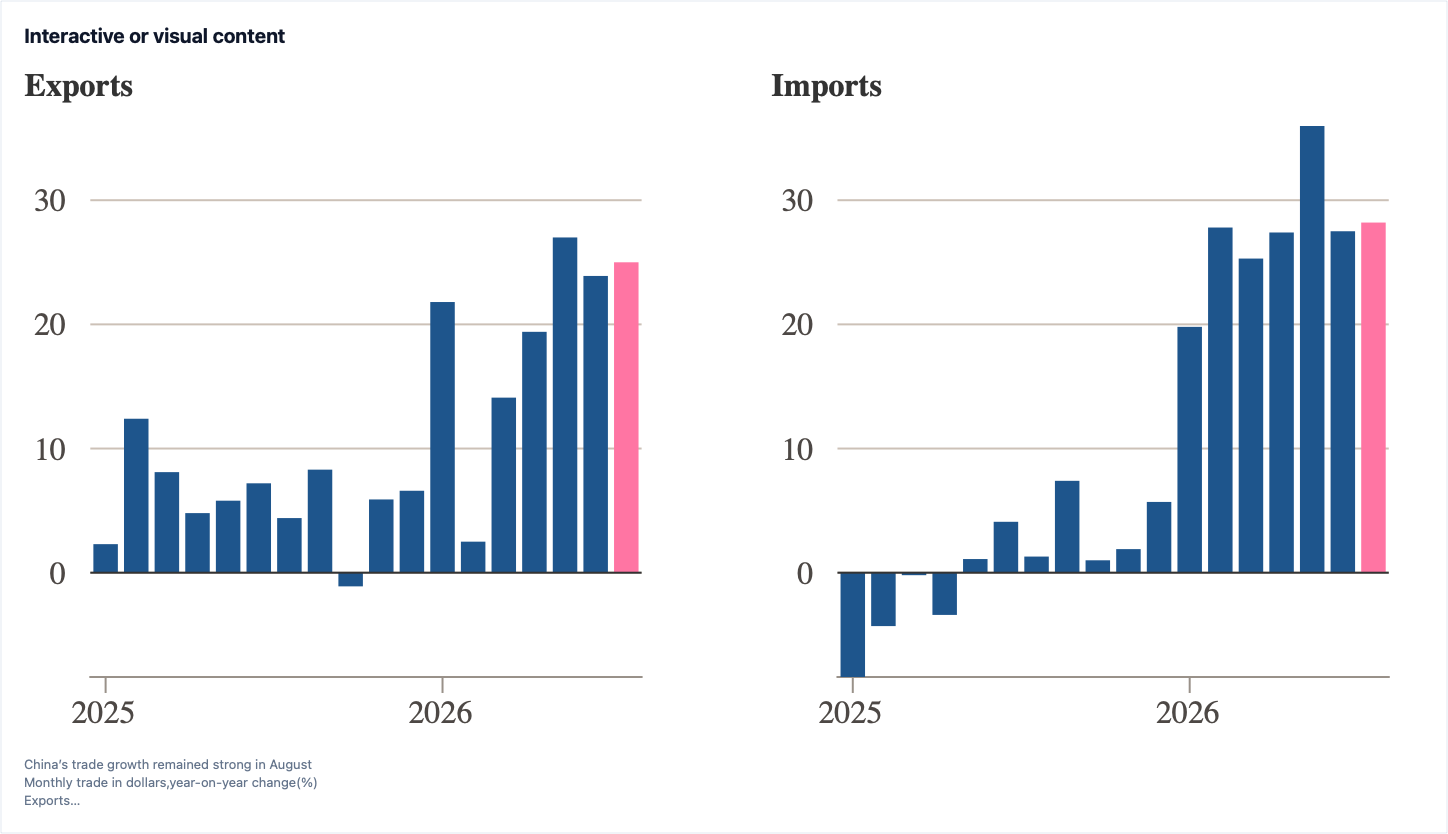
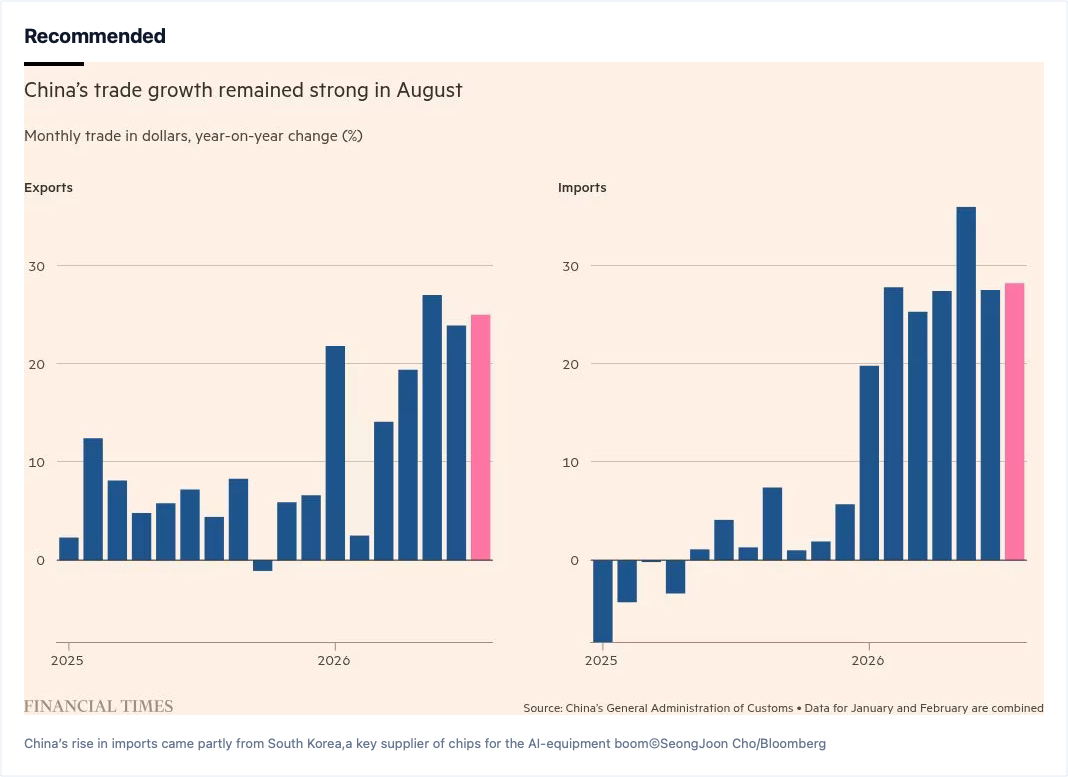
Official data from China’s customs administration showed that dollar-denominated exports rose 25 percent year on year in August, driven by tech shipments from the global AI boom, while imports climbed 28.2 percent. The trade surplus for the first eight months reached $805.51 billion, outpacing the previous year's pace and putting China on track to exceed its record $1.2 trillion annual surplus set in 2025, with net exports remaining a vital driver of GDP growth amid weak domestic demand and a prolonged property slump.
The surging trade surplus arrives at a critical political moment ahead of Chinese President Xi Jinping’s scheduled state visit to the US later this month to meet Donald Trump, where both leaders will decide whether to extend a one-year trade war truce expiring in November. While the US is demanding that China lower subsidies and stimulate domestic demand, Beijing seeks the removal of export controls on advanced chips, all while the EU and other partners voice alarm over deindustrialisation caused by competitive Chinese goods. (Key numbers: 11)
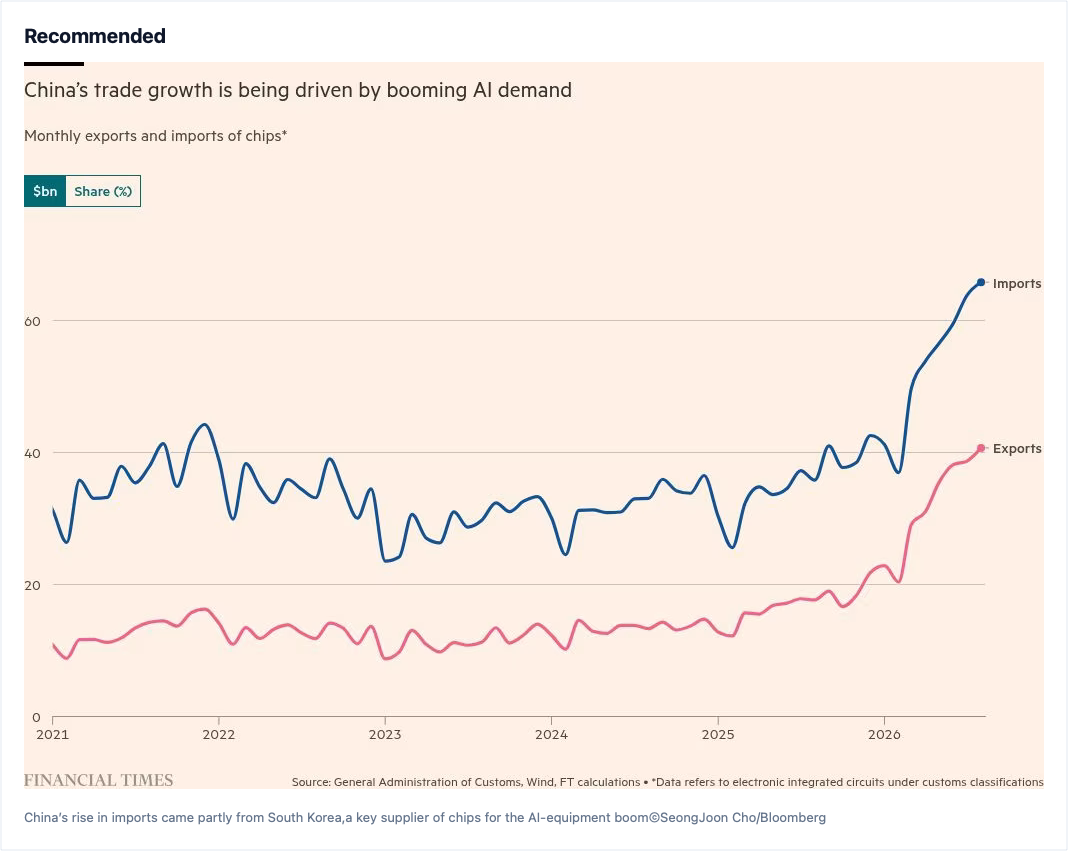
Import growth was heavily fueled by rising semiconductor prices and demand for AI hardware, with imports from key supplier South Korea surging 108 percent year on year to a record $32.1 billion in August, making it China's largest single-country import source at 11.4 percent of total imports. Economists noted that tech shipments have accounted for 54 percent of China's export growth so far this year, underscoring the decisive role of the AI-equipment build-out in shaping China's latest trade flows.