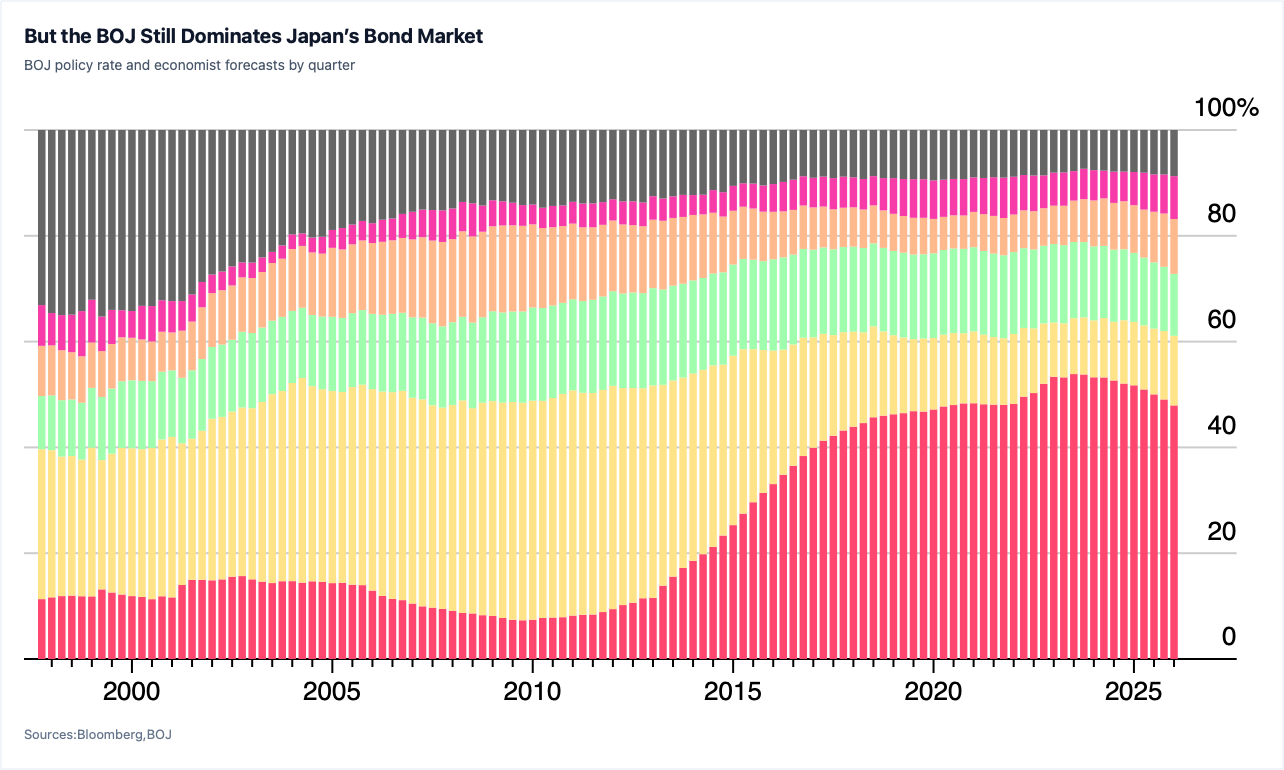
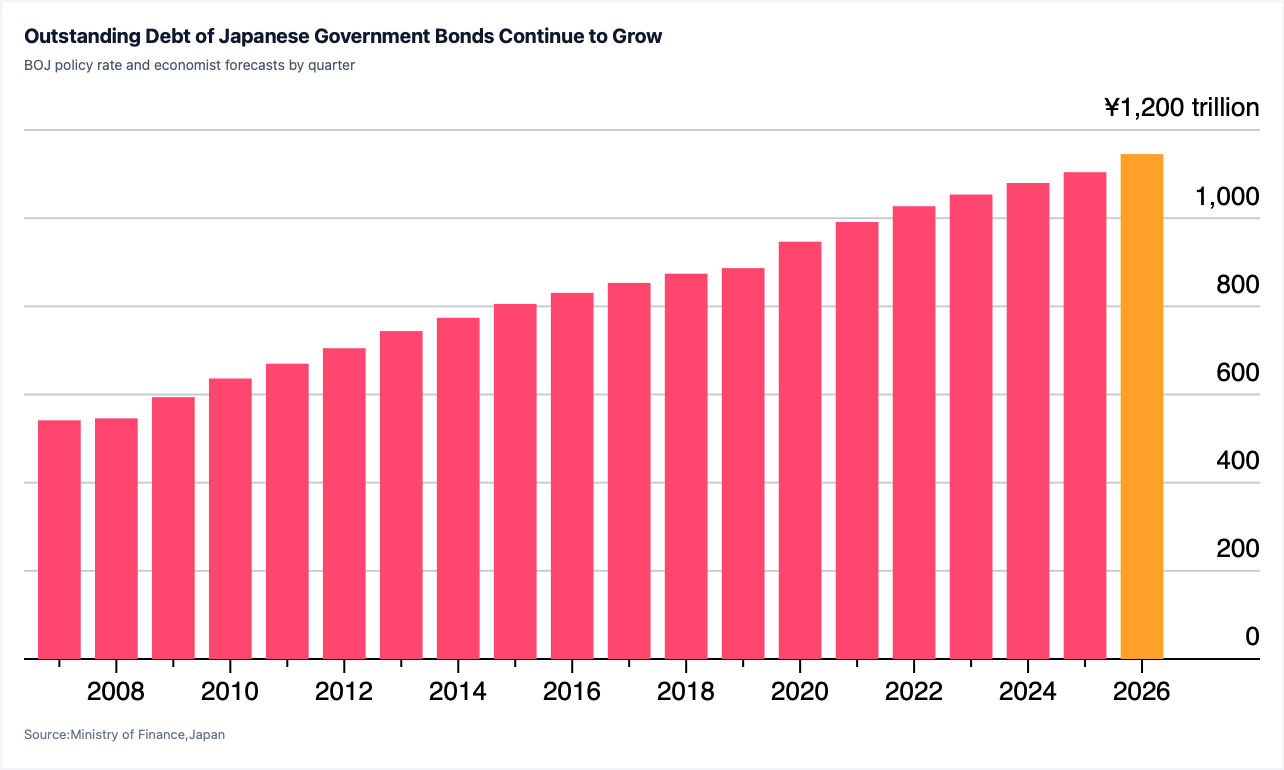
过去日本央行作为公债的主要买家曾持有约54%的流通债券,如今随著脱离通缩并追求市场机能正常化,央行开始大幅缩减购债规模,创下历史最大减幅。然而民间商业银行与寿险公司等机构填补意愿低落,使债券市场出现庞大需求缺口。与此同时,日本政府庞大的财政支出蓝图、食品消费税减免提议以及扩增的国防预算,使得未偿债务进一步膨胀,大量新增的公债发行量令投资人忧心忡忡。
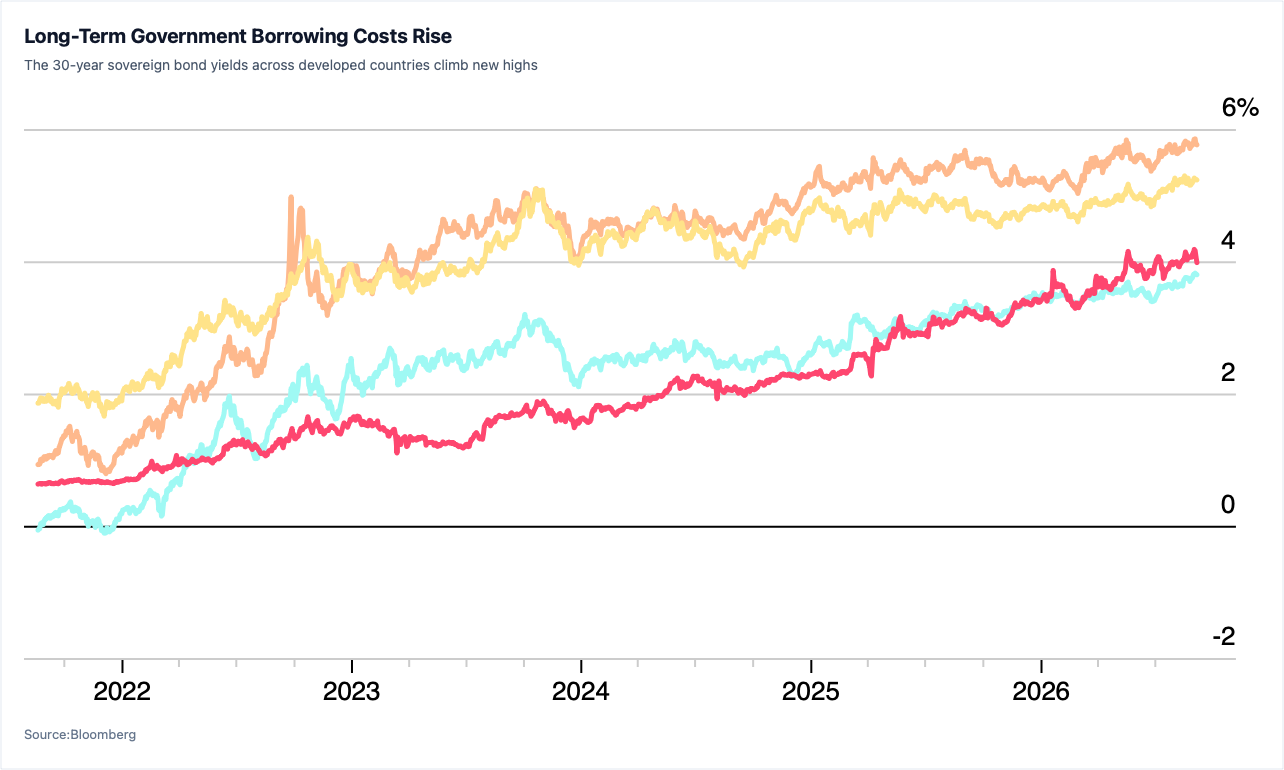
除了国内因素,全球主要经济体政府公债同步遭遇抛售潮,也对日本公债殖利率构成巨大的上行压力。随著英、美、德等国的长天期借贷成本攀升至多年高点,外国公债所提供的高殖利率削弱了日本公债的相对吸引力。在各国央行可能推迟降息或重启升息的预期下,全球主权债券价格普遍承压,借贷成本走高亦恐将加剧日本家庭、企业乃至政府自身的偿债负担。
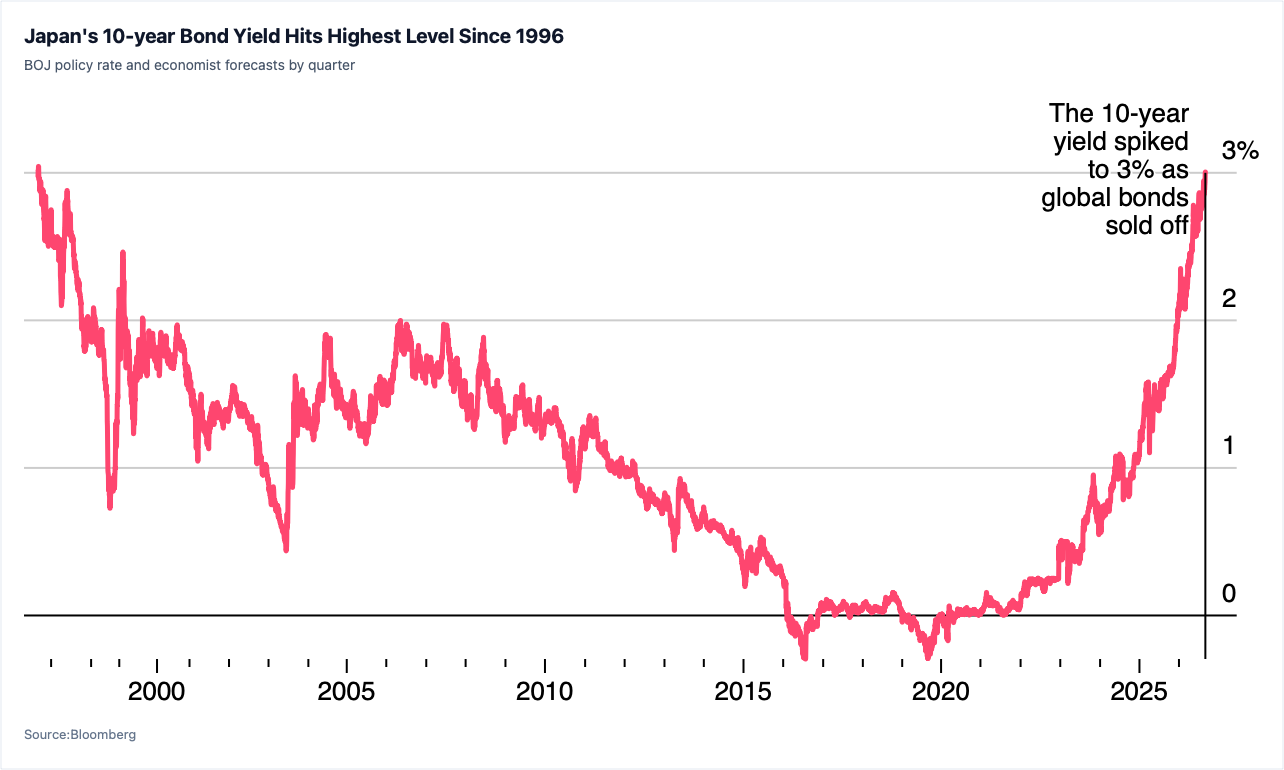
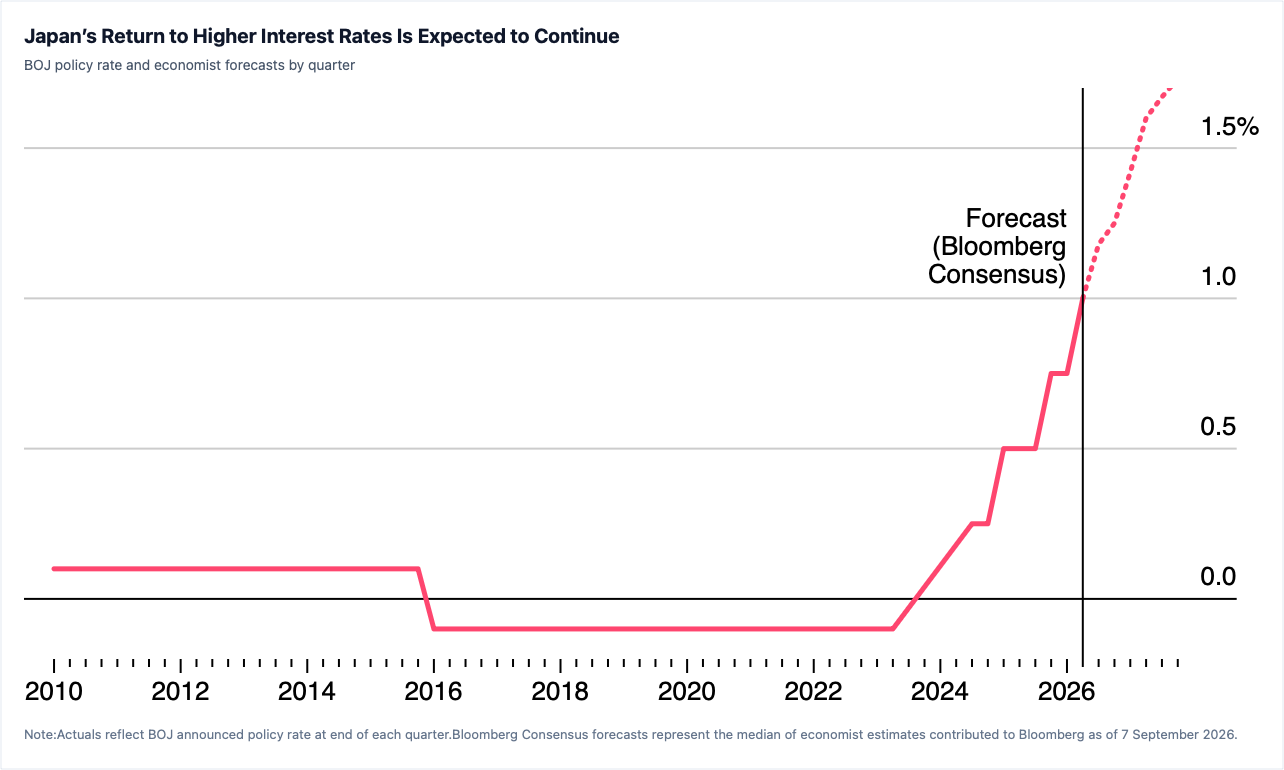
Long viewed as one of the world's most stable sovereign debt markets, Japan saw its 10-year government bond yield reach 3% for the first time this century as investors demand higher returns amid rate hike expectations and rising fiscal risks. The Bank of Japan raised its policy rate to a 31-year high of 1%, and persistent above-target inflation, elevated energy costs, and a weak yen have fueled expectations of further monetary tightening, depressing bond prices and driving yields sharply higher.
Having previously accumulated roughly 54% of outstanding government debt to fight deflation, the Bank of Japan is now retreating from large-scale bond purchases at a record pace to restore market functioning. However, private institutional investors like commercial banks and life insurers remain hesitant to absorb the supply, leaving a massive demand void. This coincides with Japan's growing debt mountain, fueled by multi-trillion-yen economic roadmaps, proposed temporary food sales tax cuts, and expanded defense spending, which threaten to flood the market with unprecedented bond issuance.
Compounding domestic pressures, a broader global sovereign bond selloff has pushed borrowing costs across major economies like the US, UK, and Germany to multi-year highs amid energy inflation concerns. Higher yields on foreign government debt diminish the relative appeal of Japanese bonds, adding upward pressure on domestic yields as investors realign portfolios. Persistent expectations of delayed rate cuts or renewed tightening globally could keep bond prices under pressure, elevating borrowing costs for Japanese households, companies, and the debt-laden government.