巴黎过去十年大规模推动自行车交通基础设施建设。如今城市拥有超过1,500公里自行车道,比以自行车闻名的阿姆斯特丹还多。2014年社会党市长安妮·伊达尔戈上任时已有约700公里车道,此后数量增加一倍以上。市中心道路被重新分配给行人与骑行者,如里沃利街三分之二路面改为自行车道。结果是空气质量改善、噪音减少,如今巴黎日常出行中骑行次数已超过汽车。
然而政策也加剧了政治分裂。只有约三分之一巴黎居民拥有汽车,但在富裕西部城区这一比例接近一半。随着市长选举将在3月15日和22日两轮投票中举行,汽车政策成为核心争议。民调显示民粹右翼候选人萨拉·克纳福在首轮支持率中升至第三位,其口号是恢复汽车通行。与此同时,中右翼候选人拉希达·达蒂也批评城市交通“混乱”,并可能结束社会党长达25年的执政。
领先候选人是社会党人埃马纽埃尔·格雷瓜尔,他承诺继续推进“100%可骑行城市”计划并限制汽车使用。选举还涉及住房与治安问题,例如是否限制旅游短租和扩大公共住房。尽管交通改革使市中心拥堵减少,但建设过程带来的施工干扰和管理问题引发不满。巴黎因此在环境改善与市民分歧之间形成新的政治冲突。
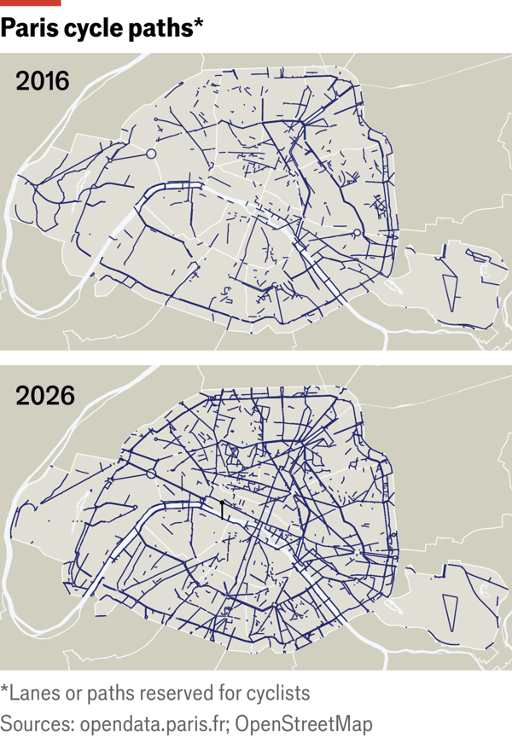
Paris has spent the past decade transforming its transport system by expanding cycling infrastructure. The city now has more than 1,500km of cycle lanes, exceeding the network in Amsterdam. When Socialist mayor Anne Hidalgo took office in 2014 the city already had about 700km of lanes, and the network has since more than doubled. Major streets such as Rue de Rivoli have been redesigned so that two thirds of their width is dedicated to protected bike lanes. As a result air quality has improved, noise has fallen, and more daily trips in Paris are now made by bicycle than by car.
However these policies have also intensified political divisions. Only about one third of Parisians own cars, but the share approaches one half in wealthier western districts. With mayoral elections scheduled for March 15 and March 22, transport policy has become a central campaign issue. Polls show populist-right candidate Sarah Knafo rising to third place in the first round by campaigning to restore car access to some roads. Meanwhile centre-right candidate Rachida Dati criticises the “chaos” created by the rapid expansion of cycling infrastructure and could end 25 years of Socialist leadership.
The current front-runner is Socialist candidate Emmanuel Grégoire, who promises to continue limiting car use and create a “100% cyclable” city. Other campaign debates include housing shortages, tourist rentals and policing policies. Although the transport reforms have reduced congestion and pollution in central Paris, the construction of protected bike lanes has caused temporary disruption and fuelled dissatisfaction. The result is a political contest that pits environmental transformation against concerns about everyday urban management.