高市早苗自去年10月出任日本首位女性首相并领导自民党以来,多项民调支持率持续超过70%。1月19日,上任不足100天,她宣布2月8日举行众议院提前选举,距离上次选举仅一年多,竞选期将成为战后最短。她称需要选民为其领导与新执政联盟背书,主张积极产业政策、防务改革、减税并结束“过度紧缩”。扩张议程预期引发市场反应,日本长期国债收益率升至历史高位。
高市押注在高人气窗口期巩固权力,力图让自民党及其盟友摆脱目前仅1席的微弱多数。她直率的风格与前任形成反差;一项民调显示,30岁以下选民对其政府的支持率超过90%。迄今主要政绩包括应对通胀的补充预算、妥善处理外事访问,以及在涉台摩擦中对华施压。然而,对人不等于对党:自民党近年丑闻缠身,其长期盟友公明党在她当选后结束了26年的合作,通胀与社媒政治也提高了竞争度。
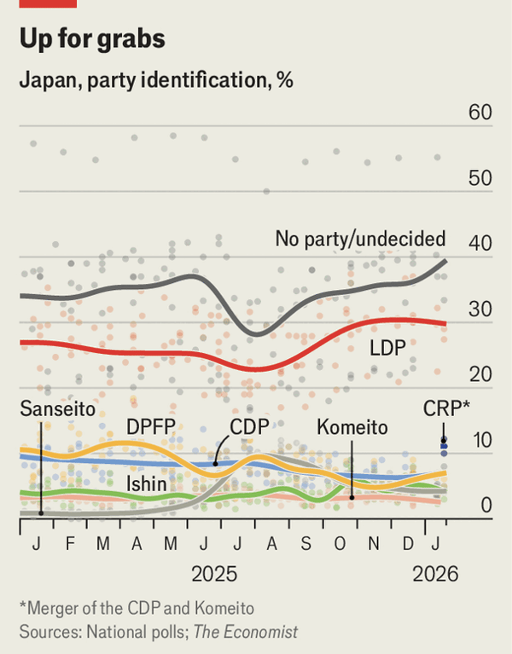
自民党支持率回升至约35%,虽领先他党,但与2024年10月选举时相当,当时其失去单独多数。反对派整合加速:立宪民主党与公明党本月组建“中间改革联盟”,并受创价学会基层动员加持;民粹新党在近两次选举中进展明显,尽管高市上任后其民调回落,移民与通胀焦虑仍在。若自民党重获单独多数,高市施政空间将扩大;债市波动显示市场认为概率不低,但她承认已将首相之位置于风险之中。
Since taking office last October as Japan’s first female prime minister and leader of the LDP, Sanae Takaichi’s approval has consistently exceeded 70% in many polls. On January 19th, less than 100 days in, she called a snap lower-house election for February 8th, barely a year after the last vote and with the shortest campaign in the post-war era. She seeks voter endorsement for her leadership and a new coalition, touting aggressive industrial policy, defence reforms, tax cuts and an end to “excessive austerity”. Markets reacted, pushing long-term Japanese bond yields to record highs.
Takaichi is betting on consolidating power while popularity is high, aiming to improve on the coalition’s current one-seat majority. Her plain-spoken style contrasts with predecessors; one poll put approval among under-30s above 90%. Achievements so far include an inflation-soothing supplementary budget, deft diplomacy, and firmness toward China over Taiwan. Yet liking her does not equal liking her party. The LDP’s image has been marred by scandals; its long-time partner Komeito ended a 26-year partnership after her selection. Inflation and social-media campaigning have also sharpened competition.
LDP support has edged up to about 35%—ahead of rivals but similar to October 2024, when it lost an outright majority. The opposition is regrouping: the Constitutional Democratic Party and Komeito formed a Centrist Reform Alliance, leveraging Soka Gakkai’s mobilisation in key districts. Populist parties made gains in the past two cycles; though their polls have slipped since Takaichi took office, concerns over immigration and inflation persist. If the LDP regains a majority, her hand strengthens; bond-market turbulence suggests markets see a high chance—but she says she has put her premiership on the line.