中国政府希望提振内需,但成效有限。1月19日公布的数据显示,2025年GDP增长5%,主要由出口拉动,而居民消费增长仅约4.2%。各省消费差异显著:黑龙江人均可支配收入约3.1万元,其中75%用于消费;西藏收入相近,但仅消费61%。这种差异引发了对哪些地区“敢消费”、哪些地区“谨慎或害怕消费”的讨论,也凸显理解区域差异对刺激消费政策的重要性。
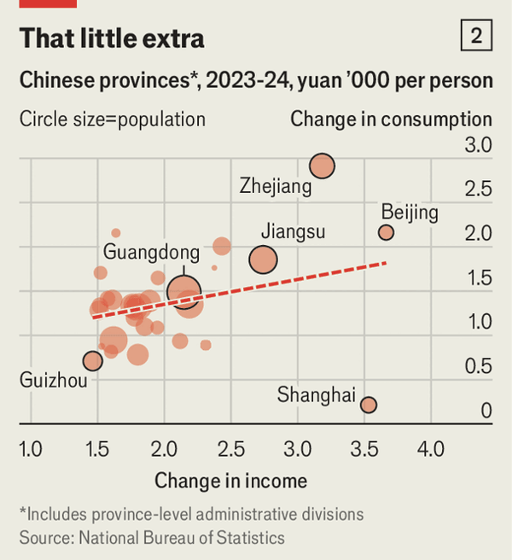
按收入水平看,收入越高,消费占比越低,但存在显著偏离趋势的省份。广东居民消费收入的70%,高出趋势值3个百分点,因体量大,贡献的全国消费额比预期多1740亿元;山东消费偏低,拖累全国消费约3270亿元。更关键的是边际消费:2023—2024年,浙江人均收入增加3200元,其中2900元转化为消费;上海人均收入增加3500元,却仅多消费200元。此前的高消费省广东与低消费省山东在这一指标上接近平均。
影响边际消费倾向的因素包括初始收入水平、城市化程度、失业保险覆盖率和抚养比。高收入和高度城市化地区更倾向于储蓄;失业保险覆盖率高的地区更愿意增加消费;抚养比高则抑制额外支出。由此看,刺激消费应聚焦低收入、农村人口占比高的地区,并通过强化社会保障、减轻育儿与养老负担来配合。即便如此,若2026年GDP目标仍接近5%,当局可能需要更积极的财政刺激。
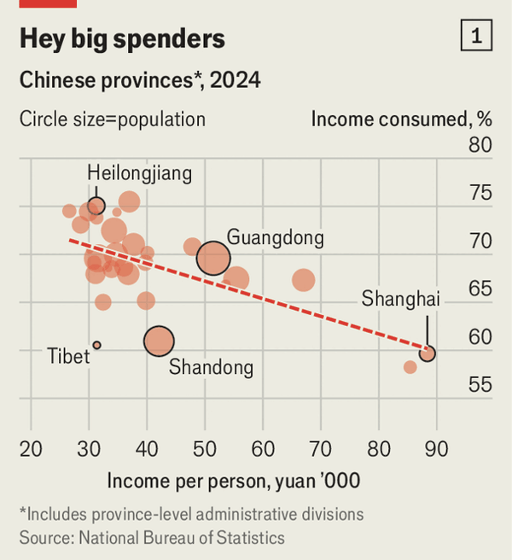
China’s government wants to boost domestic consumption, but results remain limited. Data released on January 19th show GDP grew by 5% in 2025, driven mainly by exports, while household consumption rose by only about 4.2%. Regional differences are stark: Heilongjiang’s average disposable income is roughly 31,000 yuan, with 75% spent, while Tibetans earn similar amounts but spend just 61%. Such gaps have fuelled debate over which provinces “dare” to consume and highlight why understanding regional patterns matters for policy.
Across provinces, higher income generally correlates with a lower consumption share, yet deviations are notable. Guangdong spends 70% of income, about three percentage points above trend, contributing an extra 174bn yuan to national consumption; Shandong underspends, subtracting about 327bn yuan. Marginal behaviour matters more. From 2023 to 2024, Zhejiang turned 2,900 yuan of a 3,200-yuan income gain into consumption, while Shanghai spent only 200 yuan of a 3,500-yuan gain. Guangdong and Shandong sit near the average on this measure.
Several factors shape marginal spending. Higher initial income and greater urbanisation dampen extra consumption; broader unemployment insurance coverage raises it; high dependency ratios reduce it. The analysis points to focusing stimulus on lower-income, more rural provinces, alongside strengthening safety nets and easing child- and elder-care costs. Even then, if the 2026 GDP target again nears 5%, authorities may face pressure to deploy bolder fiscal stimulus.