菲律宾 19% 对美关税在 11 月中被撤销后,农户依然未见价格改善,农民数量约 350 万,Quezon 占全国椰子供应约 10%。对美出口占椰子产品出口总量约 24%,价值 6.33 亿美元。尽管约 60% 获豁免产品来自椰子产业,但农户端价格保持停滞,甚至在 11 月 28 日 farmgate 价为每千克 57.52 比索、较油厂收购价 71.29 比索仍显低位;且在免税后反而下跌约 1 比索。年初以来涨幅约 26%,但并未形成农民获利改善趋势。
分析普遍指出,关税影响有限,核心问题在国内结构性瓶颈:菲律宾出口仍以低附加值的 copra 与粗油为主,与印尼、越南的高附加值路线形成对比。加工链条长、存在压价中间商,使小农难以从需求增长或成本下降中获益。多数农户每 6–7 周收成一次,需经数日烘干并以公斤计售予二三级商,收入极度受压;加工商与交易商利润显著大于种植者,显示分配结构失衡。
节约成本可能提高加工端利润,但难快速传导至生产端。小农仍承担贫困结构,依赖兼作渔业、稻作与水果维生。政府被要求推动国家工业化、农村基础设施、资本获取与补贴体系改革,以提升竞争力并扩大国内价值增值。若无战略性干预,零关税难形成对小农的实质效益。
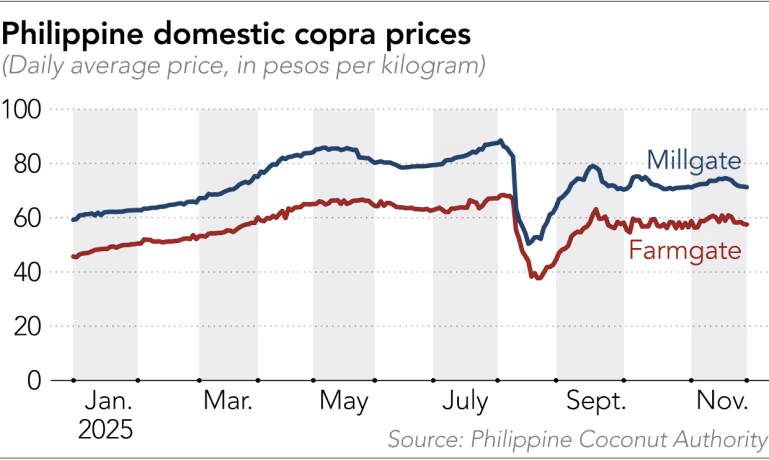
After the Philippines’ 19% U.S. tariff was removed in mid-November, coconut farmers reported no price gains despite a sector employing about 3.5 million growers and supplying 10% of national output from Quezon. The U.S. absorbed USD 633 million of coconut exports last year, or roughly 24% of total shipments, and coconuts accounted for about 60% of the exempted products. Yet farmgate prices remain flat: on Nov. 28, copra averaged 57.52 pesos per kilogram versus mill prices of 71.29 pesos, about 26% higher than at the year’s start but roughly 1 peso lower than before the tariff’s removal, indicating no improvement in farmer income.
Analysts note that tariff relief is marginal compared with structural constraints. Philippine exports remain dominated by low-value copra and crude oil, unlike Indonesia and Vietnam, which have scaled high–value-added processing. Long chains of intermediaries depress farm incomes and prevent smallholders from capturing gains from increased demand or lower export costs. Most farmers harvest every six to seven weeks, dry copra for several days, and sell at low margins, while traders and processors retain disproportionate income shares.
Cost savings may enhance processor profitability but are unlikely to reach farmers quickly. Smallholders continue to face chronic poverty and rely on fishing, rice, and fruit for supplemental income. Economists argue that national industrialization, rural infrastructure, access to capital, and effective subsidies are essential to improve competitiveness and domestic value addition. Without strategic reform, zero tariffs will not materially benefit small farmers.