开发商为了在人工智慧建设中抢占先机,经常将同一个专案向多家公用事业公司提出申请,以寻求最优惠的条件和最快的审批速度。这种被业界称为「幽灵」申请的行为,不仅使审批时间大幅延长,也让电网营运商难以准确预测真实的电力需求,甚至可能削弱美国在全球人工智慧竞赛中的竞争力。
为了应对激增的申请量,许多公用事业公司开始提高门槛,要求支付高昂的预付款、提供巨额担保以及具备近乎完美的信用评级。例如在德州,州长已下令暂停审批并对相关专案进行审查,而一些公用事业公司也改采「准备就绪者优先」的模式,以淘汰缺乏实际执行能力的开发商。
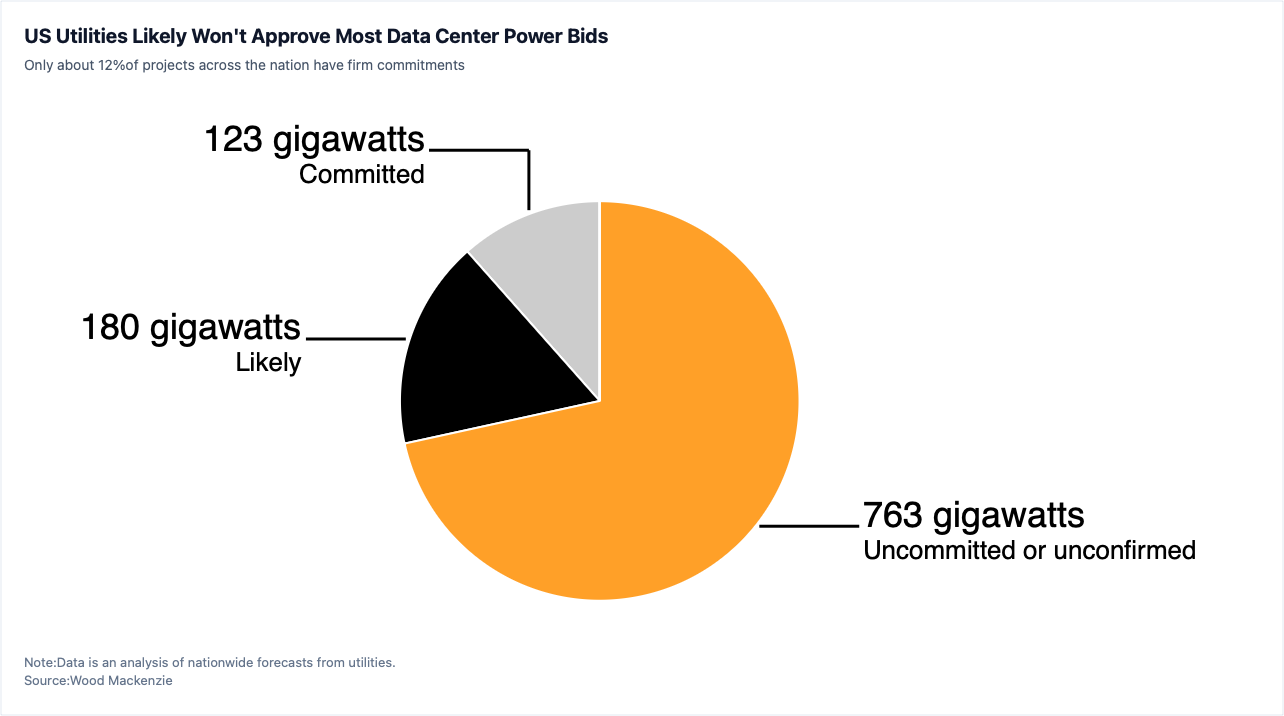
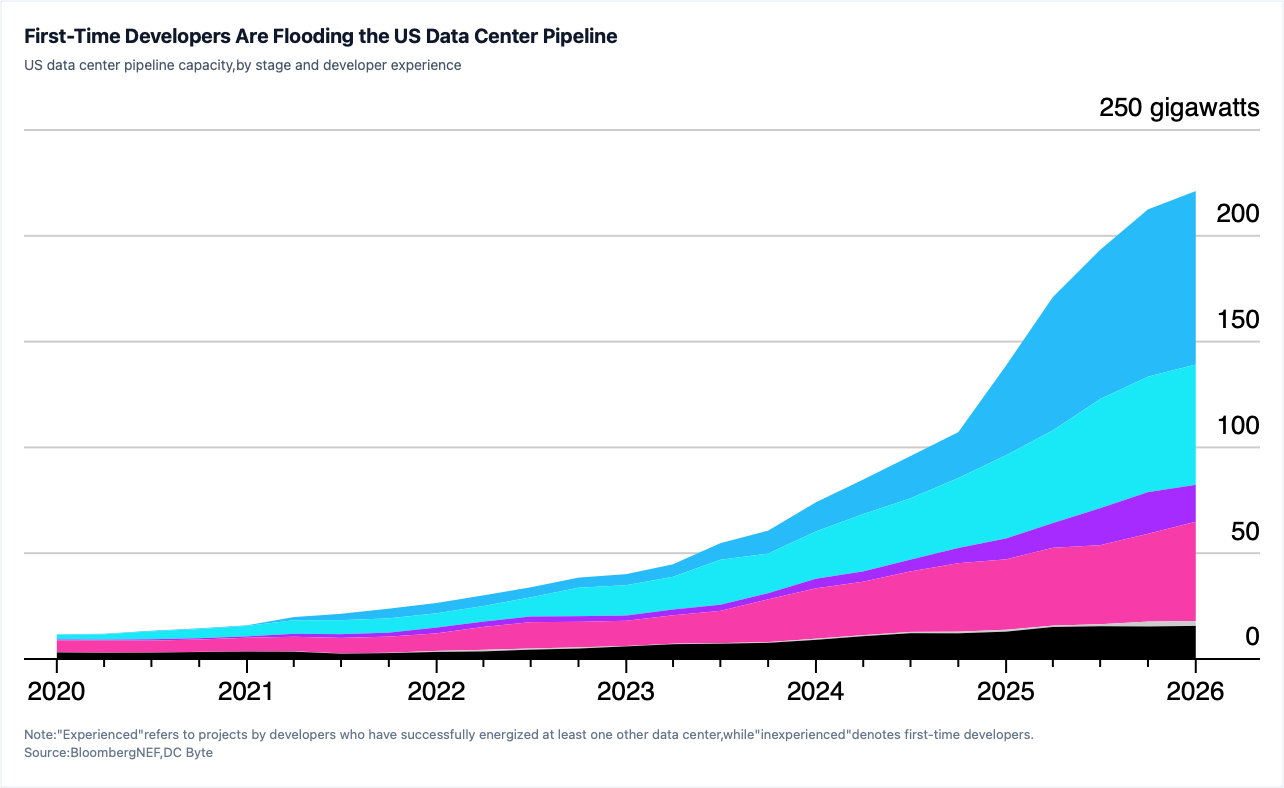
According to projections from Wood Mackenzie, over two-thirds of the electricity sought for the US artificial intelligence boom is unlikely to materialize due to "phantom" projects and unrealistic pitches. Grid operators and utilities are expected to commit to only about 28 percent of the requested power capacity for data center projects.
To gain a competitive edge in the AI build-out, developers often pitch the same project to multiple utilities in search of the best deal and fastest approval. This practice, known in the industry as "phantom" applications, significantly stretches approval timelines, makes it difficult for grid operators to accurately forecast true power demand, and could potentially undermine US competitiveness in the global AI race.
In response to the surge of requests, many utilities are raising barriers by demanding steep upfront application costs, significant collateral, and near-perfect credit ratings. In Texas, for instance, the governor has ordered a pause and audit of such projects, while some utilities are shifting to a "first-ready, first-served" model to weed out developers lacking the actual capability to deliver.