中国的产业政策引发了向高科技领域的巨大转变,国家半导体基金筹集了6870亿元人民币,政府背景的基金在2025年增长了75%。然而,这导致了激烈的竞争和低效率,使亏损工业企业的比例从2011年的10%飙升至今年4月份创纪录的32%。
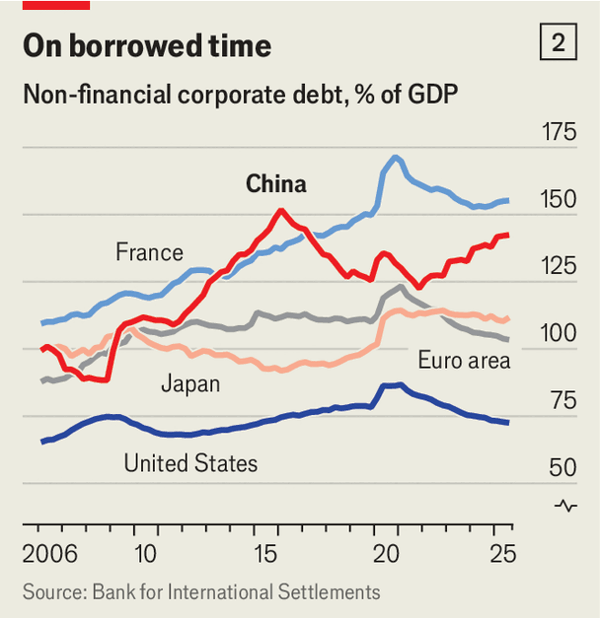
此外,产业政策使中国的全要素生产率降低了1.2%,年国内生产总值降低了2%,而企业债务自2019年以来翻了一番。地方政府债务也达到了约60万亿元人民币,占国内生产总值的43%,给试图为高科技项目融资的地区带来了沉重负担。
与此同时,高科技投资仍然集中在少数富裕的大都市,预计它们将获得70%的人工智能资金,这使得内陆省份和3亿至4亿低技能工人落后。尽管取得了技术进步,但国内需求依然疲软,4月份社会消费品零售总额同比仅增长0.2%就证明了这一点。
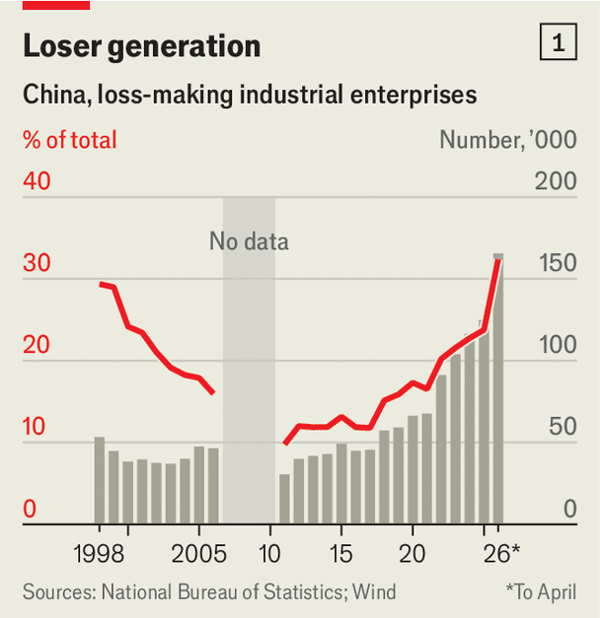
China's industrial policies have triggered a massive shift towards high-tech sectors, with a national semiconductor fund raising 687 billion yuan and government-backed funds growing 75% in 2025. However, this has led to intense competition and inefficiencies, causing the share of unprofitable industrial firms to spike to a record 32% in April from 10% in 2011.
Moreover, industrial policies have reduced China's total factor productivity by 1.2% and annual GDP by 2%, while corporate debt has doubled since 2019. Local government debt has also reached approximately 60 trillion yuan, or 43% of GDP, placing a heavy burden on regions trying to finance high-tech projects.
Meanwhile, high-tech investments remain concentrated in a few wealthy metropolises expected to receive 70% of artificial intelligence funding, leaving inland provinces and 300 million to 400 million low-skilled workers behind. Despite technological progress, weak domestic demand persists, as evidenced by retail sales growth hitting a record low of 0.2% in April.
Source: China is innovative. Its economy is a mess. Which matters more?
Subtitle: A question that will define the 21st century
Dateline: 6月 11, 2026 04:20 上午 | YICHUN AND YINGTAN