3月进口同比大幅升至27.8%,高于彭博中位预测13.9%,也高于1月与2月合计19.8%。中国海关副署指出,全球局势当前动荡不稳,地缘冲突升级、国际油价剧烈波动、全球需求与产量收缩,以及物流与供应链秩序受扰。能源冲击也使部分依赖石化产品的行业走出此前通缩背景。ING首席中国经济学家Lynn Song表示,短期内进口增长仍主要源于科技产品价格上涨而非能源,并指出截至年初至今,晶片进口量同比增长11%,而按价值计上升45%。
尽管出口趋缓,中国月度贸易顺差仍增加510亿美元。中国去年年度口径下的顺差已首次突破1兆美元。康奈尔大学经济学教授Eswar Prasad警告,全球经济吸收中国过剩产能的能力正在减弱,而伊朗战争正在压抑多国非食品与非能源的家庭消费。海关总署发言人补充,中国与中东地区的贸易在3月走弱,较1月和2月上升后转为下降,显示地区冲突对中国贸易的直接影响。
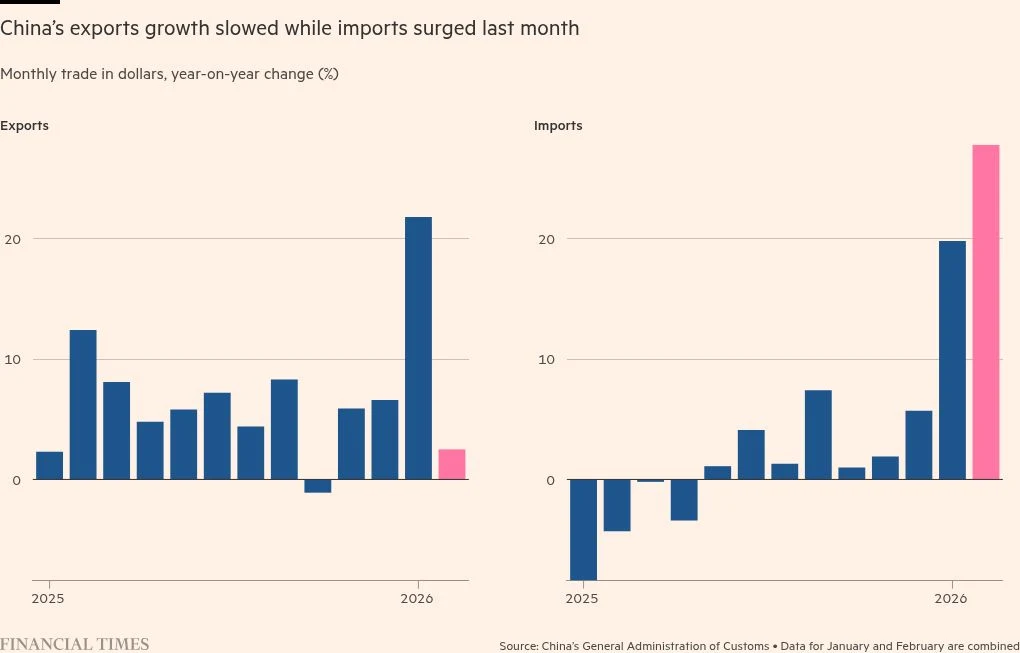
China’s trade weakened in March as geopolitical turmoil in the Middle East and higher fuel costs overshadowed growth. Exports rose 2.5% year-on-year in dollar terms, below Bloomberg’s median forecast of 8.6% and below the January–February combined rise of 21.8%, while Beijing prepared for resumed talks with the US ahead of a planned mid-May meeting between Donald Trump and Xi Jinping.
Imports surged to a monthly record of 27.8% year-on-year, above Bloomberg’s 13.9% median estimate and higher than January–February’s combined 19.8%. Customs cited broader global instability: intensifying conflicts, sharp oil-price swings, weaker global demand and production, and disrupted logistics and supply-chain order. The fuel shock also pushed some fuel-intensive sectors, especially petrochemicals, out of the previous deflationary environment. ING’s China chief economist Lynn Song said imports were still mostly driven by higher technology product prices, not energy yet, while chip imports were up 11% by volume and 45% by value year-to-date.
Even so, the monthly trade surplus still increased by $51 billion. China had already recorded a surplus above $1 trillion on an annual basis last year for the first time. Eswar Prasad of Cornell warned that the world economy’s capacity to absorb China’s excess production was thinning, while the Iran war was suppressing non-food, non-energy household consumption in many countries. A customs spokesperson said China’s trade with the Middle East declined in March after rising in the first two months, showing the regional conflict’s direct impact on trade.