英格兰空气质量自 2003–2023 年取得显著改善:PM2.5 年均浓度在各地区大约减半,并在多数地区已低于英国为 2040 年设定的目标水平;进步与工业及交通排放管制、疫情期间的排放下降、与清洁空气区扩大相关。道路安全同样大幅提升:英国 1994 年约有 13,000 名行人死亡或重伤,2024 年约为 6,000;0–15 岁群体从近 5,000 减至约 1,000。乘车人员的死亡与重伤也同步下降,部分归因于 20 mph 限速区与车辆安全技术升级。
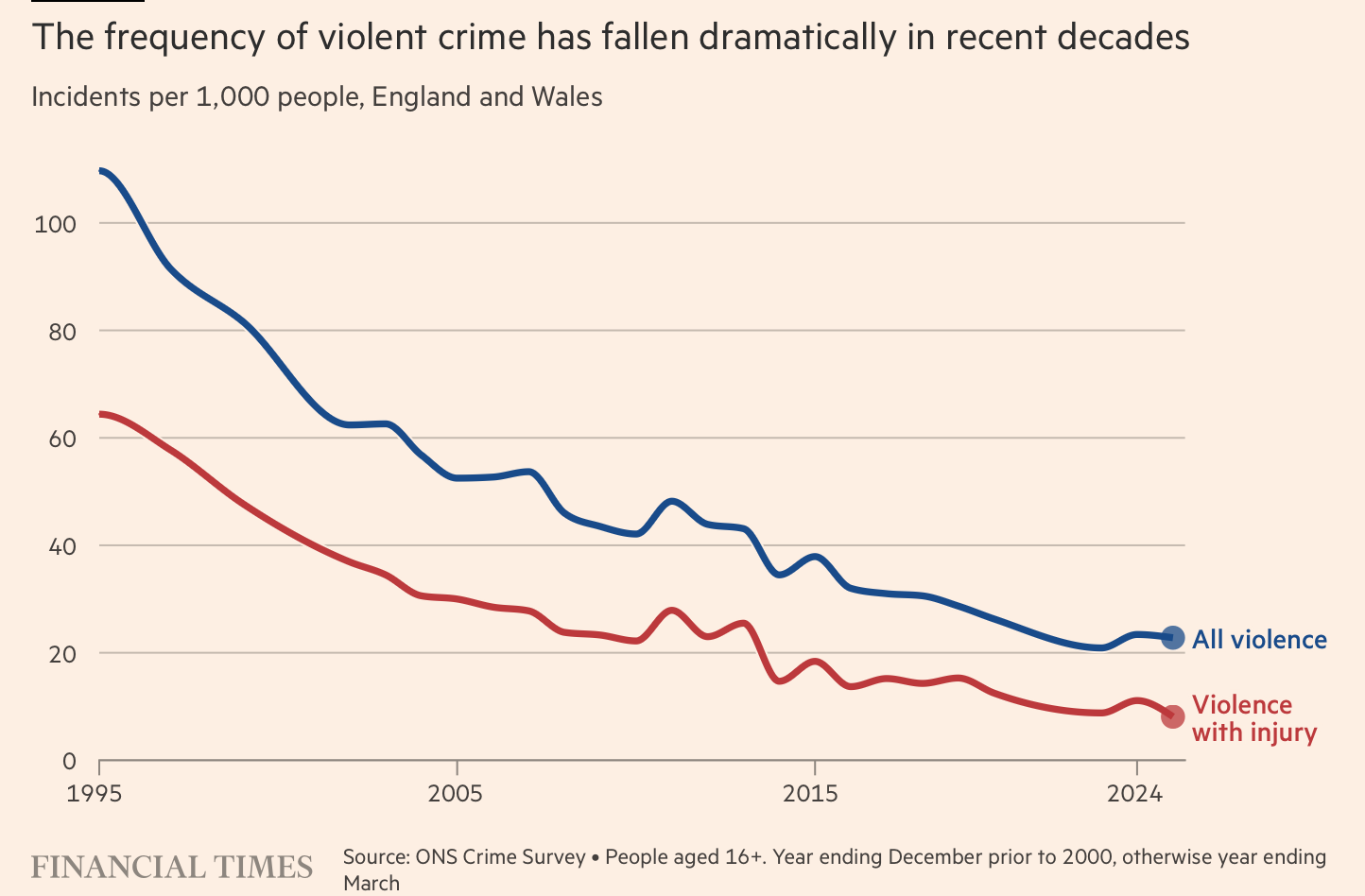
暴力犯罪趋势亦呈长期下行。英格兰与威尔士的暴力犯罪在 1990 年代达峰后显著下降,与多国类似;解释包括生活方式变化(年轻男性更多待在家中)、以及汽油去铅化对大脑发育影响等。文章指出,尽管社交媒体与智能手机时代引发对“失去某些珍贵事物”的情感,但从“某些方面变差”推论到“整体变差”与“无法变好”是一种认知滑坡,统计改善显示复杂社会问题并非不可逆。
1990 年代的怀旧情绪在年轻与未经历该年代的人群中蔓延,但社交媒体放大了这一表达。文章强调,广泛数据表明生活环境在空气、道路、治安等关键指标上均显著优于上世纪末,并提醒改善既可能来自政策与科技,也可能悄然发生。若人们怀念无智能手机的时代,只需放下设备、走到户外——空气更清洁,街道更安全。
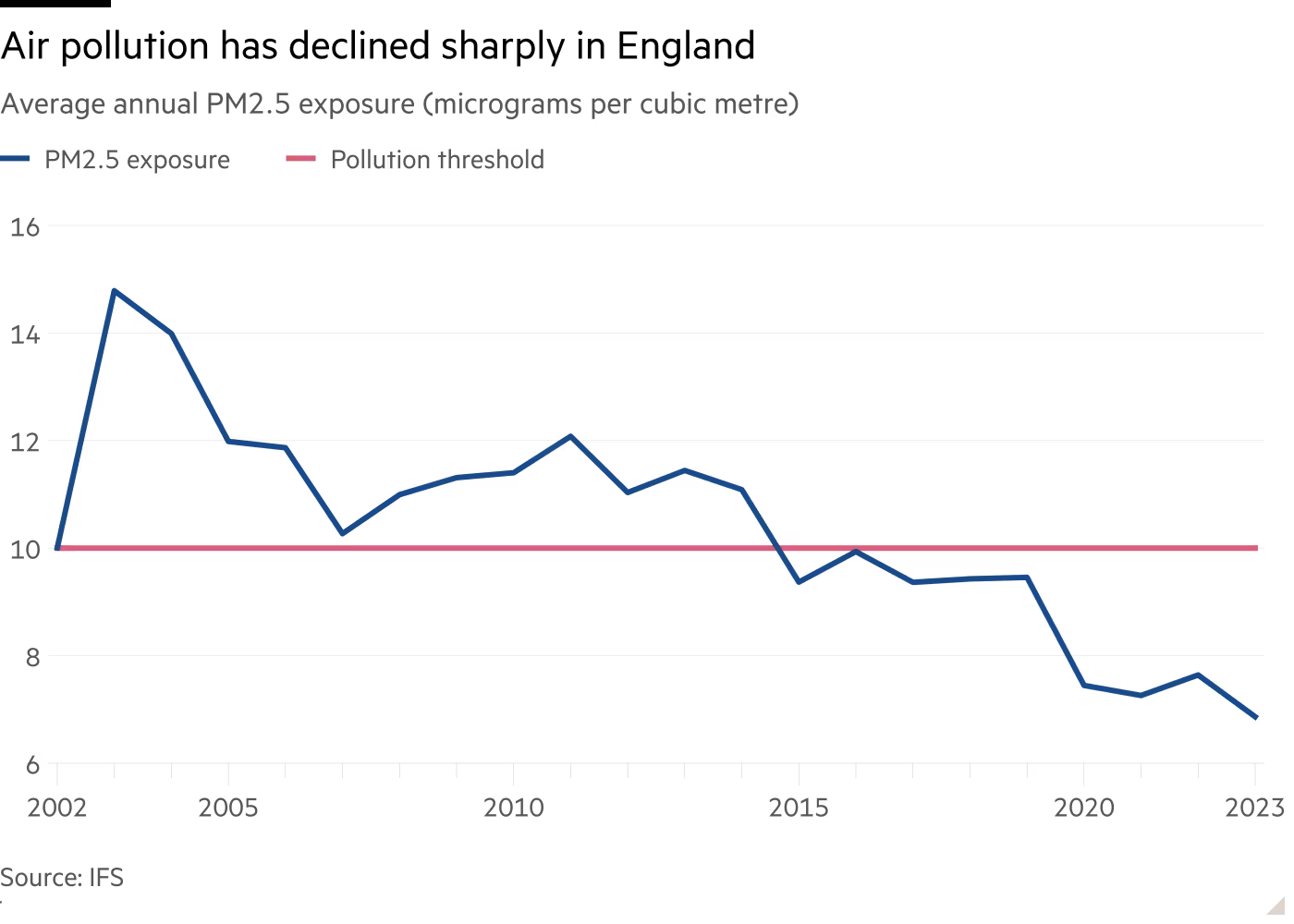
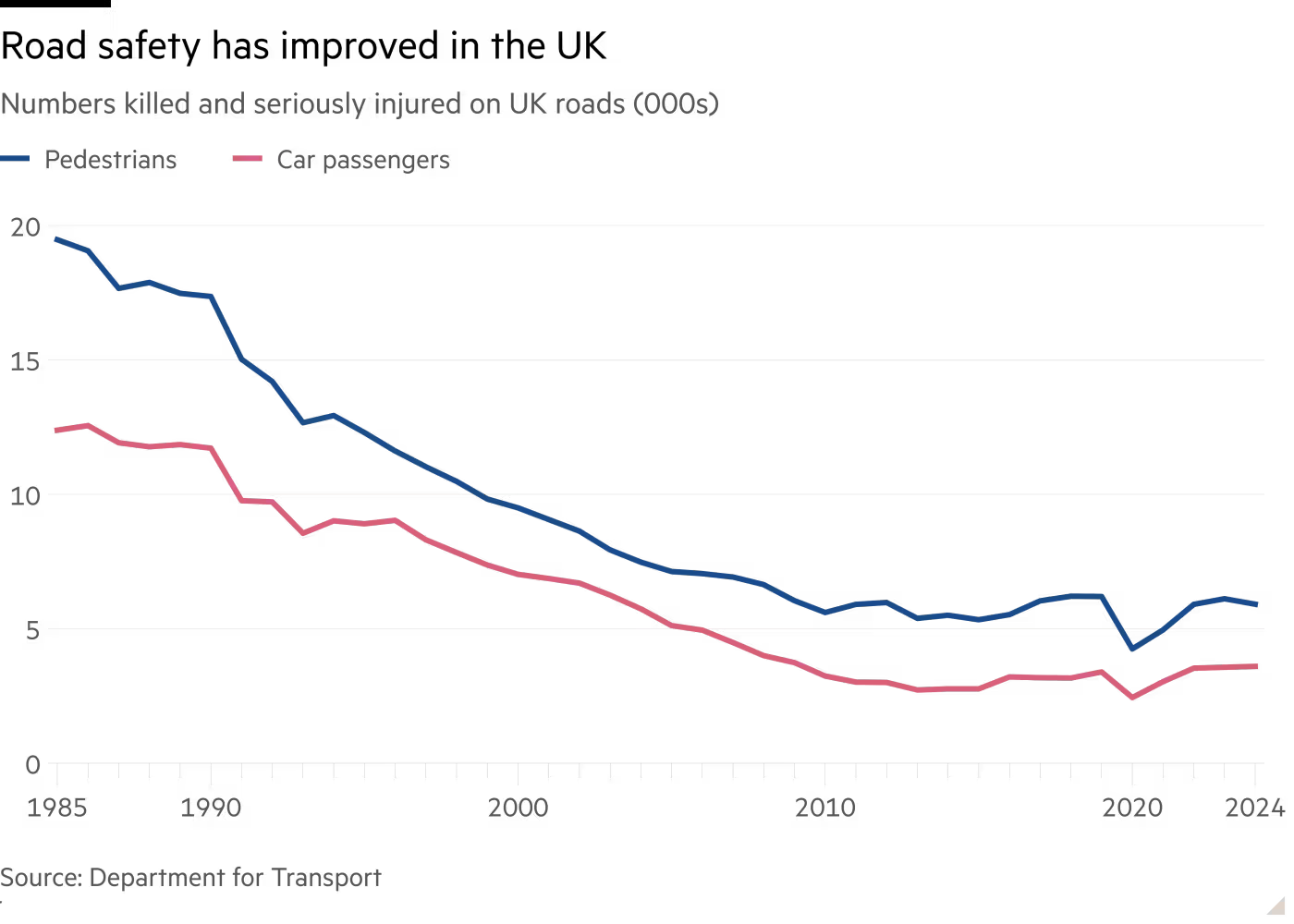
England’s air quality has improved dramatically: between 2003 and 2023, average PM2.5 levels in every region roughly halved, with most areas already below the government’s 2040 target. These gains stemmed from tighter industrial and transport emission limits, a pandemic-era drop that did not rebound, and expanded clean-air zones. Road safety shows similar long-term progress: pedestrian deaths and serious injuries in Great Britain fell from about 13,000 in 1994 to roughly 6,000 by 2024; for ages 0–15, the decline was from nearly 5,000 to about 1,000. Passenger fatalities and serious injuries also dropped, helped by 20-mph zones and improved vehicle safety.
Violent crime has likewise trended downward. In England and Wales, it peaked in the 1990s and has fallen substantially since, mirroring patterns elsewhere. Explanations include lifestyle changes—more young men staying home on video games—and the cognitive effects of removing lead from petrol. While nostalgic narratives suggest the digital era has lost something valuable, the article warns against extrapolating “some things are worse” into “everything is worse” or “nothing can improve,” when long-run data show the opposite for major social indicators.
Nostalgia for the 1990s, including among those who never lived through it, is amplified by social media. Yet evidence shows cleaner air, safer roads, and lower violence than in the late 20th century. Progress can arise from deliberate policy and technology or occur quietly without clear causation. For those longing for pre-smartphone life, the piece concludes, one can simply put the device down and go outside—where the air is cleaner and the streets safer than in the 1990s.