就业市场面临周期性与结构性的双重挑战,除了国内需求疲软之外,人工智慧的普及更是雪上加霜。中国的AI采用率位居亚洲之冠,预计未来将取代高达7000万个工作岗位,这使得就业不确定性大幅增加,官方甚至罕见地取消了未来五年的城镇就业目标。
随著整体经济成长低于预期且劳动力市场压力持续扩大,中国官方正面临加大经济刺激力道的压力。尽管目前失业保险基金支出已激增至疫情期间的水平,但多数分析师认为,政府现阶段将优先加快落实既有政策,除非情况进一步恶化才会推出额外援助。
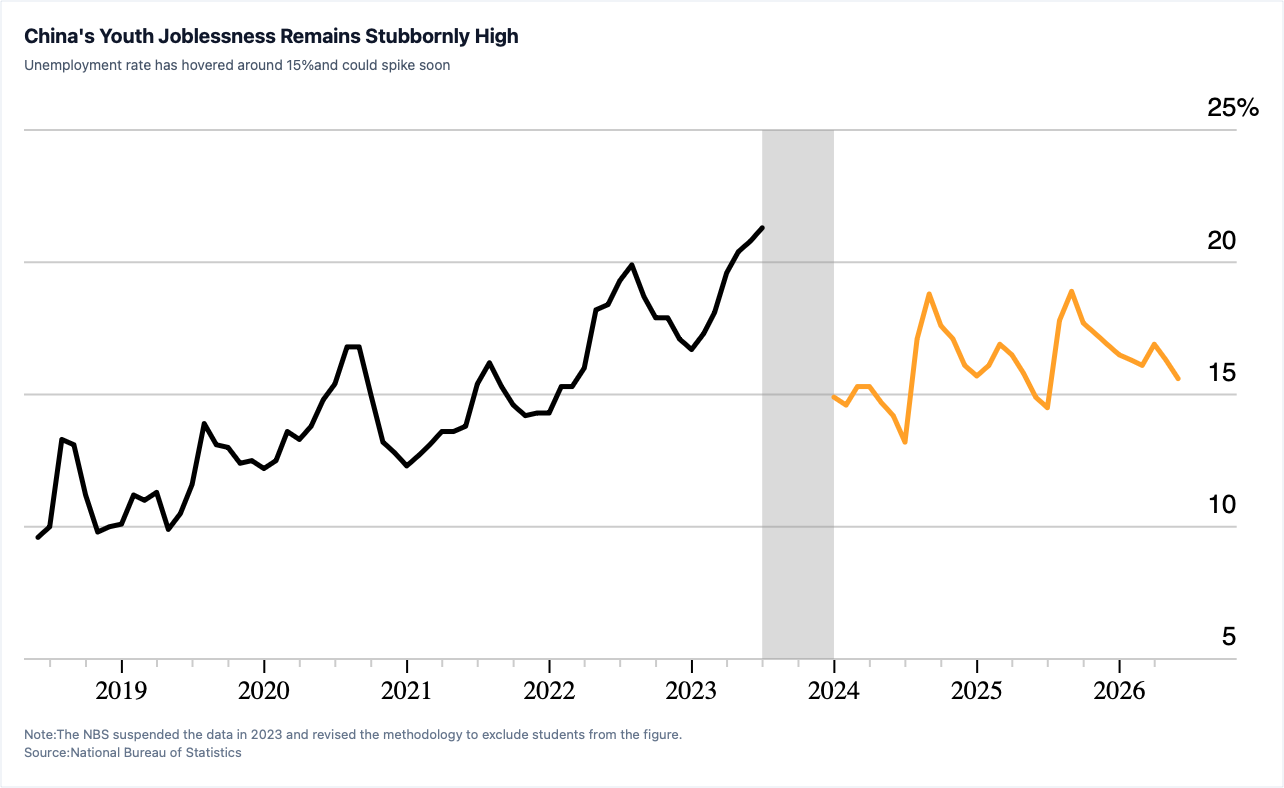
China's surveyed urban unemployment rate for individuals aged 16 to 24 reached 14.9% last month, marking the highest June figure since students were excluded from the data over two years ago. With a record 12.7 million graduates entering the workforce this year, economists predict youth unemployment could approach 20% in the coming months.
The labor market is grappling with both cyclical and structural challenges, exacerbated by weak domestic demand and the rapid integration of artificial intelligence. China's AI adoption rate, the highest in Asia, threatens to displace an estimated 70 million workers, prompting the government to drop its urban job creation targets for the next five years due to rising employment uncertainty. (Key numbers: 7000)
As economic growth falls below expectations and labor market pressures broaden, authorities face mounting pressure to implement stronger stimulus measures. Although unemployment insurance expenditures have already surged to pandemic-era levels, analysts expect the government to focus on executing existing policies first, reserving additional aid for if the economic situation deteriorates further.