特朗普将2025年4月2日称为“美国历史上最重要的日子”后,宣布“经济独立”,并以高关税激起全球报复风险:日本、加拿大、法国等盟友迅速表态将“快速”或“最大影响”反击,世界短暂进入全面贸易对抗边缘。美国有效关税率一度超过20%,回落后仍在10.5%,为自1940年代以来最高;且WTO估计非歧视性贸易比重由80%降至72%,但全球新工厂投资在发达经济体出现“超过四分之一”下滑。
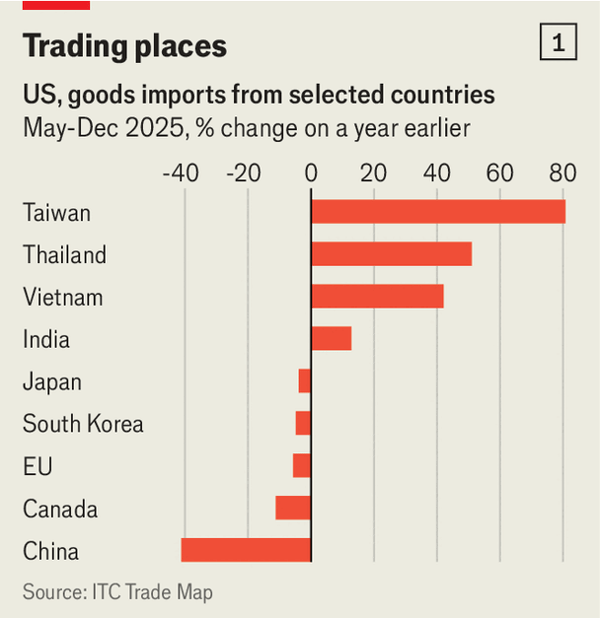
特朗普关税并未完全阻断贸易,只是显著重组供应链与流向。2025年全球贸易仍增长近5%,而美国对外关税墙因豁免与后撤变得多孔,约一半进口仍免税,商品逆差却扩大到超12,000亿美元(占GDP约4%)。与中国直接贸易几乎被>100%惩罚性关税挤压,5—12月对华进口同比下降逾40%,同时越南和泰国增幅逾40%,印度在高达50%关税下凭借智能手机豁免增长,AI相关进口尤其半导体和数据中心设备则大幅上升,台湾对美出口更是超80%。
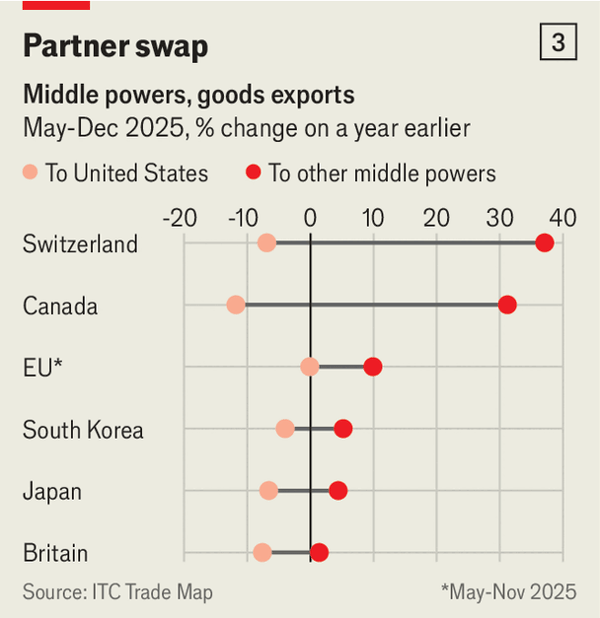
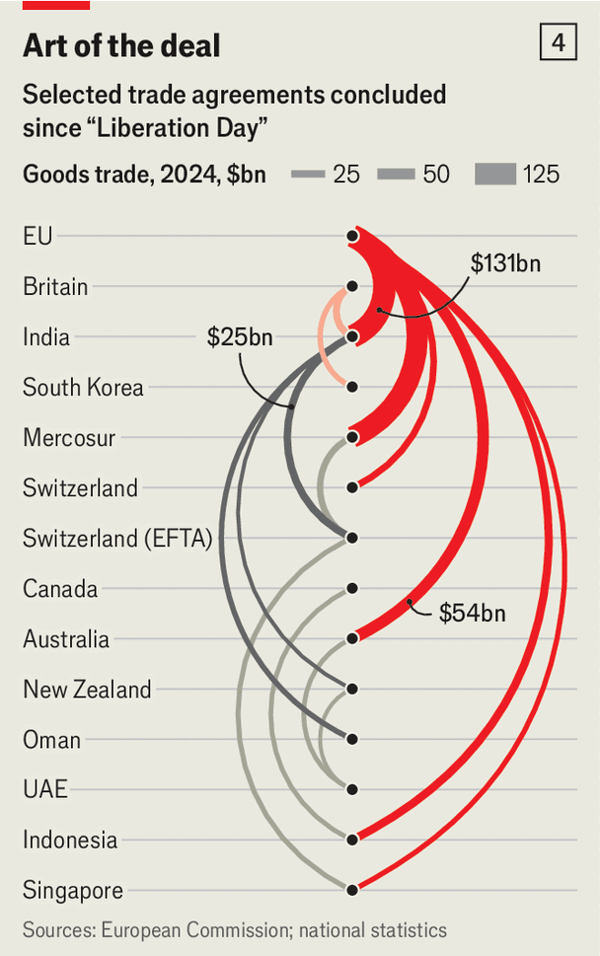
更深的变化是各国未复制美国做法而是重组贸易。受影响仅约11%的全球贸易被加税;英、日、韩等对美出口下降约6%的期间,它们对彼此的贸易却同比增长12%,并在一年内促成15项以上覆盖超4000亿美元贸易的新协定,欧洲与澳大利亚、印度、印尼、南方共同市场等达成协议,形成“愿意者联盟”。美国随后又对16个伙伴展开16项“结构性过剩产能”调查、另开60项强迫劳动相关调查,WTO喀麦隆部长会议未能突破共识困局,说明高摩擦风险仍在。
Trump declared April 2, 2025 as a pivotal moment, then moved toward sweeping tariffs that triggered a near-universal threat of retaliation, even as Japan, Canada and France promised quick, forceful responses. His administration’s effective tariff rate briefly topped 20% and settled at 10.5%—still the highest since the 1940s—while the WTO estimates non-discriminatory trade share slipping from 80% to 72%, and factory investment in rich economies fell by more than a quarter in 2025.
The trading system was disrupted more than it collapsed: global trade still rose by almost 5% in 2025, while about half of U.S. imports remained duty-free despite many headline levies. The goods deficit widened above $1.2 trillion (4% of GDP), imports from China were over 40% lower from May to December than a year earlier, but imports from Thailand and Vietnam were up more than 40%, India expanded exports despite up to 50% duties, and Taiwan’s semiconductor exports to the U.S. rose more than 80% as AI-linked goods were largely spared.
The broader effect was diversification rather than contraction, with tariff hikes touching only about 11% of global trade. Middle powers redirected around the shock, increasing trade among themselves by 12% over the same period even as exports to America fell 6%, and signing more than 15 deals covering over $400bn in trade across a year. Yet the outlook remains fragile: the U.S. launched 16 structural-overcapacity investigations and 60 forced-labor investigations, while WTO’s March 30 ministerial in Cameroon stalled, keeping the multilateral system under pressure.
Source: “Liberation Day” has reshaped trade—but not as Donald Trump hoped
Subtitle: In many ways, global commerce has strengthened
Dateline: 4月 02, 2026 12:24 上午