IMF在2月18日的年度评估认定人民币被低估约16%,这是自2011年估算低估23%以来最大的错位。推动这一趋势的是房地产下行后的疲弱复苏:生产者价格已连续40个月下跌,工资增长乏力、通胀偏低,使得按通胀调整后的人民币实际汇率在去年底比四年前便宜15%。
经常账户数据凸显了这种失衡:IMF模型认为像中国这样的人口结构应对应约占GDP 0.9%的温和顺差,而去年实际为3.7%。IMF称若采用之后更完整的数据,低估幅度可能接近19%而非16%,且自2021年以来中国海外资产收益停滞、与全球加息周期不一致,进一步强化了统计低报或资本配置低效的疑点。
廉价人民币支撑了出口,但也加剧贸易摩擦,例如欧盟将在7月对价值低于150欧元的小包裹征收3欧元税费。IMF主张紧急且显著的财政方案,把部分产业补贴转向养老金、医疗、扶贫和房地产稳定;若再叠加延迟退休,未来五年年均增速可提高0.5个百分点,并使贸易顺差收窄超过GDP的1%,从而缓解通缩并改善全球再平衡。
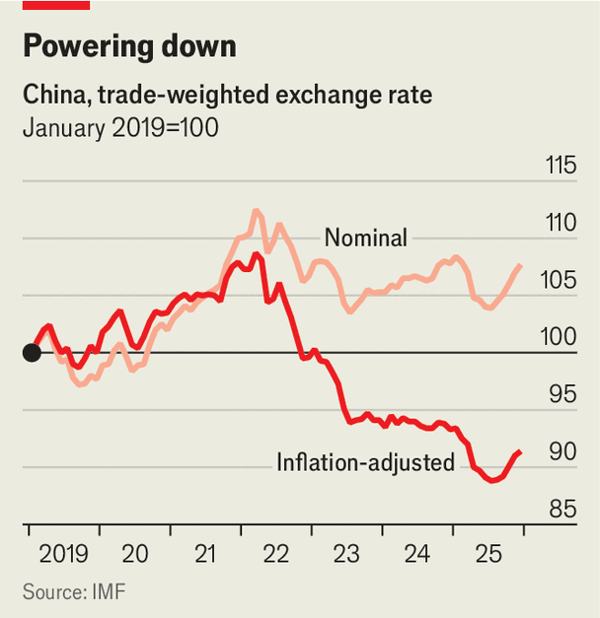
The IMF’s February 18 assessment estimates the yuan is undervalued by about 16%, the largest misalignment since a 23% undervaluation estimate in 2011. The driver is the weak post-property-bust recovery: producer prices have fallen for 40 straight months, wage growth is soft, and low inflation has left the inflation-adjusted real yuan 15% cheaper at last year-end than four years earlier.
Current-account figures show the imbalance clearly: IMF models suggest a middle-aged economy like China should run a modest surplus near 0.9% of GDP, but last year’s reported surplus was 3.7%. The fund says fuller data would likely lift the undervaluation estimate to about 19% rather than 16%, while stagnant returns on China’s foreign assets since 2021 despite global rate hikes add to concerns about underreported income or inefficient overseas allocation.
A cheap yuan has cushioned exports but intensified trade conflict, including the EU’s July levy of €3 on parcels valued below €150. The IMF calls for an urgent, significant fiscal package that shifts spending from industrial subsidies to pensions, health care, poverty relief, and property stabilization; combined with a delayed retirement age, it projects about 0.5 percentage points higher annual growth over five years and a trade-surplus reduction of more than 1% of GDP, easing deflation and improving global rebalancing.
Source: Why the IMF’s newest report finds that the yuan is undervalued
Subtitle: It says the currency is 16% cheaper than it should be
Dateline: 2月 19, 2026 04:41 上午