巴塞罗那的租房市场极度紧张:一套公寓上网后约1小时就能收到200个询问,通常一天内租出。全欧范围内也在恶化,欧盟平均房价在2015至2025年间上涨60%,许多地区房租已占平均工资的40%以上。
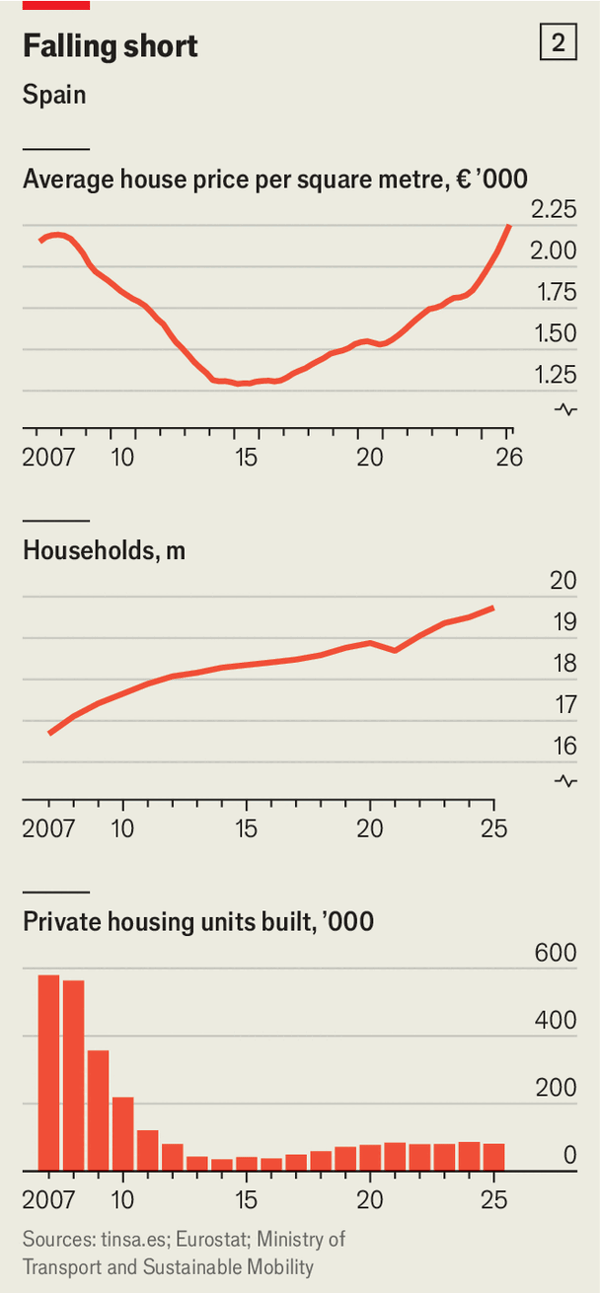
西班牙的短缺最严重:西班牙央行估计缺口达70万套;自2021年以来家庭数增加120万,主要因大规模移民,但西班牙每年建房不足9万套。德国每年只建其经济学家所需40万套新住房的一半左右,法国今年约建30万套,却仍比需求少22万套。
各国已转向租金管制,但效果有限且有副作用:荷兰扩大了私租管制,西班牙2023年也允许地方政府限制涨租。加泰罗尼亚在前两年让现有租户租金下降5%,但新租约数量下降10%;更有效的长期解法仍是增加供给,而西班牙的7亿欧元四年计划、1.3亿欧元欧盟资金以及葡萄牙将建房增值税从23%降至6%的措施,都指向这一方向。
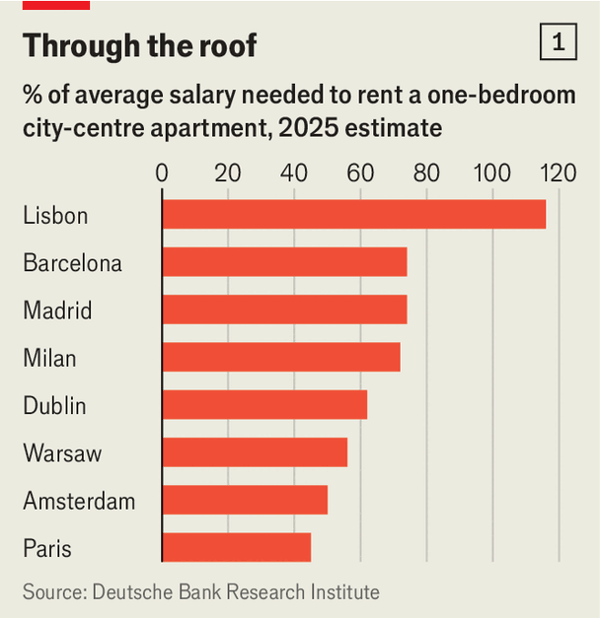
Barcelona’s rental market is extremely tight: a flat posted online gets about 200 enquiries within an hour and is usually let within a day. Across Europe the problem is worsening, with average EU house prices up 60% between 2015 and 2025 and rents in many places taking more than 40% of average salaries.
Spain has the sharpest shortage: the Bank of Spain estimates a gap of 700,000 homes; since 2021 the number of households has risen by 1.2 million, mainly because of heavy immigration, yet Spain builds fewer than 90,000 homes a year. Germany is building only about half of the 400,000 new units economists say it needs annually, and France is set to build around 300,000 homes this year, still 220,000 short of need.
Countries have turned to rent controls, but the results are mixed and often distort supply: the Netherlands expanded them for private rentals, and Spain in 2023 allowed regional and local governments to cap rent increases. In Catalonia, rents for existing tenants fell 5% over the first two years, but new rental contracts fell 10%, underscoring that the longer-term answer remains more construction, backed by Spain’s €7bn four-year plan, €1.3bn in EU funds, and Portugal’s cut in construction VAT from 23% to 6%.
Source: To understand European voters’ anger, look at their rent bills
Subtitle: Rent-control policies are making Europe’s housing shortage worse
Dateline: 5月 14, 2026 11:25 上午 | Amsterdam and Barcelona