随着各国央行实现储备多元化,外国政府目前仅持有美国国债的13%,低于2008年38%的峰值,创下30年来的最低份额。美元在全球外汇储备中的份额已从2001年的71%下滑至去年的57%,而对储备武器化的担忧则从2023年的14%激增至去年的49%,这加剧了这一趋势。
由于美国联邦债务在过去十年中增长了17万亿美元,而全球储备增长仅为2万亿美元,巨大的供应增长加剧了这一降幅。尽管在去年增加了5,450亿美元后,外国商业投资者目前持有超过5万亿美元的资产(占市场的17%),但其私营属性使他们对收益率更敏感且难以预测。
事实上,私营机构正在削减其持有量;例如瑞典养老基金Alecta自2025年初开始分批出售国债,而日本保险公司自2020年以来已净卖出20万亿日元。这种从非商业性央行向注重回报的私营投资者的转变表明,未来对美国债务的需求将需要更高的收益率。
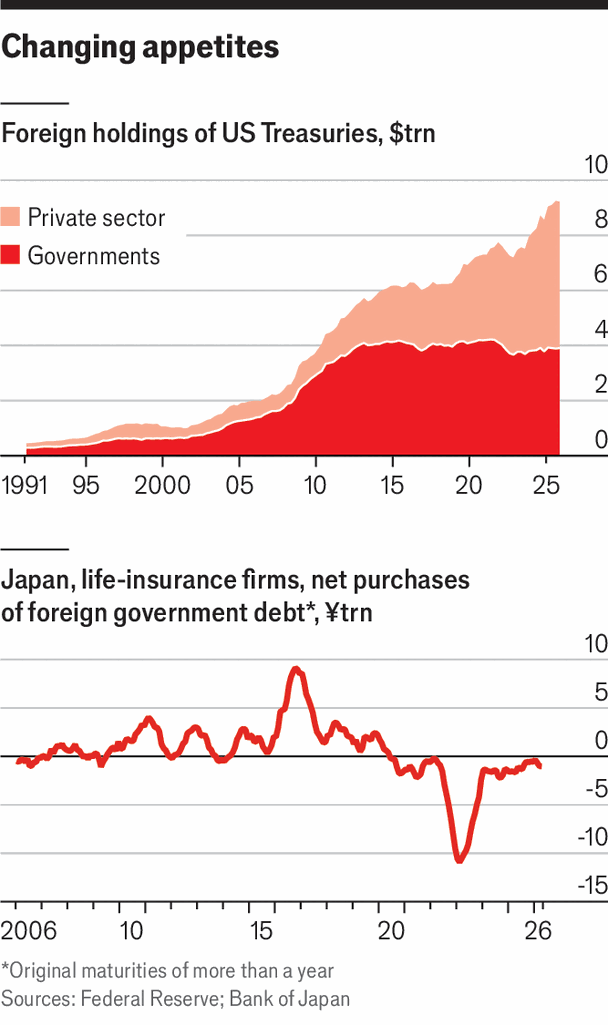
Foreign governments now hold just 13% of US Treasuries, down from a peak of 38% in 2008, representing the lowest share in 30 years as central banks diversify their reserves. The dollar's share of global foreign-exchange reserves has slipped from 71% in 2001 to 57% last year, exacerbated by weaponisation concerns that rose from 14% in 2023 to 49% last year.
This decline is compounded by massive supply growth, as US federal debt grew by $17 trillion over the last decade, compared to just $2 trillion in global reserve expansion. Although foreign commercial investors now hold over $5 trillion (17% of the market) after adding $545 billion last year, their private status makes them more yield-sensitive and unpredictable.
Indeed, private institutions are cutting holdings; for example, Swedish pension fund Alecta began selling its Treasuries in early 2025, and Japanese insurers have sold a net 20 trillion yen since 2020. This shift from non-commercial central banks to return-focused private investors suggests that future demand for US debt will require higher yields.
Source: Foreign demand for American government debt is becoming much less reliable
Subtitle: A once-vital source of funding for the Treasury market is drying up
Dateline: June 4th 2026