预测市场的匿名性与监管漏洞使其成为境内外不良行为者的潜在工具。Polymarket的离岸平台不要求用户实名认证,美国用户仍可透过VPN绕过禁令参与交易,且不禁止多帐户操作。在罗马尼亚总统选举中,一个名为Gunnar242的帐户花费超过一百万美元持续买入亲俄候选人西米翁的合约,该帐户停止交易后,两个疑似由同一实体控制的新帐户立即接手,总共亏损约三百六十万美元。罗马尼亚政府正在调查是否有外国势力试图透过Polymarket影响公众舆论,这也引发了对预测市场可能被武器化用于选举干预的严重担忧。
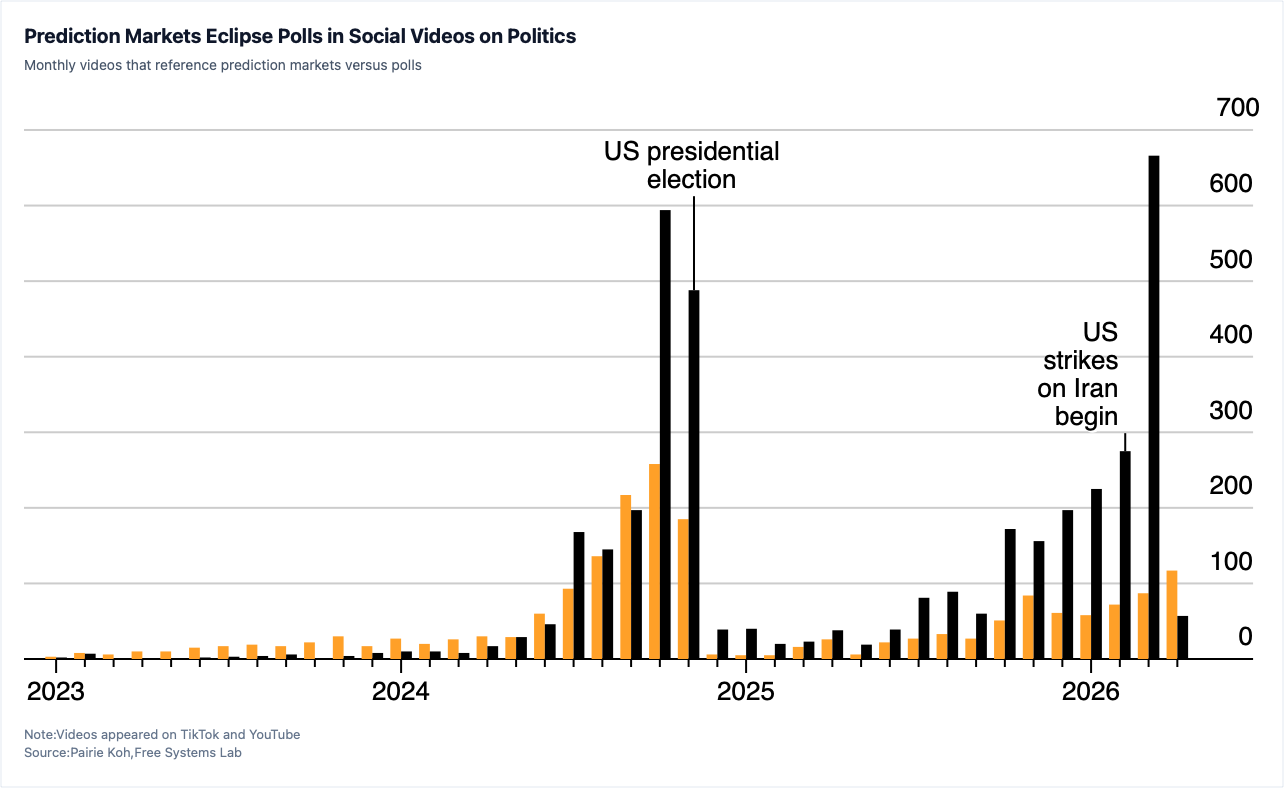
随著美国中期选举临近,预测市场带来的风险日益加剧。史丹佛大学研究发现,社群媒体上引用预测市场的政治影片数量已超过引用民调的四倍以上。然而媒体经常引用流动性极低的市场数据——研究显示过去三十天内被媒体引用的选举市场中,超过三分之一交易量不足以确保数据可靠。与此同时,特朗普政府大幅裁减了负责选举安全的联邦机构人员,商品期货交易委员会(CFTC)对预测市场的态度也从严格监管转向支持推广。专家警告,若缺乏更强的监管护栏和媒体素养,预测市场恐将成为散播虚假资讯、侵蚀公众对民主信心的新型武器。(关键数字:2026, 30)
Prediction markets such as Polymarket and Kalshi have surged into mainstream political discourse following the 2024 US presidential election, yet a closer examination reveals deep vulnerabilities to manipulation. In the California governor's race, a single anonymous wallet spent $44,000 to spike candidate Matt Mahan's odds from roughly 13% to 96% on Polymarket, generating a wave of media coverage that failed to note the move was driven by one untraceable account. The incident illustrates how thinly traded political markets can be gamed at minimal cost to manufacture false narratives, with even brief price distortions sufficient to trigger news stories and social media amplification that create real political momentum.
The platforms' anonymity and weak regulatory oversight have opened the door to potential abuse by both domestic political operatives and foreign actors. Polymarket's offshore platform requires no identity verification, permits multiple accounts, and processes transactions through stablecoins, making it nearly impossible to trace bad actors. In Romania's 2025 presidential election, blockchain analysis revealed that interconnected anonymous accounts spent millions propping up a Kremlin-backed candidate's odds, with new wallets appearing as soon as old ones were exposed. Similar patterns have emerged in Colombia and the Los Angeles mayoral race, where prediction market data was weaponized to spread stolen-election narratives — including by influencers paid by the platforms themselves. (Key numbers: 242)
As the 2026 US midterms approach, experts and former officials warn that prediction markets pose a growing threat to democratic integrity unless significant reforms are enacted. Stanford researchers found that more than a third of election markets cited by major media outlets in a recent 30-day period were too illiquid to be reported with confidence, yet broadcasters like CNN routinely present these odds as authoritative data. Meanwhile, the Trump administration has gutted enforcement capacity at the CFTC and related agencies, and the industry's most prominent players have secured political protection through advisory roles for Trump Jr. and investments from Republican-aligned firms. Scholars and election security professionals urge media companies to adopt minimum liquidity standards before citing prediction markets, warning that without stronger guardrails, these platforms risk becoming powerful vectors for disinformation rather than the 'truth machines' their founders promise.