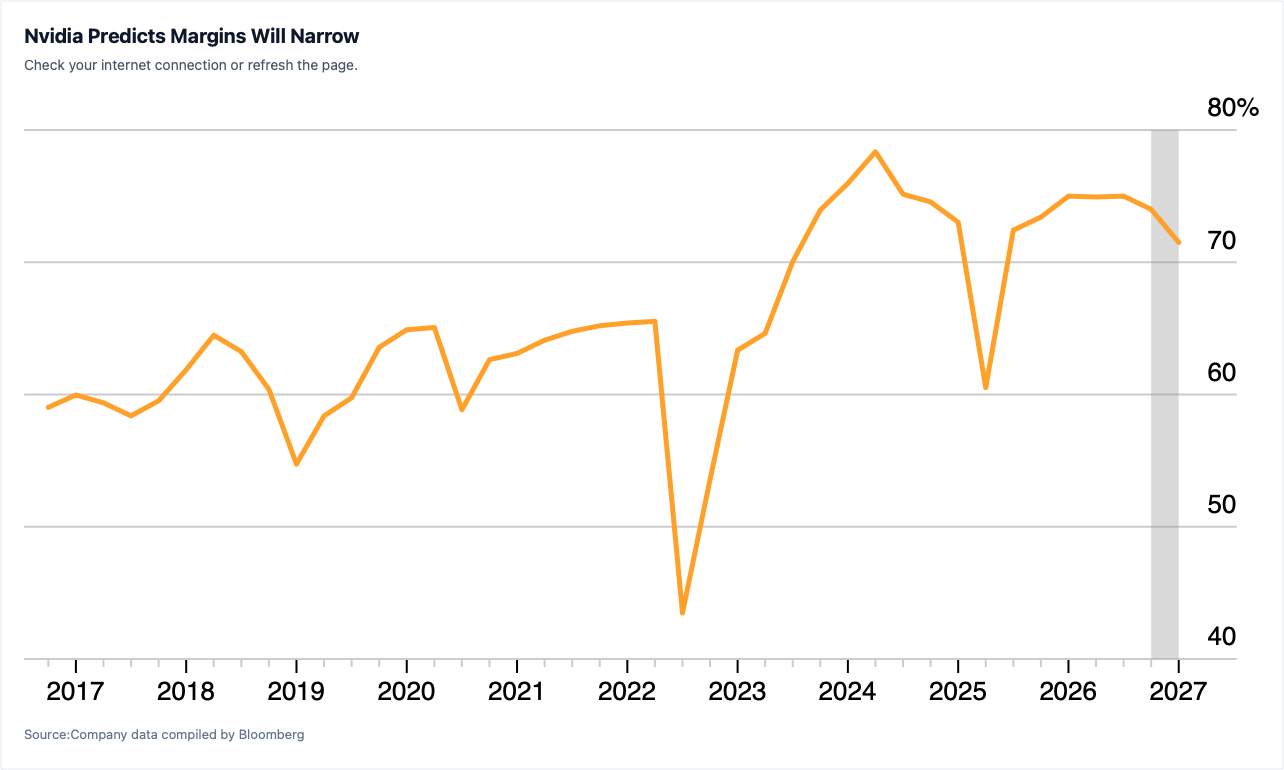
尽管整体市场需求持续强劲,辉达也警告未来几个月的毛利率将因记忆体晶片成本激增而暂时收窄,预计将在第四财季触底至71%到72%之间。为了应对成本上升,辉达已通知客户调涨产品价格,财务长Colette Kress预估2028财年的毛利率将稳定回升至72%至73%。此外,其关键的资料中心部门表现依然亮眼,第二季度营收高达890亿美元,主要动能来自亚马逊与Google等大型云端服务供应商。
在应对未来挑战方面,辉达正积极扩大客户群,以降低对少数科技巨头的高度依赖,并透过长期的采购协议来确保供应链稳定。然而,市场竞争正变得日益激烈,除了客户开始积极自主研发晶片(例如OpenAI声称其新处理器在测试中超越辉达)之外,公司还必须应对美国对中国市场的销售限制。尽管面临这些变数,辉达仍强调其广泛的投资布局将加速AI技术的普及,从而为其产品创造更多潜在需求。
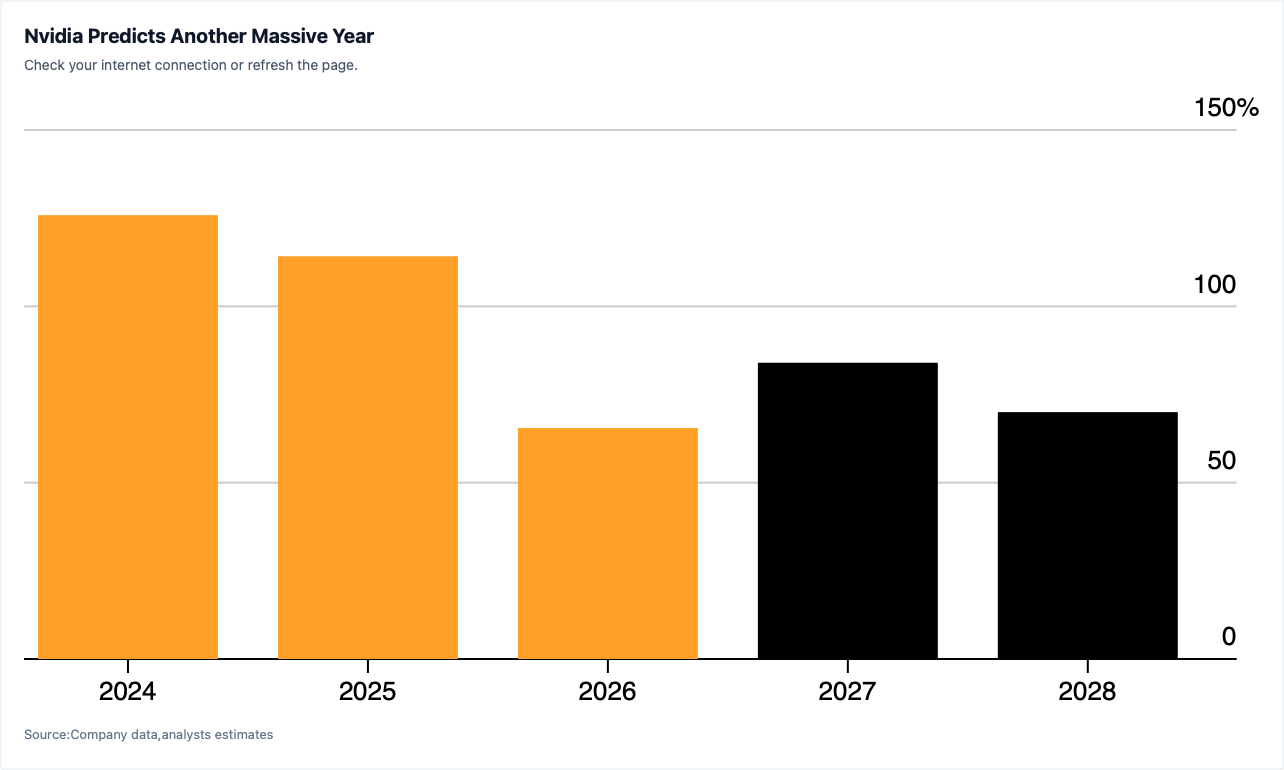
Nvidia has released a bullish sales outlook for fiscal 2028, projecting revenue growth of approximately 70%, which significantly exceeds analysts' expectations of 45%. CEO Jensen Huang pointed out that the build-out of artificial intelligence infrastructure is moving at full steam, and the newly mass-produced Vera Rubin chip will meet the market's massively growing demand. This strong forecast effectively alleviated investor concerns about a potential bubble in the AI economy, driving Nvidia's shares up more than 4% in late trading.
Despite sustained robust market demand, Nvidia warned that its gross margins will temporarily narrow in the coming months due to surging memory chip costs, expecting them to bottom out between 71% and 72% in the fiscal fourth quarter. To counter rising costs, Nvidia has notified customers of product price increases, and CFO Colette Kress estimates that margins will steadily recover to 72% to 73% in fiscal 2028. Additionally, its crucial data center division remains stellar, achieving $89 billion in second-quarter revenue, primarily fueled by major cloud providers like Amazon and Google.
Regarding future challenges, Nvidia is actively expanding its customer base to reduce heavy reliance on a few tech giants and is securing its supply chain through long-term purchase agreements. However, market competition is becoming increasingly fierce, with customers proactively developing in-house chips—such as OpenAI claiming its new processor outperformed Nvidia's in tests—and the company also having to navigate US sales restrictions in the Chinese market. Despite these variables, Nvidia emphasizes that its extensive strategic investments will accelerate the adoption of AI technology, thereby creating even more potential demand for its products.