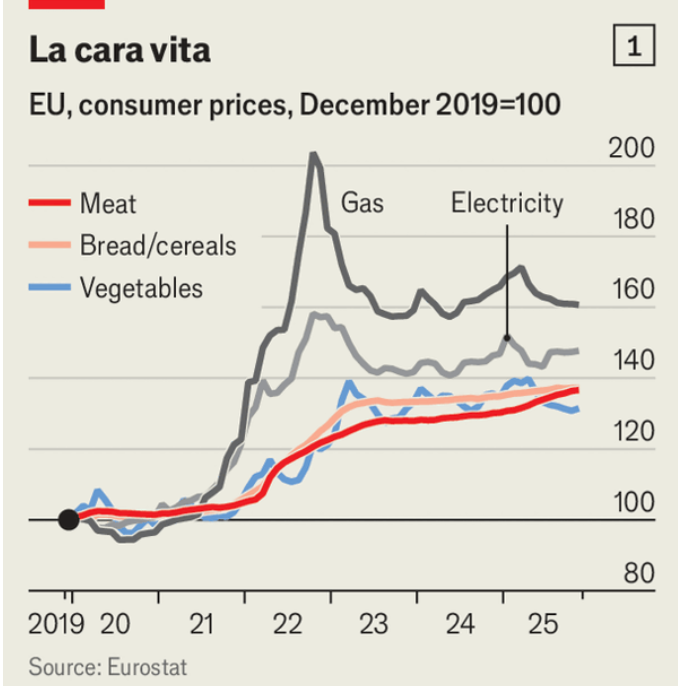
富裕世界流行“负担不起危机”的说法,在欧盟内部也很强烈:5月的欧盟晴雨表受访者把应对通胀列为欧洲议会最高优先事项,高于国防、贫困和就业。欧元区通胀在2022年10月见顶10.6%,其中能源单项贡献3.8个百分点,此后回落到11月的2.1%,但能源与食品价格仍显著高于战前水平。
更广义的购买力正在修复:按统一消费者价格指数折算的欧元区工资从2021年年中到2022年末约下滑4%,但到2025年第三季度已回到乌克兰冲突前水平,而自2021年上半年以来实际最低工资在波兰约上升30%、在德国约上升11%。住房在预算占比上也相对稳定:租金目前约以3%的年率上涨(超过2010年代平均速度的两倍),但德国、法国、意大利的住户收入中位数仍将约15%–20%用于住房,而且将可支配收入40%以上用于住宿的家庭占比自2021年以来反而有所下降。
更紧的约束是高度监管市场中的“可获得性”:在柏林、巴黎等地,受控租金可能远低于市场价,因此一套房源可吸引数百份申请,短租扩张与马德里等地快速人口流入进一步加剧供给紧张。同样的配给也出现在服务领域:57%的美国患者称能在一个月内见到专科医生,而法国为35%,同时熟练工种与护理人员短缺在大规模退休潮下可能继续恶化。
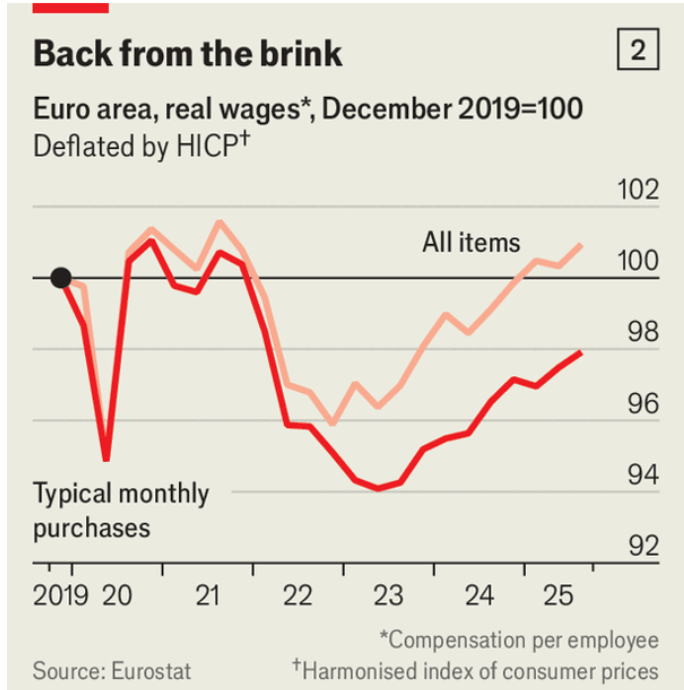
Wages, adjusted for HICP, saw a 4% decline from mid-2021 to the end of 2022 but began to recover by Q3 2025. In real terms, Poland experienced a significant 30% increase in the minimum wage since H1 2021, while Germany saw an 11% rise.
Current rents are rising at an annual rate of 3%, exceeding rates from the 2010s. In Germany, France, and Italy, median housing costs account for 15-20% of income, showing stability over the last decade.
Health-wise, 57% of Americans can see a specialist within a month, compared to just 35% in France. The main issue is the regulated markets, which may lead to rationing.
Source: Forget affordability. Europe has an availability crisis
Subtitle: Tight regulation is largely to blame
Dateline: 12月 30, 2025 08:50 上午