联合国上月更新统计口径,把城市蔓延纳入边界后,东京“全球最大城市”称号虽延续了七十年,却比真实情况多算了15年。按新口径,雅加达达4200万人、达卡3700万人、东京3300万人,德里与上海各约3000万人,构成前五。
最新数据凸显城市化加速:全球45%人口居住在至少5万人的城市,另有36%居住在至少5000人的城镇。增长主要集中在中等收入的亚洲:全球前十只有1个不在亚洲,33个“巨型城市”(超1000万人)中富国仅占7个,且到2050年雅加达与达卡合计还将新增2500万人,几乎相当于澳大利亚人口。
这些人口流动带来增收与教育机会,但失序治理正把收益转化为拥堵与贫困陷阱。宜居度与交通数据量化了代价:EIU在173城中将雅加达排第132、德里第145、达卡倒数第3;拥堵排名雅加达第12、达卡第3、德里第7,雅加达堵车每年约损失60亿美元,而在治理碎片化下达卡市长称其无权处理80%的城市问题、加尔各答都会区多达423个治理实体;对比之下,大东京地区超过90%居民步行20分钟内可达车站。
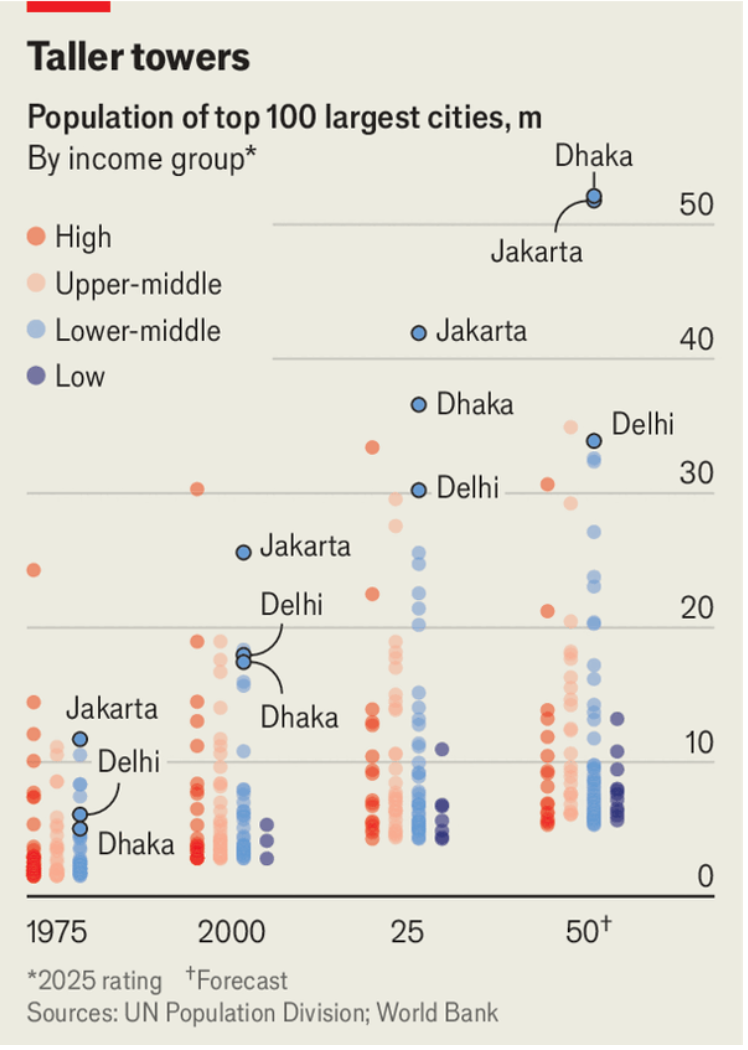
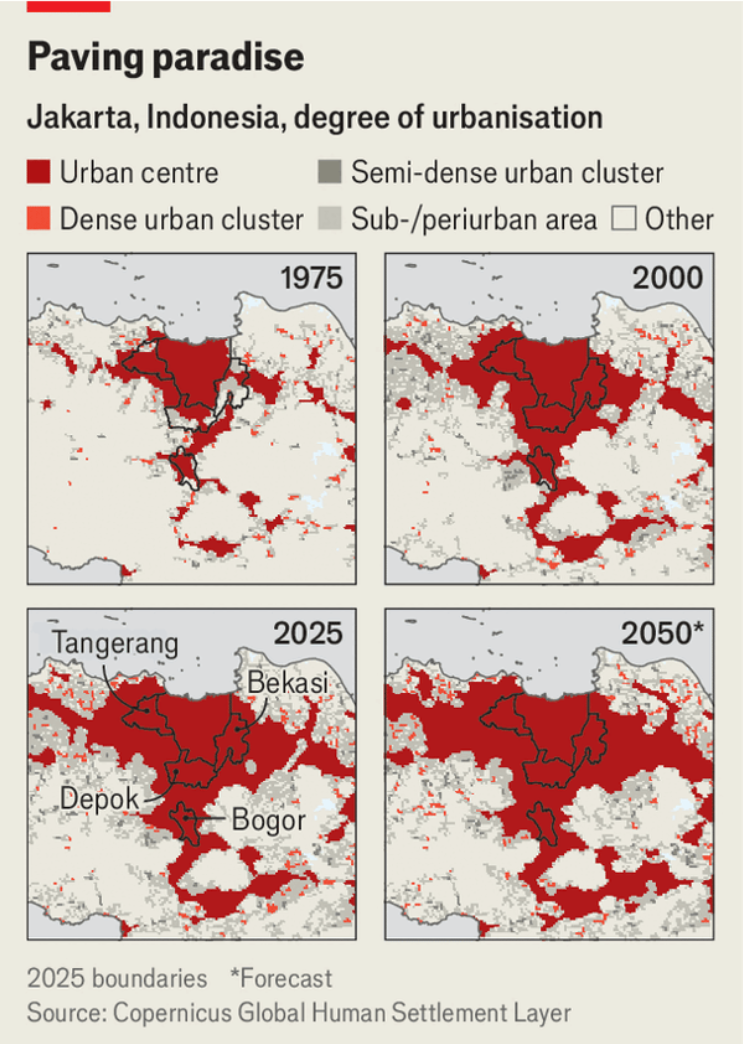
The UN’s figures released last month revise city boundaries to reflect sprawl, meaning Tokyo’s reign as the world’s biggest city—often assumed for seven decades—was 15 years too long. By the new measure, Jakarta has 42m people, Dhaka 37m and Tokyo 33m, with Delhi and Shanghai at around 30m each to complete the top five.
The data underline rapid urbanisation: 45% of humanity lives in cities of at least 50,000 people, and another 36% lives in towns of at least 5,000. Growth is concentrated in middle-income Asia: only 1 of the world’s 10 biggest cities is outside the continent, only 7 of 33 “megacities” (over 10m) are in rich countries, and by 2050 Jakarta and Dhaka together add another 25m—nearly Australia’s population.
Migration can raise incomes and education, but weak governance risks turning gains into squalor, pollution and gridlock that traps workers in dysfunction. The costs show up in rankings and totals: EIU places Jakarta 132nd of 173 cities, Delhi 145th and Dhaka third from last; congestion ranks Jakarta 12th, Dhaka 3rd and Delhi 7th, Jakarta estimates traffic drains $6bn a year, Dhaka’s mayor says 80% of city problems sit beyond his authority, Kolkata has 423 governing entities, while over 90% of greater Tokyo residents live within a 20-minute walk of a station.
Source: Why many Asian megacities are miserable places
Subtitle: And why Shanghai and Tokyo are not
Dateline: 12月 11, 2025 06:42 上午 | DHAKA, JAKARTA and TOKYO