在乌克兰战争之后,印度炼油商曾长期受益于地缘政治套利:当世界多数国家减少从俄罗斯的石油采购时,信实工业、Nayara Energy 及印度国家控股的印度石油公司(IOC)、印度国家石油公司(BPCL)和印度斯坦石油(HPCL)都以大幅折扣价采购俄罗斯原油。随着霍尔木兹海峡如今几乎完全封锁,原先的优势变成了负担,因为一条关键的海湾原油通道被切断,印度对海湾原油的依赖从大约每天250万桶(约占进口量的一半,主要来自伊拉克、沙特和阿联酋)降至约一半。
这一下滑让数百万桶留在海湾一侧,只有少量悬挂印度旗的液化石油气运输船在伊朗控制下通过。印度正重新转向俄罗斯,自战争爆发以来又多购入约3000万桶,约等于缺失海湾供应的两个半星期;俄罗斯原油占比已从高峰期约44%降至2月的25%,在特朗普对“已在海上”的货船豁免后再度上升。即便如此,Kpler数据显示印度仍未替代超过三分之二的海湾进口,仍有约70万桶/日缺口,其余供应缺口仍由商业储备补足。
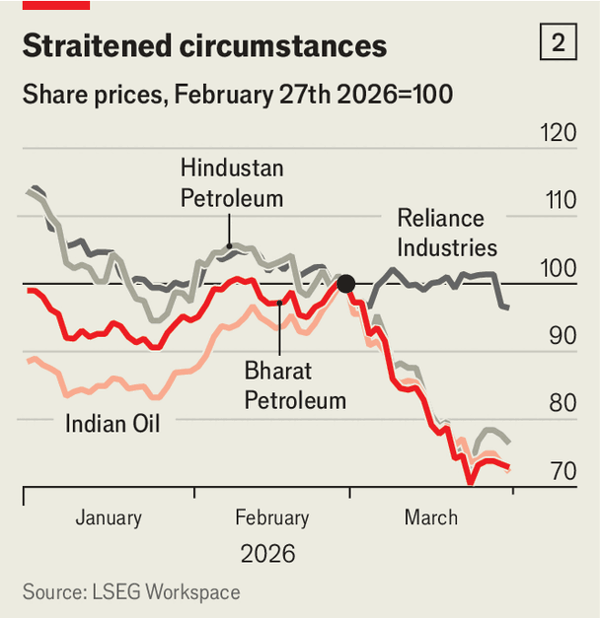
利润正在被压缩:除信实外,多数炼厂股价下跌,ICICI证券估计,只要中断持续一个月,行业盈利年化水平就可能下降12%至15%。印度也在失去价格优势,随着中国、日本和韩国等买家争购俄罗斯油、并且国内油价仍被政府压着,印度不得不向俄油支付高于布伦特10至15美元的溢价;尽管战前柴油裂解差约为10美元/桶,已升至约60美元,印度仍无法出口腾挪,3月27日又对柴油和航空煤油出口加征税并下调国内燃油税。
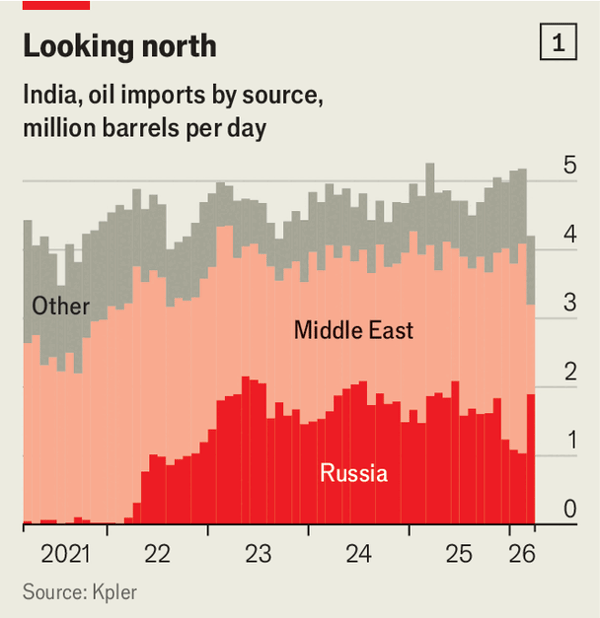
For years, Indian refiners benefited from geopolitical arbitrage: while much of the world cut Russian oil purchases after the Ukraine invasion, Reliance Industries, Nayara Energy, and state firms IOC, BPCL, and HPCL bought Russian crude at deep discounts. With the Strait of Hormuz now mostly shut, that advantage became a drag as a key Gulf supply channel closed, and India’s reliance on Gulf crude fell from about 2.5 million barrels a day (roughly half its imports, mainly from Iraq, Saudi Arabia, and the UAE) to about half that level.
The decline stranded millions of barrels on the Gulf side, with only a few Indian-flagged LPG carriers allowed through by Iran. India has shifted back to Russia, buying about 30 million additional barrels since the war began, equal to about two and a half weeks of missing Gulf supply; Russia’s share had fallen from around 44% at peak to 25% by February and has risen again after Trump’s waiver for cargoes already at sea. Even so, Kpler still shows India replacing less than two-thirds of Gulf imports, leaving a shortfall of about 700,000 barrels per day, which is partly filled from commercial reserves.
Margins are squeezing: except for Reliance, most refiners’ shares have fallen, and ICICI Securities estimates earnings could decline at an annualised rate of 12% to 15% for each month of disruption. India has also lost its price edge, paying a $10–15 premium to Brent for Russian barrels as China, Japan, and South Korea compete for supply, while domestic fuel prices remain controlled by the government; despite diesel cracks rising from about $10 pre-war to around $60, India still cannot use exports to ease pressure, adding extra export duty on diesel and jet fuel on March 27 and cutting taxes on domestic fuel.
Source: India’s oil refiners are feeling the squeeze from the Gulf war
Subtitle: The conflict, and the government, are depleting margins
Dateline: 4月 01, 2026 03:22 上午 | MUMBAI