这篇文章将 Dario Amodei、Demis Hassabis、Elon Musk、Mark Zuckerberg 和 Sam Altman 定义为当今最知名的五位 AI 人物,其中 ChatGPT 的周活跃用户量超过 9 亿,且其技术已经进入美国军事体系。围绕 AI 的预期分化明显:部分经济学家押注其“超级增长”效应,部分担忧数百万人失业,还有观点认为其有可能带来生存性风险,焦虑强度在近代可与原子裂变后阶段相提并论。
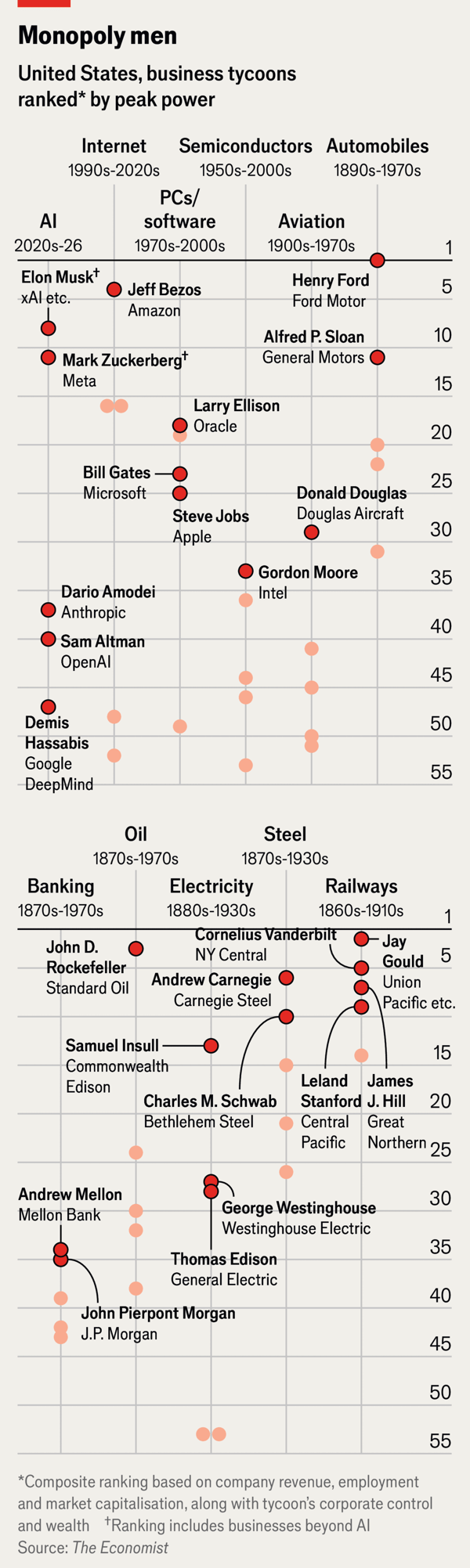
作者回顾了过去 150 年美国 11 次关键技术浪潮,对每一波中“控制、分发与普及”该技术的五位人物进行横向比较,并以企业收入、就业、市场价值、控制权和个人财富进行标准化衡量。该框架下,Rockefeller 峰值财富约占当时美国 GDP 的 1.5%,但在综合实力上 Henry Ford 仍居首:其鼎盛期资产高于美国 GDP 的 1%,1925 年雇员约占美国家口的 0.15%,1917 年 Model T 在道路汽车中占比超过 40%,并通过 5 美元日薪把工厂员工拉入消费端。
文中也指出,当前 AI 五人组的权力分布并不都接近“第一梯队”:Jeff Bezos 以约 2.7 万亿美元市值和超 100 万美国就业者位列第四,Musk 在第八且主要来自 Tesla 与 SpaceX,Zuckerberg 在第十一且主要来自社交媒体主导;Amodei、Altman 与 Demis 在排名后段,原因是 AI 模型企业工人规模更小、个人控制权更弱(Altman 受董事会约束、Amodei 持股有限、Hassabis 并非公司最高级管理者),且 OpenAI 与成立十年的 Ford 对比后仍无利润,而后者当年年利润约等于现值 10 亿美元。
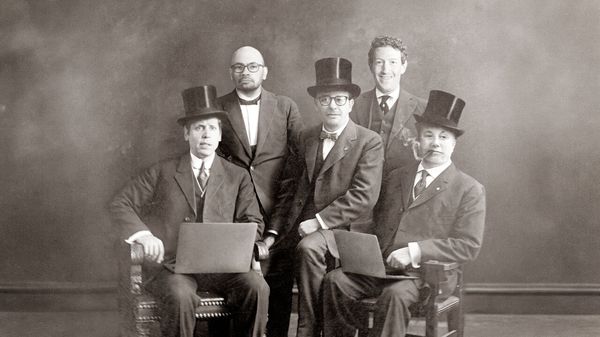
The essay identifies Dario Amodei, Demis Hassabis, Elon Musk, Mark Zuckerberg, and Sam Altman as the five most recognizable figures in AI, with ChatGPT alone reporting over 900 million weekly users and already embedded in U.S. defense use cases. Debates split across three trajectories: potential long-run productivity upside, potential mass job displacement, and even existential concern, making AI the most socially anxiety-generating technology discussed since the post-nuclear age.
To assess historical power, the analysis compares 11 U.S. technological waves over 150 years and selects the top five figures behind each wave’s commercialization and diffusion, then normalizes company revenue, employment, market value, control intensity, and personal wealth. Rockefeller’s peak fortune is estimated at about 1.5% of U.S. GDP, yet Henry Ford ranks highest overall: estimated peak assets above 1% of GDP, 1925 workforce about 0.15% of the population, and Model T market share above 40% in 1917, while a $5/day wage connected mass production to mass demand; Bezos appears 4th at roughly $2.7 trillion market value with over 1 million U.S. employees, Musk 8th mainly from Tesla/SpaceX, Zuckerberg 11th mainly from social media, and Altman/Amodei/Demis in the lower half due to smaller teams and weaker direct control, with OpenAI still unprofitable a decade on while Ford was earning roughly $1bn (in today’s dollars) by that same age.
Across eras, the pattern is that concentrated magnates accelerate adoption while introducing novel risks: railways, oil, steel, cars, and electrification reshaped institutions, generated safety panics, and displaced existing labor and financial structures. Regulation also tends to follow, as shown by the 1911 breakup of Standard Oil into 34 firms, the 1913 creation of the Federal Reserve after a financial crisis backdrop, and the 2000 antitrust action against Microsoft, suggesting AI tycoons may similarly face stronger state curbs if their influence expands.
Source: Could AI’s leading men become as powerful as Ford or Rockefeller?
Subtitle: For now, they are still a long way behind
Dateline: 4月 16, 2026 08:13 上午 | Dearborn, Michiga