美国的高等教育正面临严重的学术准备危机,越来越多的本科生在入学时缺乏基本的学术技能。加州大学(UC)系统内超过1800名数学和科学讲师签署的公开信报告称,伯克利分校有20-30%的早期微积分学生表现出严重的准备不足。在加州大学圣地亚哥分校,数学技能低于高中水平的一年级本科生在五年内增加了近三十倍,达到约八分之一。这在国际上也得到了印证:经合组织(OECD)于2024年底发布的成人技能调查显示,富裕国家中约有8%的接受高等教育的学生在阅读和数理能力方面仅处于小学生水平。在美国,有七分之一的大学生在阅读测试中得分等于或低于小学水平(十年前该比例仅为二十分之一),而数理能力等于或低于最低水平的大学生比例则接近五分之一。
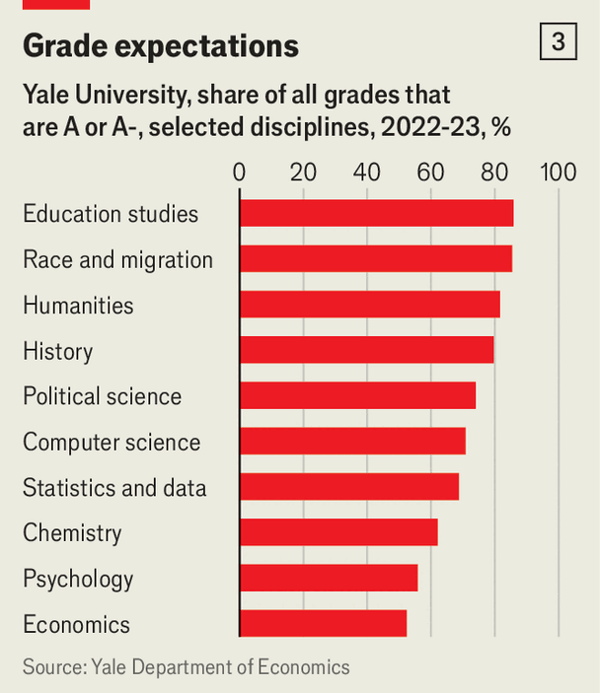
这一退步源于疫情引发的中断以及中等教育的长期问题,并因大学招生政策的变化而进一步加剧。批评人士指出,标准化考试(如SAT和ACT)的取消是关键原因,这类考试在疫情前有超过50%的四年制本科大学要求提供,而如今仅剩下10%。这导致招生官不得不依赖膨胀的高中成绩;例如,被加州大学圣地亚哥分校送去修读最弱初级数学补习班的学生中,有四分之一在高中最后几年的数学考试中获得了满分。此外,大学内部的成绩贬值(成绩膨胀)也十分猖獗:在英国,一等学位的比例从1995年的7%飙升至2025年的30%,而在耶鲁大学,A和A-的评级比例从2010-11学年的67%升至2022-23学年的79%。
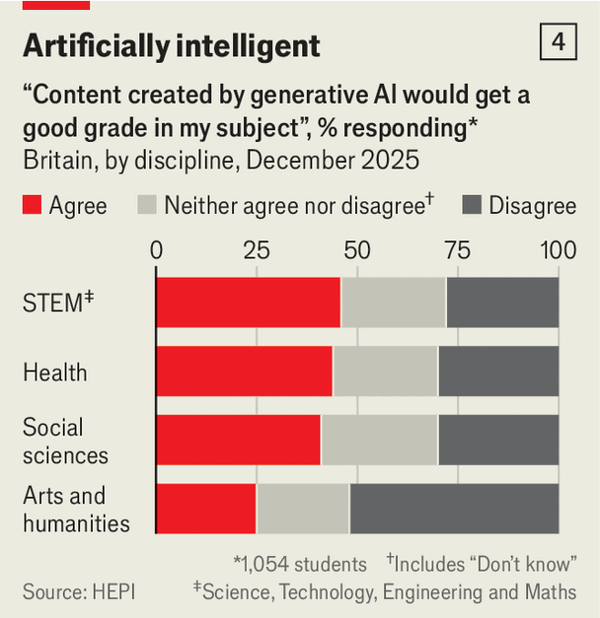
使这些挑战更加棘手的是人工智能的快速融入,这使得学术作弊行为日益猖獗。英国HEPI智库在3月份发布的一项调查显示,94%的本科生在评估工作中使用人工智能,其中12%承认将人工智能生成的文本直接复制到课程作业中。在美国,大约三分之二的公立大学学生在2023-24学年使用过人工智能,其中9%承认利用其进行作弊。对得克萨斯州2018至2025年间50万份成绩的分析显示,自ChatGPT于2022年底发布以来,在写作和编程等人工智能擅长的课程中,获得“A”等评级的比例上升了13个百分点(增加了约30%)。一些学术界人士没有选择通过加强监考来应对这一危机,而是表现出听之任之的态度,甚至认为在人工智能主导的未来,坚实的基本技能已不再必要。
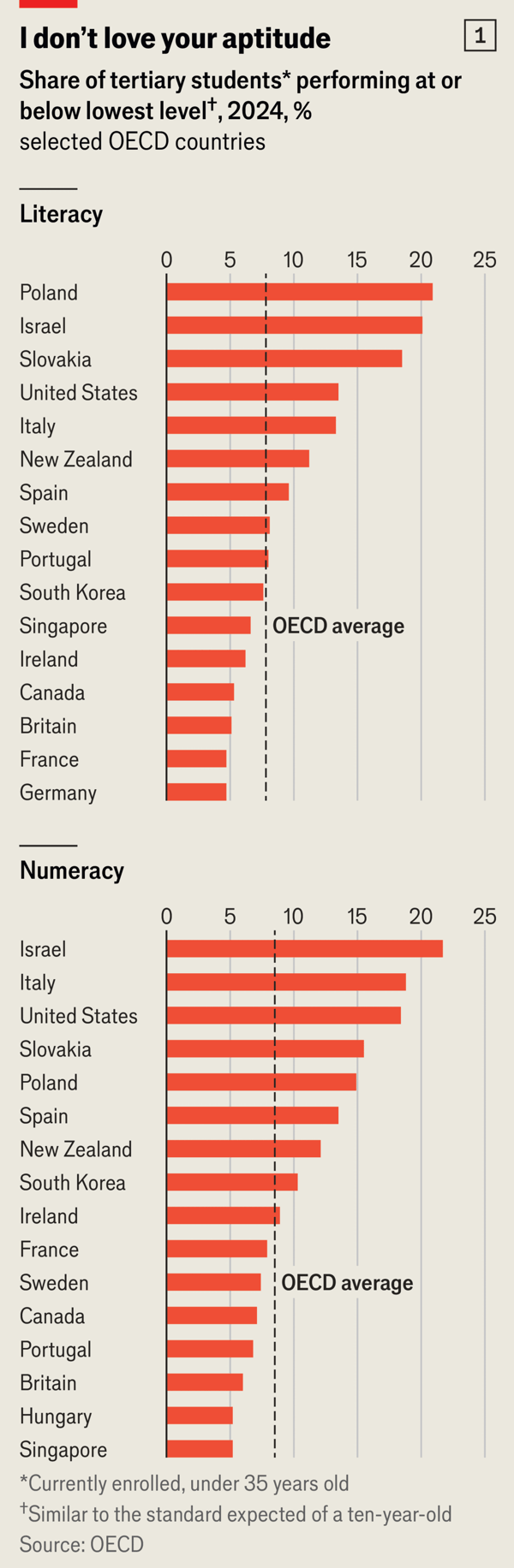
Higher education in the United States is facing a severe readiness crisis, with increasing numbers of undergraduates arriving without basic academic skills. An open letter signed by over 1,800 math and science lecturers at the University of California (UC) reported that 20-30% of early calculus students at Berkeley show severe preparation deficits. At UC San Diego, first-year students with math skills below high-school levels increased nearly thirtyfold in five years to approximately one in eight. This is reflected globally: the OECD’s Survey of Adult Skills (published in late 2024) reveals that 8% of tertiary students across rich countries perform at a primary-school level in literacy and numeracy. In the U.S., one in seven students scored at or below this primary-school bar in literacy—up from one in twenty a decade ago—while nearly one in five did so in numeracy.
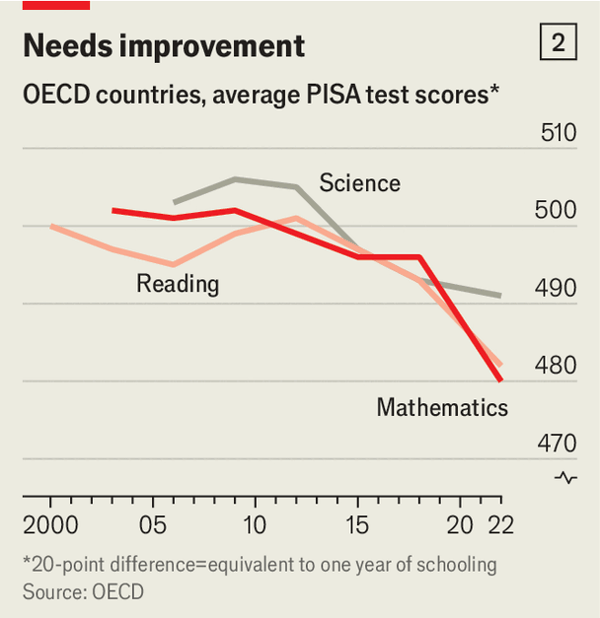
This decline stems from pandemic-related disruptions and long-term issues in secondary education, compounded by changes in university admissions policies. Critics point to the elimination of standardized tests like the SAT and ACT, which fell from being required by over 50% of bachelor’s-granting institutions before the pandemic to just 10% today. Consequently, admissions officers rely on inflated high-school grades; for instance, a quarter of UCSD students sent to remedial math classes had perfect high-school math scores. Furthermore, grade inflation is rampant in universities: in Britain, first-class degrees rose from 7% in 1995 to 30% in 2025, while at Yale, A and A- grades jumped from 67% in 2010-11 to 79% in 2022-23.
Compounding these challenges is the rapid integration of artificial intelligence, which has enabled widespread academic dishonesty. A March survey by HEPI in the United Kingdom found that 94% of undergraduates use AI for assessed work, with 12% pasting AI-generated text directly. In the U.S., about two-thirds of public university students used AI during the 2023-24 academic year, with 9% admitting to cheating. An analysis of 500,000 grades in Texas between 2018 and 2025 showed that the share of "A" grades in writing and coding courses rose by 13 percentage points (a 30% increase) after ChatGPT's launch in late 2022. Rather than confronting this crisis by enforcing proctored exams, some academics are expressing resignation, suggesting basic skills are no longer necessary in an AI-dominated future.
Source: Students are doing worse than you think
Subtitle: Some at college or university are testing no better than ten-year-olds
Dateline: 6月 25, 2026 03:29 上午