自1930年以来,在80多个参赛国中只有8个国家赢得过世界杯,而财富、人口、身高(最佳为181厘米)和地理等因素解释了70%的埃洛值变化。区域差异非常明显,南美球队的埃洛积分比亚洲球队平均高出640分,这意味着90%的预期胜率。
足球的成功在很大程度上是自我延续的,1976年处于前四分之一的球队中约有80%在几十年后仍保持其地位。为了弥补差距,一些国家专注于基层计划,如日本到2092年建立100个职业俱乐部的目标,而另一些国家则依靠引进人才。
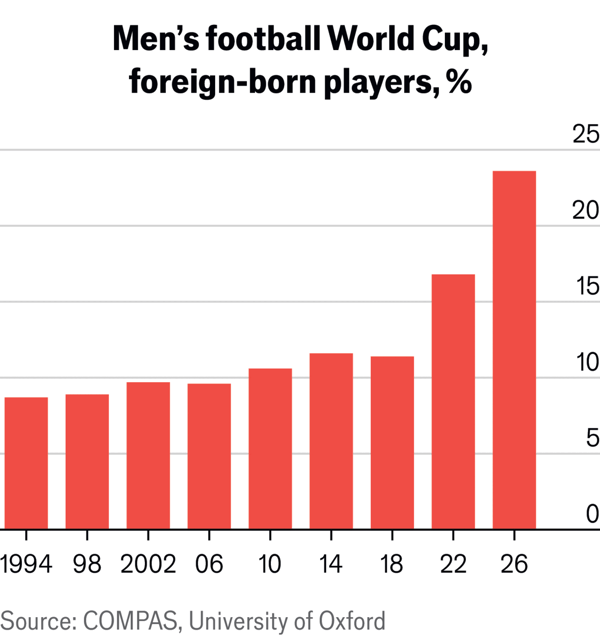
全球移民正在重塑这项运动,代表非出生国参赛的球员比例从1994年的9%上升到如今的24%。这一策略取得了历史性的成就,例如摩洛哥在26名队员中有14名是外国出生的,从而成为首支打入世界杯半决赛的非洲球队。
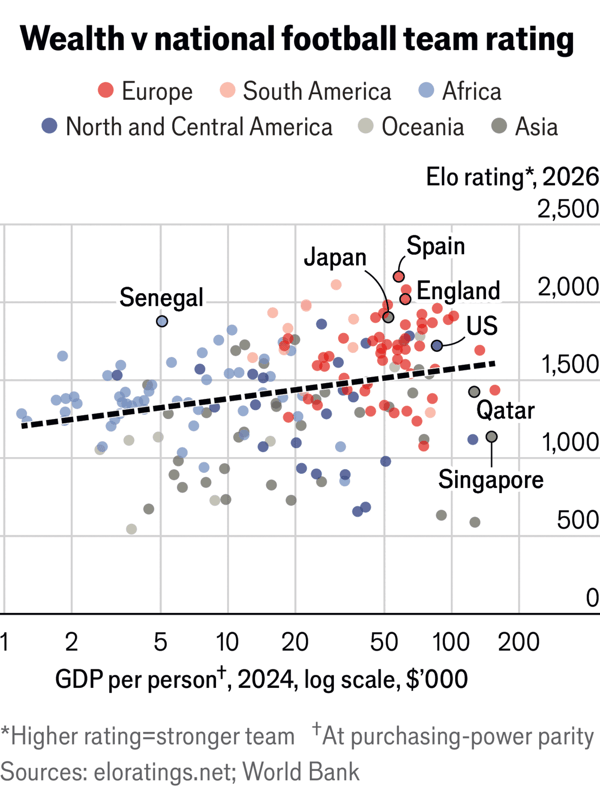
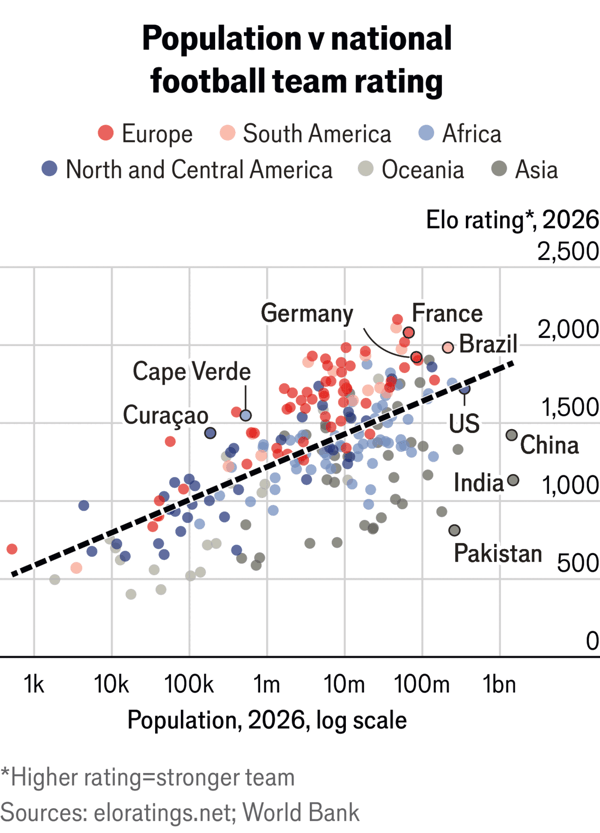
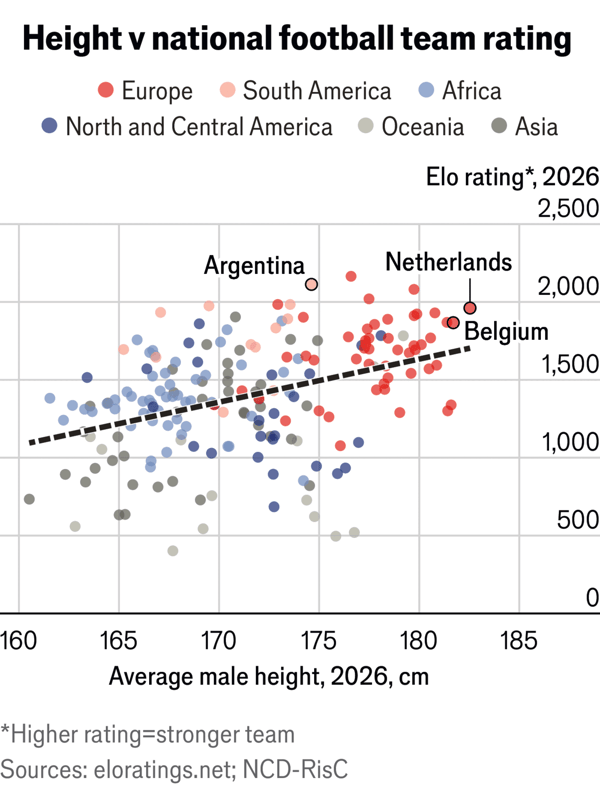
Since 1930, only eight out of more than 80 participating countries have won the World Cup, with factors like wealth, population, height (optimally 181cm), and geography explaining 70% of Elo rating variations. Regional disparities are stark, as South American teams average 640 Elo points higher than Asian teams, indicating a 90% expected win rate.
Football success remains highly self-perpetuating, with roughly 80% of the top-quartile teams from 1976 retaining their status decades later. To bridge the gap, some countries focus on grassroots plans like Japan's goal of establishing 100 professional clubs by 2092, while others rely on importing talent.
Global migration is reshaping the sport, as the share of players representing countries other than their birth nation rose from 9% in 1994 to 24% today. This strategy has yielded historic achievements, exemplified by Morocco becoming the first African semi-finalist using a squad where 14 of the 26 players were foreign-born.
Source: How to win the World Cup
Subtitle: Being rich helps, but being open to immigration works best of all
Dateline: 6月 11, 2026 04:21 上午