软件即服务(SaaS)行业面临来自人工智能的生存威胁,导致股市波动,Salesforce、ServiceNow和Workday等巨头今年的股价平均下跌了34%。这场“SaaS末日”是由人工智能实验室、估值110亿美元的法律专业初创公司Harvey等人工智能本土初创公司,以及选择自主开发系统的企业(如柯克兰·艾利斯律师事务所投资5亿美元开发定制工具)共同推动的。
按人类“席位”收费的传统SaaS经常性收入模式,正受到无需个人用户许可即可自动执行任务的人工智能代理的削弱。此外,提供专有的人工智能工具蚕食了传统收入,因为运行人工智能代理比传统软件会产生更高的边际计算成本。
相反,部分领域正在蓬勃发展,网络安全SaaS供应商今年股价平均上涨52%,Snowflake因人工智能需求一日内股价飙升36%。然而,随着不断增长的人工智能收入无法弥补传统席位许可销售额的损失,整个行业面临着自我吞噬的风险。
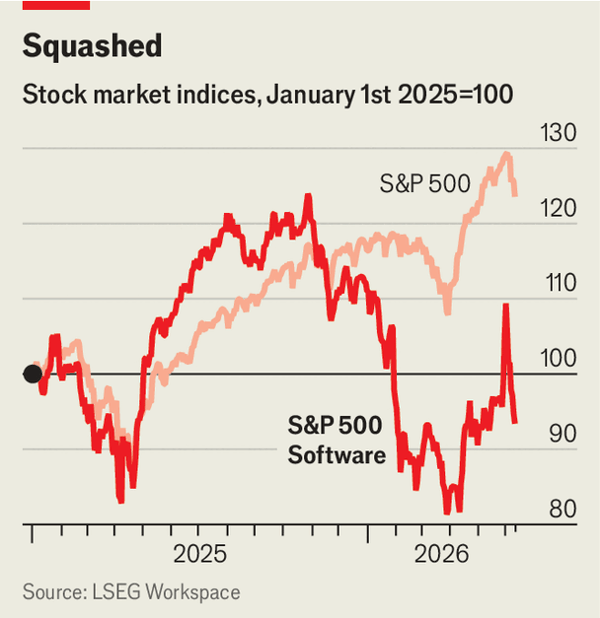
The Software-as-a-Service (SaaS) industry faces an existential threat from artificial intelligence, leading to stock volatility and a 34% average share price decline for giants like Salesforce, ServiceNow, and Workday this year. This "SaaSpocalypse" is driven by AI labs, AI-native startups like the $11 billion legal specialist Harvey, and enterprises opting for DIY systems, such as Kirkland & Ellis investing $500 million in custom tools.
The traditional SaaS recurring-revenue model, which charges per human "seat," is undermined by AI agents that automate tasks without needing individual user licenses. Furthermore, providing proprietary AI tools cannibalizes legacy revenues because running AI agents incurs higher marginal computation costs than traditional software.
Conversely, some segments are thriving as cybersecurity SaaS providers average a 52% share price increase this year, and Snowflake's stock surged 36% in a single day due to AI demand. Yet, the broader industry risks eating itself as growing AI revenues fail to offset the loss of traditional seat-based licensing sales.
Source: Fear of the SaaSpocalypse is tormenting techland
Subtitle: Software once ate the world. Now it is in danger of eating itself
Dateline: 6月 11, 2026 04:20 上午 | San Francisco