在柬埔寨西部的吴哥窟,拥有超过1000座雕像的古迹群于4月3日增添了一尊新雕像。它是向“Magawa”致敬——这只在柬埔寨服役6年的、出生于坦桑尼亚的探雷训练鼠,重1–1.5公斤,纪念碑高2.2米,被认为是全球首个公开纪念拯救生命啮齿动物的纪念碑。
柬埔寨的地雷污染极其严重:人工作业者用金属探测器清理一块网球场大小的区域,最多可能耗时4天。相对地,HeroRATS约重1–1.5公斤,可在被疑似埋设区安全穿行,并嗅出埋藏多年后的爆炸物,2015年至今已清理40平方公里并发现超过8000枚地雷。
Magawa表现尤为突出,6年内发现超过100枚地雷,相当于20个足球场面积,并因此成为唯一获得PDSA金质奖的啮齿类动物。尽管如此,柬埔寨仍估计有400万至600万枚地雷遗留,主要集中在最贫困地区,地雷自1979年至今已夺去或重伤65,000人,且该数字与APOPO已发现的8000枚相比,仍高出约500–750倍,且清除资金正在下降。
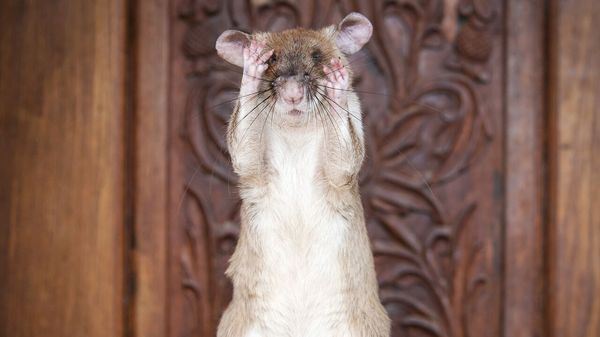
At the western Cambodian complex of Angkor Wat, which is said to hold more than 1,000 statues, a new monument was added on April 3. It honors Magawa, a Tanzanian-born mine-detection rat who served in Cambodia for six years, weighing 1–1.5 kg, with a 2.2-metre statue believed to be the first public monument dedicated to a life-saving rodent.
Cambodia’s landmine burden remains severe: a human operator using a metal detector can take up to four days to clear an area the size of a tennis court. By contrast, HeroRATS are light enough to cross mined ground safely, can detect explosive traces years after burial, and since deployment in 2015 have cleared 40 square kilometres and located over 8,000 landmines.
Magawa stood out, detecting over 100 landmines across six years, an area equivalent to 20 football pitches, and became the only rat awarded the PDSA Gold Medal. Yet estimates still show 4–6 million mines remain, concentrated in poorer regions, while landmines have killed or injured 65,000 people since 1979, and this residual total is roughly 500–750 times what has been found, even as clearance funding is shrinking.
Source: Cambodia honours a life-saving rat
Subtitle: The rodent helped clear more than 100 unexploded mines
Dateline: 4月 09, 2026 04:29 上午