在1968年圣诞前夜,阿波罗8号在月球背面完成了第四次掠过,机组改变了飞船姿态,数秒后首次看到地球从月球灰色环形坑地平线上升起。由于这一景象完全超出预期,宇航员停止任务,拥到舷窗前,飞行员比尔·安德斯用彩色胶片拍下了后来成为经典的“地球升起”。
这幅图像的姊妹版本——地球在月球背后“日落”般的场景——则由阿提米斯II号在4月6日拍摄。与阿波罗8号的即兴拍摄相比,这次构图安排得更有准备性。
阿提米斯II的飞行轨道只给了机组一次获得这类画面的机会,但其与月球的距离远大于阿波罗8号,因此他们能更从容地执行拍摄。NASA还事先提供了可见内容与出现时序的预演图,这些准备并未削弱影像的震撼力;附注还邀请读者订阅 Simply Science 周更订阅通讯。
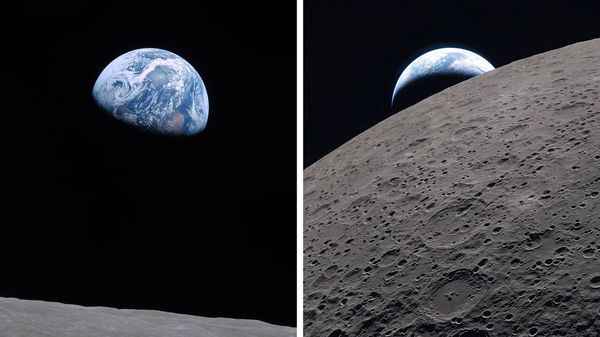
On Christmas Eve in 1968, during Apollo 8’s fourth pass over the far side of the Moon, the crew changed spacecraft orientation, and within seconds saw Earth rise above the gray, cratered lunar plains for the first time. The moment was so unexpected that astronauts dropped their tasks, crowded around the windows, and pilot Bill Anders captured it on color film, creating the iconic “Earthrise” image.
Its counterpart image—Earth setting behind the Moon—was shot on April 6 by Artemis II and was far less spontaneous. Artemis II had only one opportunity to capture such a shot, but its distance from the Moon was far greater than Apollo 8’s, giving the crew more time to carry out the capture deliberately.
NASA supplied pre-visualizations showing what would be visible and when to guide the crew, and those planning aids did not reduce the magnificence of the visual result. A closing note adds an invitation to subscribe to Simply Science, a weekly science newsletter for subscribers only.
Source: Earth and Moon, then and now
Dateline: 4月 09, 2026 03:38 上午