中国在动荡的全球环境中再次实现了其年度增长目标。1月19日公布的数据显示,2025年GDP增长5%,与前两年一致,尽管人口下降速度快于预期。增长主要由创纪录的贸易顺差推动,规模接近1.2万亿美元,即便中国仍处于与美国的关税战中。出口的强劲表现弥补了国内需求的疲软,使整体增长达标。
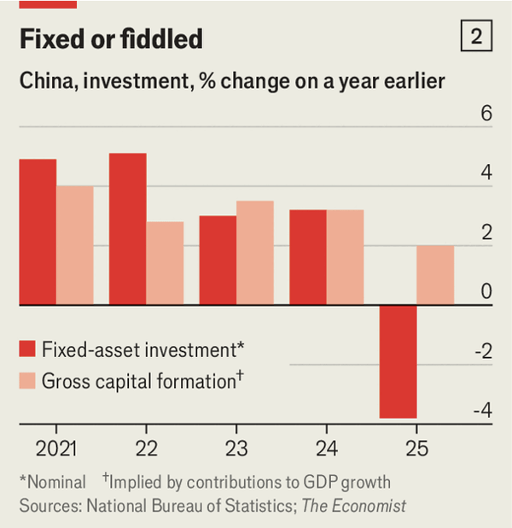
国内需求结构则显得反常。政府提出要“提振消费”,但居民储蓄率在2025年升至32%,高于上一年的31.7%。固定资产投资却出现异常下滑,官方数据显示2025年同比下降,这是自1989年以来首次,其中房地产、基建和制造业投资均表现低迷(制造业仅增长0.6%)。与之相对,另一指标“资本形成总额”显示投资仍有约2%的实际增长,对全年GDP贡献约0.75个百分点。这一差异可能源于统计口径不同,也可能反映地方政府调整数据的结果。
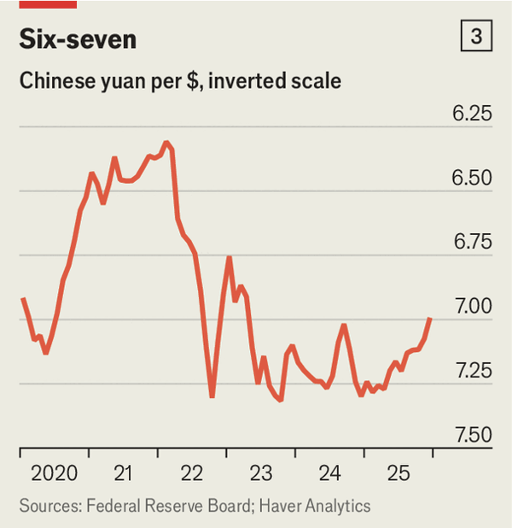
出口激增加剧了中国内外失衡。通胀低迷与需求疲软使实际汇率在2022年3月至2025年7月间贬值超过18%,显著提升了出口竞争力,却引发贸易伙伴不满。墨西哥已对1,400多种商品加征最高50%关税;欧盟与中国就电动车设定最低价格;中国也对部分出口退税和关税政策作出让步。人民币在2025年末升破7兑1美元,有助于缓解外部压力,却可能加重国内通缩。多方观点认为,解决矛盾的关键在于更强的财政刺激和社会保障改革,以推动内需回升。
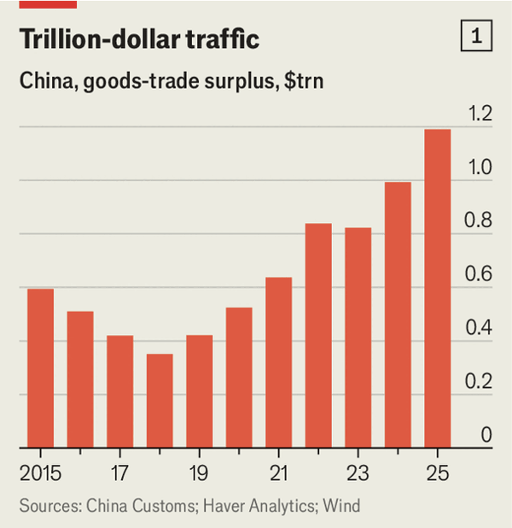
China once again hit its annual growth target amid global turmoil. Data released on January 19th showed GDP grew by 5% in 2025, matching the previous two years, even as the population shrank faster than expected. Growth was driven chiefly by a record trade surplus nearing $1.2trn, achieved despite an ongoing tariff war with America. Robust exports compensated for weak domestic demand, allowing overall growth to meet official goals.
The composition of demand looked unusual. Despite pledges to “vigorously boost consumption”, households raised their saving rate to 32% in 2025 from 31.7% a year earlier. Fixed-asset investment reportedly contracted for the first time since 1989, with continued weakness in property, falling infrastructure spending and just 0.6% growth in manufacturing investment. By contrast, gross capital formation suggested investment still rose by about 2% in real terms, contributing roughly 0.75 percentage points to GDP growth. The discrepancy likely reflects methodological differences or possible data understatement by local governments.
Export strength has worsened China’s internal and external imbalances. Persistent deflation meant the real exchange rate depreciated by over 18% between March 2022 and July 2025, boosting competitiveness but straining relations with partners. Mexico imposed tariffs of up to 50% on over 1,400 goods; the EU agreed minimum prices on Chinese electric vehicles; and China eased some export tax breaks and tariffs. The yuan strengthened late in 2025, dipping below seven per dollar, which may calm trade tensions but risks intensifying deflation. Many economists, including the IMF, argue that stronger fiscal stimulus and social-safety-net reforms are needed to rebalance growth towards domestic consumption.