陆地保护的现代起点可追溯到1872年美国黄石公园的建立,但公海长期缺乏有效治理,正式受保护的面积不到1%。新的《国家管辖范围以外区域海洋生物多样性协定》(BBNJ)将于2026年1月17日生效,已有145个签署方、81个批准方(仍在增加),覆盖各国200海里(370公里)专属经济区之外的海域;这片国际水域占海洋的61%、地表的43%,平均水深4,100米,约占地球生物圈的三分之二。
多地海洋生物多样性正急剧下降:一项涵盖483个物种、1,320个种群的研究显示,82%的种群被捕捞移除的速度超过其补充速度。管理渔业的17个区域渔业管理组织(RFMOs)总体表现不佳,例如大西洋西部蓝鳍金枪鱼产卵群体近几十年下降了五分之四(约80%),大西洋东部下降了三分之二(约67%);刺网和延绳钓造成的兼捕对鲨鱼、海豚、海龟等慢生物种尤为致命,东太平洋的加湾鼠海豚已濒临灭绝,而深海底拖网在公海海山等热点区域造成的破坏往往需要数百年甚至数千年才能恢复,叠加“暗船队”和非法、未报告、无管制捕捞进一步加剧风险。
BBNJ的三大支柱包括:海洋遗传资源的利益共享框架、对可能影响海洋活动的稳健环境影响评估及信息共享机制、以及建立全球互联的大型海洋保护区(MPAs)的程序。协定本身未设定保护比例目标,但与联合国在《生物多样性公约》下到2030年保护30%陆地与水域的承诺衔接并力图扩展到海洋,同时关注200米以下“暮光区”的中层鱼类及其对二氧化碳吸收的调节作用;目前约有一打(12个)MPA方案“排队待批”,而要全面运作仍需在2026年稍后召开缔约方大会以确立官僚程序与资金规则。
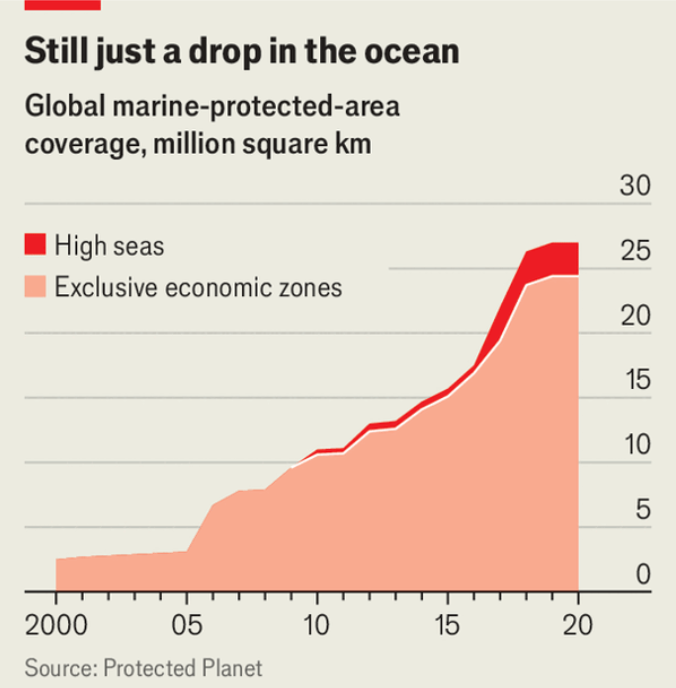
Modern terrestrial conservation is often dated to America’s Yellowstone Park in 1872, but the high seas have lacked a global conservation regime and less than 1% is formally protected. The new Biodiversity Beyond National Jurisdiction (BBNJ) treaty enters into force on January 17, 2026 with 145 signatories and 81 ratifications (and rising), covering waters beyond countries’ 200-nautical-mile (370 km) EEZs that make up 61% of the ocean, 43% of Earth’s surface, average 4,100 metres deep, and about two-thirds of the biosphere.
Marine biodiversity is in steep decline: one study of 1,320 populations across 483 species found 82% are being removed faster than they can repopulate. Oversight by 17 regional fisheries management organisations has often failed—bluefin tuna spawning stock is down four-fifths (~80%) in the western Atlantic and two-thirds (~67%) in the eastern Atlantic—while gillnets and longlines generate staggering bycatch that devastates slow-growing sharks, dolphins and turtles (with the vaquita near extinction), bottom-trawling on high-seas seamount hotspots can take centuries or millennia to recover, and “dark” fleets plus illegal, unreported and unregulated fishing intensify pressure.
BBNJ’s three legs are a benefit-sharing framework for marine genetic resources, robust environmental impact assessments with a clearing-house for sharing results and technology transfer, and a process to create a global network of large, connected marine protected areas. Although it sets no numeric protection target, it is meant to extend the UN Convention on Biological Diversity pledge to protect 30% of land and waters by 2030 to the ocean, amid concerns such as mesopelagic fishing below 200 metres; about a dozen MPAs are already queued, but a conference of parties later in 2026 is needed to finalize governance and funding rules.
Source: A half-planet-size gap in global governance is about to get plugged
Subtitle: A new treaty offers hope of curbing the destruction of the oceans
Dateline: 12月 30, 2025 05:49 上午