如果海湾战争持续,水资源可能像石油一样成为决定性战略物资。巴林、科威特和卡塔尔的饮用水中有 90% 以上依赖海水淡化,阿曼几乎也如此,沙特约占 70%,阿联酋约占 40%,而产能最高的设施主要沿海分布,使其易受伊朗导弹与无人机威胁。
2008 年的一份电报指出,朱拜勒淡化厂当时向利雅得提供了超过 90% 的饮用水;一旦其管道或周边电力基础设施被摧毁,利雅得需在一周内疏散,且沙特现行政权结构可能无法维持。自 2006 年以来,海湾国家已投入约 530 亿美元分散风险,沙特约 40% 的淡化水来自更小且更分散的设施,阿布扎比和卡塔尔也在建立战略储备,因此大多数国家即使遭袭也仍可能保留部分供水。
尽管如此,产能仍主要集中在少数工厂;阿联酋计划到 2036 年将储备提高到正常消费仅 2 天量,并在严格限水下可延长到约 1 个月,小国如巴林更脆弱。伊朗对淡化依赖较低,但约三分之一人口已有供水短缺,且持续战争有可能先让其对周边国家断水,也可能加速其自身耗尽水源。
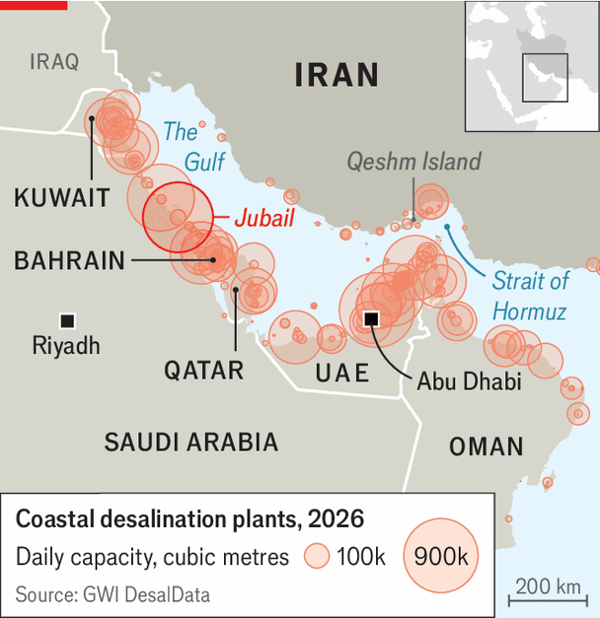
If the Gulf conflict continues, water could become as strategically vital as oil. Bahrain, Kuwait, and Qatar get more than 90% of drinking water from desalination, Oman nearly as much, Saudi Arabia about 70%, and the UAE about 40%, while the most productive plants are mostly coastal and therefore within easy reach of Iranian missiles and drones.
A 2008 cable reported that the Jubail desalination plant then supplied over 90% of Riyadh’s drinking water, and that damage to its pipelines or power system could force evacuation of the capital within a week and could break Saudi governance. Since 2006, Gulf states have spent about US$53 billion to reduce this exposure; Saudi Arabia now gets roughly 40% of its desalinated water from smaller, more distributed facilities, and Abu Dhabi and Qatar are building strategic reserves, so most countries would still have some supply even after an attack.
Nonetheless, supply remains concentrated in a few plants, and the UAE’s target is only two days of normal demand by 2036, stretchable to around a month through strict rationing, leaving smaller states like Bahrain highly exposed. Iran relies less on desalination yet nearly one-third of its population already faces water shortages; as conflict drags on, it may cut water flows to neighbors, while increasingly risking running out of water itself.
Source: In the current Gulf war, water may prove as decisive as oil
Subtitle: The Arab states are plainly vulnerable, but so is Ira
Dateline: 3月 26, 2026 05:38 上午