尽管几十年来富裕国家的女性在职业领域取得了显著进步,但最近的数据表明这一趋势正在停滞甚至逆转。自1980年以来,在美国医学和法律等高薪行业中的女性比例几乎翻了三倍,且去年英国的女性医生数量首次超过了男性医生。然而,2023年美国上市公司中女性高管的比例近20年来首次下降。2025年,在标准普尔500指数的美国大公司中,女性获得了38%的新董事席位,低于2024年的42%,延续了自2020年巅峰以来的下滑趋势。华尔街机构也出现了类似的退步,例如高盛集团在2024年任命的女性合伙人比例有所下降,2025年任命的女性董事总经理人数也有所减少。
这种退步不仅限于最高领导层。在经合组织的33个成员国中,就业女性中全职工作的比例从2023年的78.1%下降到2024年的76.8%,这是15年来的首次下降。今年3月,美国女性的劳动参与率达到了78.5%的历史新高,但此后下降了近一个百分点。这一趋势由拥有幼小家庭、接受过大学教育的母亲所主导,自2023年以来她们的参与率每年都在下降,创下了40年来最大的参与率降幅。因此,美国男女工资差距在2023年和2024年均有所扩大,这是60年来首次出现连续两年的倒退。在包括加拿大、法国和英国在内的其他富裕国家,工资差距也有所扩大。
这种停滞也反映在职业抱负的变化上,调查显示男性的晋升意愿上升至近90%,而女性则保持平稳,初级女性员工的晋升意愿仅为69%。虽然工资差距扩大的部分原因反映了疫情后低收入女性重返劳动力市场(在封锁期间曾人为地缩小了差距),但其他结构性问题也在起作用。托儿所的供应短缺依然严重,德国仍缺少30多万个针对三岁以下儿童的托儿所席位。此外,企业和政治气候发生了变化;在唐纳德·特朗普政府的领导下,联邦和企业的多元、平等与包容政策正被拆除,这进一步削弱了旨在支持女性晋升的举措。
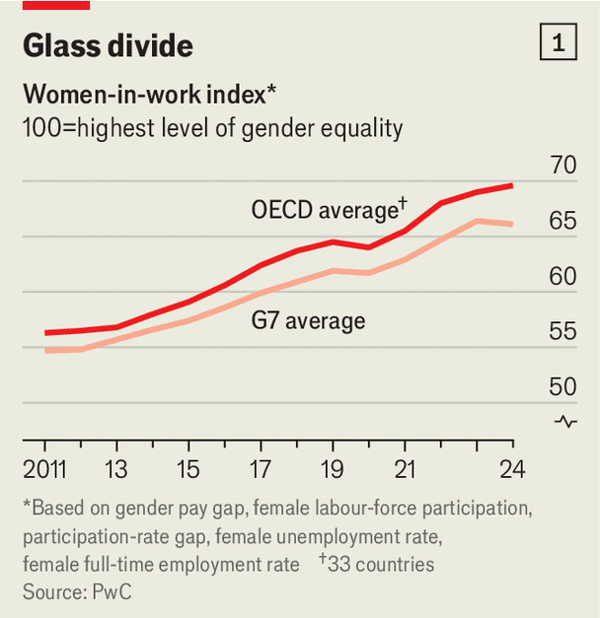
Despite decades of significant professional gains for women across the rich world, recent data signals a stalling or even reversing trend. Representation in high-paying sectors like medicine and law had nearly tripled in America since 1980, and last year female physicians in Britain outnumbered male physicians for the first time. However, women’s share of executive roles in listed U.S. companies fell in 2023 for the first time in nearly 20 years. In 2025, women secured 38% of new board seats at S&P 500 companies, down from 42% in 2024 and continuing a retreat from their 2020 peak. Similar retreats are seen at Wall Street institutions like Goldman Sachs, which named a smaller share of female partners in 2024 and fewer female managing directors in 2025.
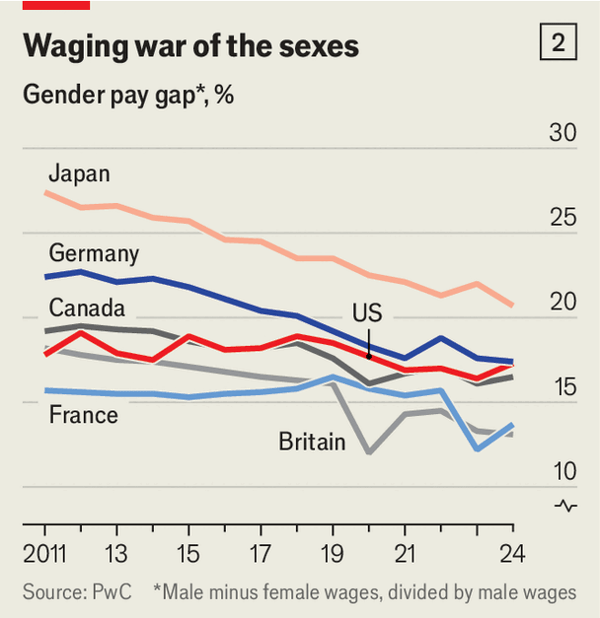
This regression extends beyond top leadership. Across 33 member countries of the OECD, the share of employed women in full-time work fell from 78.1% in 2023 to 76.8% in 2024, marking the first decline in 15 years. U.S. women’s labour force participation hit an all-time high of 78.5% in March, but has since dropped by nearly a percentage point. This decline is led by university-educated mothers with young children, whose participation has fallen annually since 2023, marking the sharpest drop in 40 years. Consequently, the U.S. gender pay gap widened in both 2023 and 2024, the first consecutive two-year decline in 60 years. Pay gaps also widened in other wealthy nations, including Canada, France, and Britain.
This stalling is mirrored in changing ambitions, as surveys show promotion interest rising to nearly 90% for men but remaining flat for women, and just 69% for entry-level female workers. While some of the pay gap widening reflects lower-income women returning to the workforce post-pandemic (which had artificially narrowed the gap during lockdowns), other structural issues are at play. Nursery supply shortages remain severe, with Germany lacking 300,000 places for children under three. Furthermore, corporate and political climates have shifted; under Donald Trump's administration, federal and corporate diversity, equity, and inclusion (DEI) policies are being dismantled, further dampening initiatives designed to support female advancement.
Source: Women’s progress at work is stalling
Subtitle: Is the “Lean In” generation leaning out?
Dateline: Jul 09, 2026 06:36 AM