俄罗斯与乌克兰战争进入第四年后,俄罗斯与欧洲科学界之间几乎所有正式关系都崩解:俄罗斯学者被逐出日内瓦 CERN,巴伦支海数据共享及冻土融化研究等工作被暂停,但南法的约35个国家参与的巨型聚变项目 ITER 仍在推进。ITER 要求进入设施时把护照放在门口,这一规则体现了其有意识地在地缘政治压力下维持跨国协作。
各国主要以“实物换实物”方式提供零部件和专业技术而非现金支持;俄罗斯提供关键磁体分块、排气系统和吸收高能中子板,因此没有任何一个国家不可或缺,但替换都会带来进度风险。迄今时间表从原定2016年建成、2020年首次实验推迟到预计2039年才实现全面运行,且总预算已从18十亿美元上升到32.4十亿美元(以2023年美元计),约增长80%,而关键部件分工并未优化:磁体由俄罗斯、欧盟、美国、日本、中国和韩国分担,排气系统由俄罗斯、日本和欧洲共享,冷却系统由印度与美国承担。
私营领域的融资正在加速,国际原子能机构称全球投资从2024年的约70亿美元增至2025年的100亿美元,增幅约43%,而美国初创公司 Commonwealth Fusion Systems 预计在2027年实现第一束等离子体,对比 ITER 可能最早到2033年才达到同类节点。欧洲商业化活动因此表现受限,并高度依赖 ITER;若初创企业率先成功,ITER 可能沦为多边遗产。
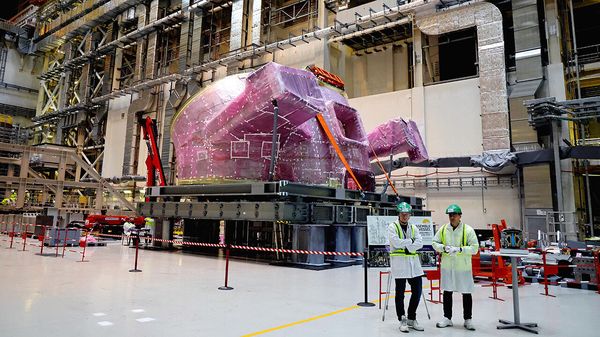
After four years of Russia’s war with Ukraine, nearly all formal ties between Russian and European science have broken down: Russian scientists were expelled from CERN, and work such as Barents Sea data-sharing and thawing-permafrost research has been halted, while ITER in southern France still continues with about 35 member countries. ITER’s rule to leave passports at the gate shows an explicit effort to preserve cross-border collaboration despite geopolitics.
Contributions are mostly in-kind rather than cash, and Russia supplies critical magnet sectors, exhaust systems, and neutron-absorbing panels, so no single country is indispensable, though replacements still create scheduling risk. The plan shifted from completion in 2016 and first experiments by 2020 to full operation only expected in 2039, while budget rose from $18 billion to $32.4 billion in 2023 dollars (about an 80% increase), and manufacturing responsibilities are split in a non-optimized way: magnets among Russia, EU, U.S., Japan, China, and South Korea, exhaust shared by Russia/Japan/Europe, cooling by India and U.S.
Private fusion financing is accelerating, with IAEA data showing global investment increasing from roughly $7 billion in 2024 to $10 billion in 2025 (about 43%), and U.S. startup Commonwealth Fusion Systems expecting first plasma in 2027 versus ITER not likely before 2033. European commercialization remains constrained and heavily tied to ITER, so if startups move first, ITER risks becoming a multilateral relic despite its scale.
Source: Europe’s joint nuclear-fusion project needs Russian expertise
Subtitle: At ITER Russian and Western scientists still work together—slowly
Dateline: 4月 09, 2026 12:06 下午