美国以关税威胁施压任何向古巴供油的国家,形成了事实上的石油禁运,并加剧了本已严重的能源短缺,旅游业下滑、交通受阻、停电时间延长。汽油官方价格为每升1.10美元且通过应用程序配给,但黑市价格达4,000比索(8美元)每升,约为官方美元价的7.3倍。
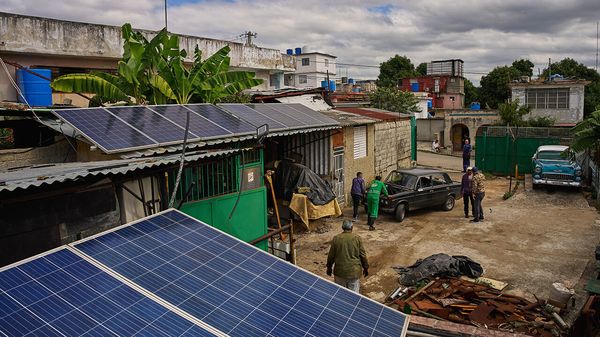
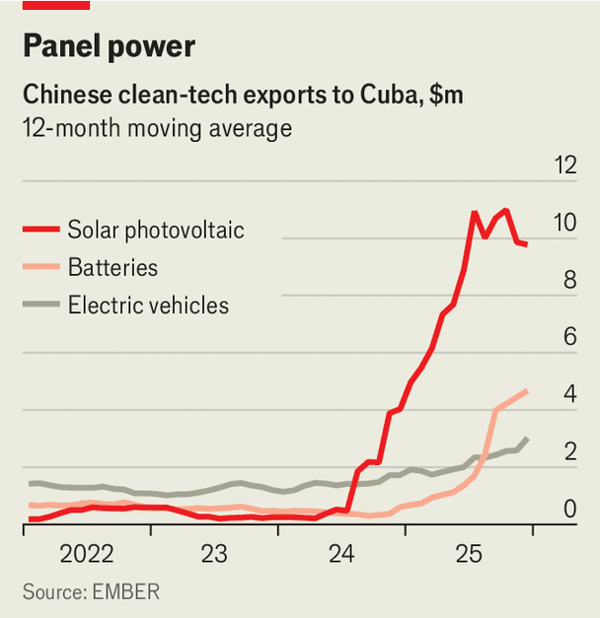
与此同时,古巴在太阳能上的扩张速度极快:根据Ember汇编的中国出口数据,在截至2025年4月的12个月里,古巴从中国进口的太阳能板增长了34倍,为全球最快。政府计划到2028年建设2吉瓦太阳能电站,并称2月11日午间峰值时新电站发电接近1吉瓦、可在当时满足全国约三分之一用电需求;其可再生能源目标也从2024年约5%提升到2030年的24%(提高19个百分点,接近5倍)。
但统计数据也显示转型瓶颈:晚间用电高峰与太阳能出力错位,即使中国电池和电动车进口激增,仍难以替代即时燃料需求。约5,000美元的家用光伏套件超出大多数家庭承受范围,而债务违约与美国压力正削弱中国新增融资意愿,导致“快速转型”与“当前危机”并存。
U.S. tariff threats against any country supplying oil to Cuba have created a de facto oil embargo and intensified an already severe energy shortage, with tourism slumping, transport disrupted, and blackouts lasting longer. Petrol is officially priced at $1.10 per litre and rationed by app, but the black-market price reaches 4,000 pesos ($8) per litre, about 7.3 times the official dollar price.
At the same time, Cuba’s solar buildout is scaling at extraordinary speed: Chinese export data compiled by Ember shows Cuba’s imports of Chinese solar panels rose by a factor of 34 in the 12 months to April 2025, the fastest growth globally. The government plans 2 GW of solar plants by 2028 and says new plants produced almost 1 GW at the February 11 lunchtime peak, enough at that moment for roughly one-third of national electricity demand; its renewables target also rises from about 5% in 2024 to 24% by 2030 (a 19-point increase, nearly fivefold).
But the numbers also show transition constraints: evening peak demand is misaligned with solar output, and even rapid imports of Chinese batteries and EVs cannot fully replace immediate fuel needs. A roughly $5,000 home-solar kit is unaffordable for most families, while debt arrears and U.S. pressure are reducing Chinese willingness to finance additional projects, leaving a “fast transition” alongside an ongoing crisis.
Source: Donald Trump’s oil embargo reveals a solar boom in Cuba
Subtitle: Chinese solar panels are flooding into the troubled island natio
Dateline: 2月 26, 2026 04:27 上午 | Havana