北京车展于5月3日结束,显示出中国主导地位:与2024年相比,本次展会规模约为两倍,展出了约180款新车,外资品牌也清楚在借鉴中国对手(例如,大众和梅赛德斯现场在中文与英文间切换,并采用中国风格表演)。中国已从追赶转为领先:外资汽车在中国的市场份额到2025年约降至30%,约为五年前的一半,同时中国2025年的汽车出口量超过800万辆,比2024年高出近三分之一,过去五年内中国品牌在欧洲份额从几乎为零升至接近9%。
梅赛德斯老板奥拉·卡勒尼厄斯称“中式速度”已成行业鼓点;传统制造商开发新车型通常需要40到80个月,而中国企业靠电动车优先设计、深度整合与上市后软件更新,将周期压缩到最多24个月。由此形成两年及以上的技术代差,沃尔沃?Wait correction: use大众. 外资厂商正加速调整:大众在合肥的新研发基地建设速度比欧洲快30%,今年在华推出20款新车型,雷诺、丰田、宝马和日产等亦把研发或合作重心转向中国以缩短周期并降低成本。
在追赶过程中,合作关系持续扩展:大众与小鹏、地平线机器人合作,丰田也与华为、腾讯、Momenta及小米合作,后者并将于2027年在上海附近新厂推出高端雷克萨斯电动车,而与吉利及其他企业合作的传闻也不断。分析人士警告,外资车企可能只是在引入难以长期维持的软件与提速心态,若过度依赖,传统厂商风险升高,因为这些合作方也在全球竞争(如小鹏在欧洲快速扩张、小米明年入场),并可能因许可费与联合开发而使关键技术主权外流。
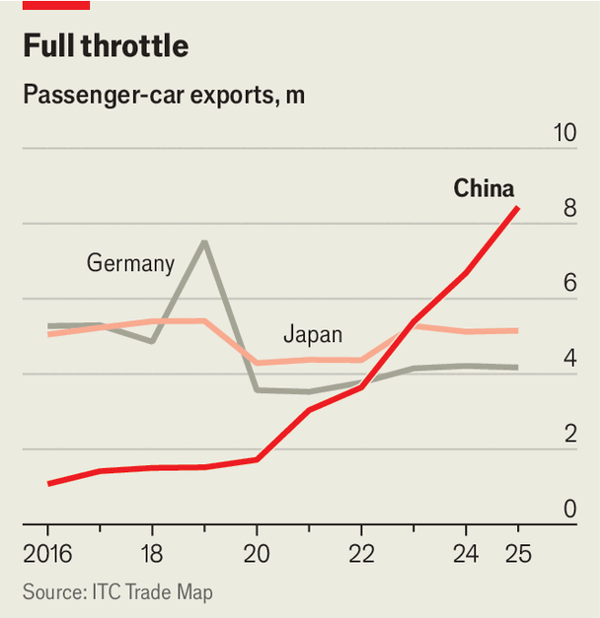
Beijing’s auto show, which ended May 3, showed Chinese leadership: it was about twice the size of the 2024 event with around 180 new cars on display, while foreign brands were openly copying their Chinese rivals (for example, Volkswagen and Mercedes switching between English and Mandarin and using Chinese cultural formats). China has moved from catching up to leading: foreign automakers’ share in China fell to about 30% in 2025, roughly half the level five years ago, while Chinese car exports topped 8 million in 2025, nearly a third more than 2024, and in Europe Chinese brands rose from almost zero to nearly 9% of sales over five years.
Mercedes boss Ola Källenius says “China speed” has become the industry drumbeat; legacy firms usually need 40–80 months to develop new models, while Chinese firms cut that to at most 24 months through EV-first design, deeper integration, and post-launch software upgrades. That leaves a technology gap of two years or more, and VW is developing vehicles at its Hefei R&D facility 30% faster than in Europe, launching 20 new models in China this year as Renault, Toyota, BMW, Nissan and others shift development and partnership activity toward China to compress time and costs.
Partnerships are broadening: VW has tied up with XPeng and Horizon, Toyota works with Huawei, Tencent, Momenta and Xiaomi, and there are similar tie-up rumors with Geely and others; Xiaomi plans to enter next year as one example of expanding rivals. Analysts say incumbents may be importing a software-and-speed mindset they cannot sustain, and heavy dependence can leave them vulnerable because these same partners are global competitors (for example XPeng in Europe), so licensing and joint development can shift proprietary know-how away from legacy firms.
Source: Global carmakers desperately want to be more Chinese
Subtitle: But partnering with local companies carries big risks
Dateline: 5月 07, 2026 06:28 上午 | Beijing