伊朗战争在约三周内迅速引发全球能源危机,亚洲成为最先承受冲击的地区。冲突导致霍尔木兹海峡航运几乎停滞,该通道在正常情况下承载全球约五分之一的石油供应以及大量液化石油气等能源产品。国际能源署称此次冲击可能成为全球石油市场历史上最大的供应中断,并协调释放4亿桶战略储备,但布伦特原油价格仍升至每桶100美元以上。能源价格上涨开始向全球经济扩散,引发对通胀再度上升的担忧。
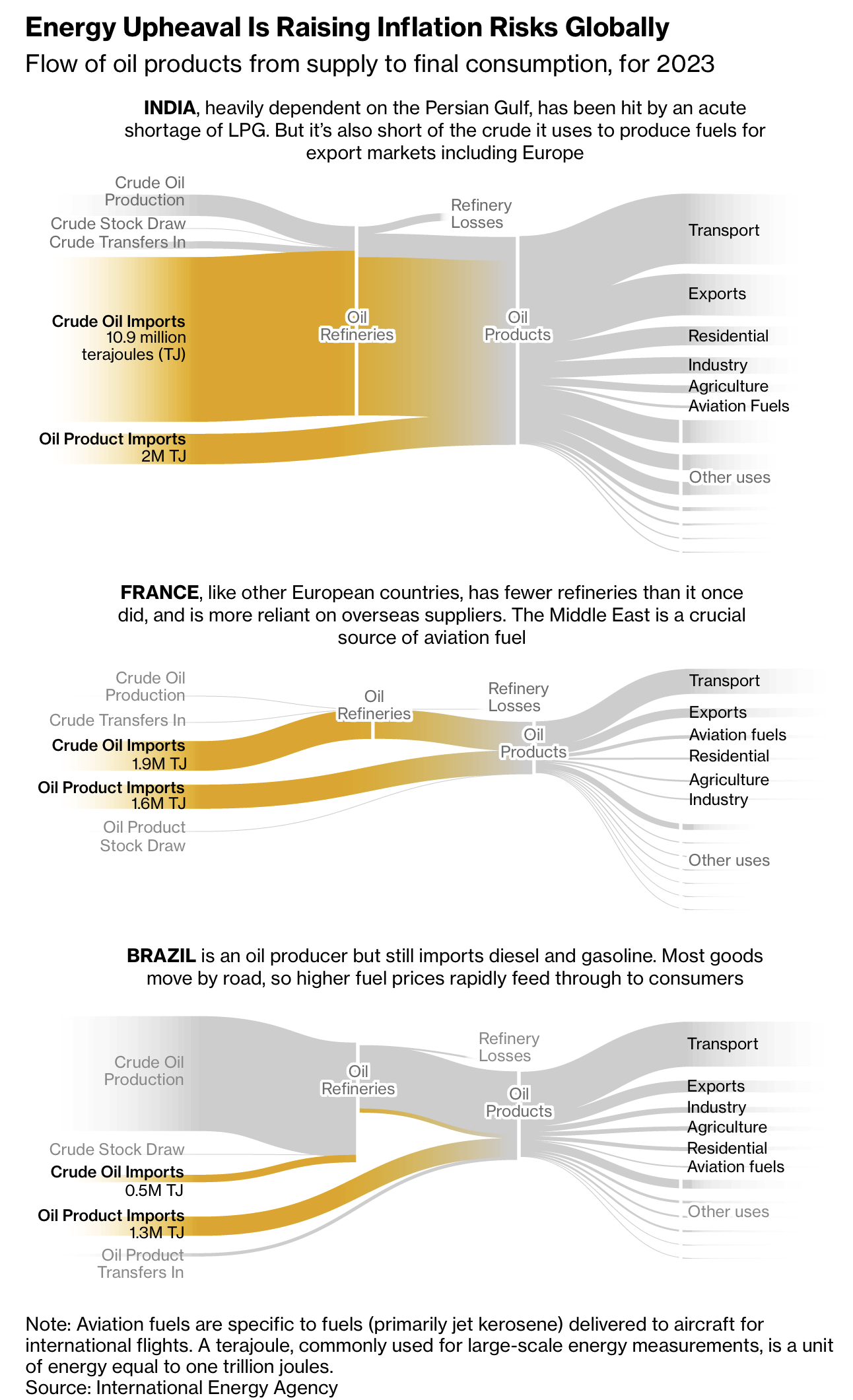
亚洲受到的影响尤为明显。印度约90%的液化石油气进口来自中东,而从美国替代供应至少需要40天运输时间且成本更高。印度商业LPG钢瓶在黑市价格已升至正常约1900卢比(约20美元)的两至三倍。约80%的印度餐厅依赖该燃料,但多数仅能储存几天的库存。燃料短缺还导致泰国柴油供应限制、孟加拉国考虑配给措施,并使航空燃料价格创纪录升至每吨1640美元(约每桶208美元)。如果油价在当前水平维持两个月,全球经济增长将受损;若油价升至140美元并持续两个月,部分地区可能陷入衰退。
能源价格上涨已产生广泛连锁反应。美国汽油价格自战争开始以来上涨超过0.70美元/加仑,柴油上涨1.21美元/加仑。全球供应链也受到冲击:化工原料石脑油短缺推动聚酯和腈纶等化纤价格一周上涨超过10%,部分塑料部件价格上涨最高50%。在巴西等产油国,政府已削减燃料税以缓解通胀压力,但该国仍需进口30%的柴油和13%的汽油。随着全球债务已达348万亿美元,各国财政空间有限,使能源冲击更可能转化为持续通胀和潜在滞胀风险。
The Iran war has triggered a global energy crisis within roughly three weeks, with Asia experiencing the earliest and most severe disruptions. The conflict has effectively halted shipping through the Strait of Hormuz, which normally carries about one-fifth of global oil supplies as well as large volumes of liquefied petroleum gas and other commodities. The International Energy Agency described the shock as potentially the largest supply disruption in the history of the global oil market and coordinated the release of 400 million barrels from strategic reserves, yet Brent crude still rose above $100 per barrel. Rising energy prices are now spreading across the global economy and raising fears of renewed inflation.
Asia faces the most immediate impact. India obtains about 90% of its LPG imports from the Middle East, while alternative shipments from the United States would require at least 40 days and significantly higher costs. Commercial LPG cylinders in India are selling on the black market for two to three times their normal price of roughly 1,900 rupees (about $20). Around 80% of Indian restaurants depend on LPG and most store only a few days of supply. Shortages have also caused diesel rationing in Thailand, potential fuel rationing in Bangladesh, and record aviation fuel prices above $1,640 per metric ton (around $208 per barrel). If oil prices remain near current levels for two months, global growth will weaken; if prices reach $140 for two months, parts of the world could enter recession.
Energy price increases are already producing broad ripple effects. US gasoline prices have risen more than $0.70 per gallon since the war began, while diesel has increased by $1.21 per gallon. Global supply chains are also affected: shortages of naphtha have pushed prices for synthetic fibers such as polyester and acrylic up more than 10% in just over a week, while some plastic components have surged by as much as 50%. Even oil-producing countries like Brazil are cutting fuel taxes to contain inflation, yet the country still imports about 30% of its diesel and 13% of its gasoline. With global debt already at $348 trillion, governments have limited fiscal capacity, making the energy shock more likely to translate into sustained inflation and potential stagflation.