中国在2010年至2024年间的全球出口份额在低端、中端、高端技术以及自然资源制成品四类中均上升,显示其制造业“似乎在与所有国家竞争”。在30个有可用数据的低收入和中等收入国家出口的服装、纺织、皮革等商品中,中国提供了其中64%的内含价值,这一比例远高于其在该收入组劳动年龄人口中的占比。
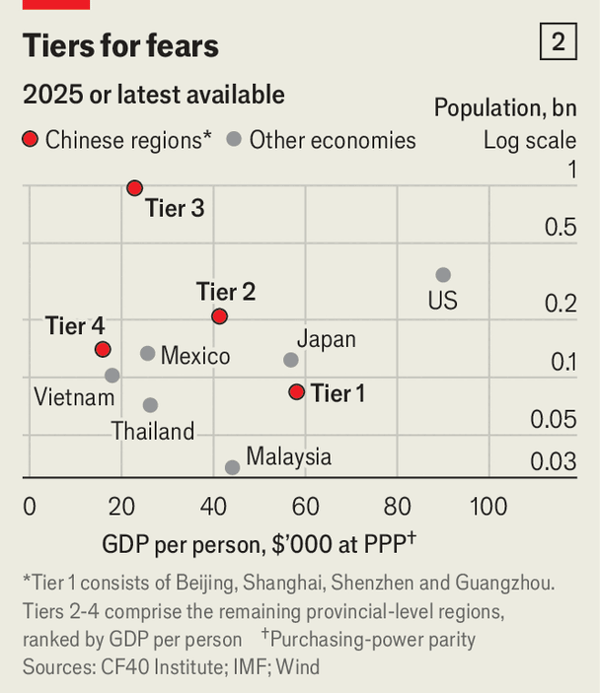
中国未像“雁阵”那样有序外迁,部分原因在于规模过大与发展不均衡并存。其四个最富城市合计人口8400万,人均GDP已超过日本;而最贫困的四个省份人口1.4亿,收入水平更接近越南,作者将中国概括为“0.7个日本、近6个马来西亚、5个墨西哥、4个泰国和1.4个越南”。
中国劳动力在国内的流动性又进一步强化了这种格局,工人可从较贫穷、低工资地区迁往更富裕省份,从而抬高低端产业工资并削弱其竞争力。中国领导层现在并不打算顺势让低端产业外移,而是主张“转变和升级传统产业”,通过自动化、机器人和其他技术创新来继续以高技术方式生产低端商品。
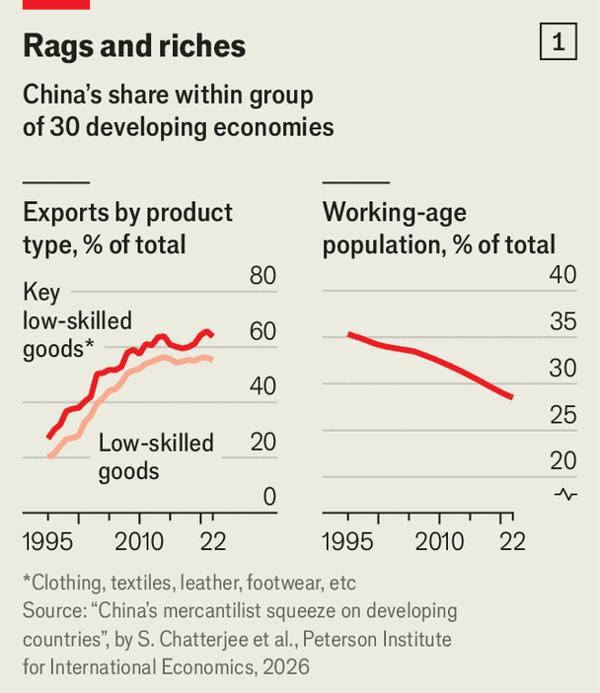
From 2010 to 2024, China’s share of global exports rose in all four manufacturing categories: low-tech, medium-tech, high-tech, and resource-based goods. In garments, textiles, leather, and similar goods exported from 30 low- and middle-income countries with available data, China supplies 64% of the value embodied, far above its share of the working-age population in that income group.
China’s deviation from the “flying geese” pattern reflects both its huge scale and uneven development. Its four richest cities, with a combined population of 84 million, have GDP per person above Japan’s, while its poorest four provinces, with 140 million people, are closer in income to Vietnam; in shorthand, China is equivalent to 0.7 Japans, nearly six Malaysias, five Mexicos, four Thailands, and 1.4 Vietnams.
Internal mobility strengthens this effect because Chinese workers can move from poorer, lower-wage regions to richer provinces, raising wages in low-end industries and making them less competitive. Rather than letting low-end manufacturing leave, policymakers now want to “transform and upgrade traditional industries,” using automation, robotics, and other technologies to keep producing low-end goods with high-tech methods.
Source: The other China shock
Subtitle: Does the country’s manufacturing success leave space for anyone else?
Dateline: 5月 21, 2026 04:15 上午 | Hong Kong