官方统计显示,中国城市人口在2024年超过9.43亿,七年内增加1亿;在劳动力于2016年达峰、人口于六年后开始收缩之后,规划仍预计城镇化率将从接近67%升至2029年接近70%,并在2030年前新增约3000万城市居民。与此同时,“城市”口径自1953年首次普查以来至少变更六次,使跨国比较与趋势判断出现口径偏差。
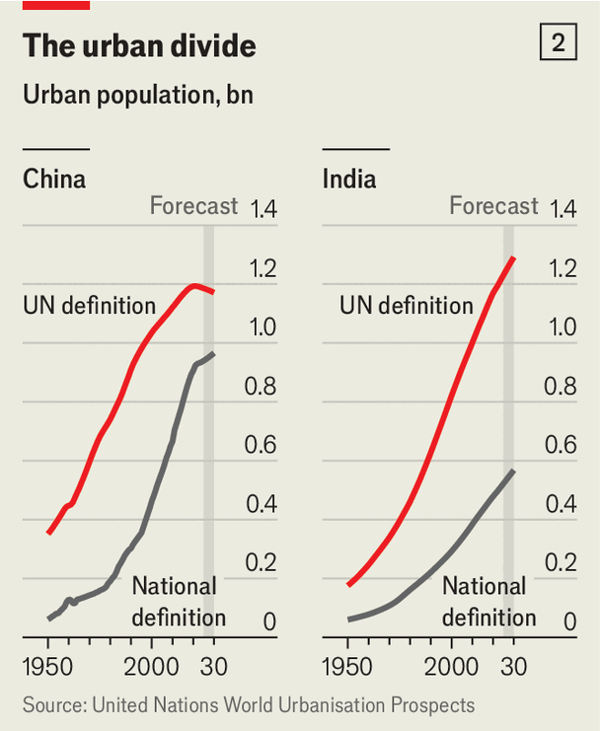
按联合国采用的国际一致口径(以1公里×1公里网格划分;“城市”需人口≥5万且相邻网格密度≥每平方公里1500,“城镇”需人口≥5000且密度≥每平方公里300),中国城镇化率为83.7%而非67%,且城市人口已在2021年达峰并预计2024—2029年减少逾1300万。该口径下中国有2000多个城市,广州为第二大城市、北京排第三;中国的城市人口规模已在2022年被印度超过,而印度按此定义真正农村人口已不足六分之一。
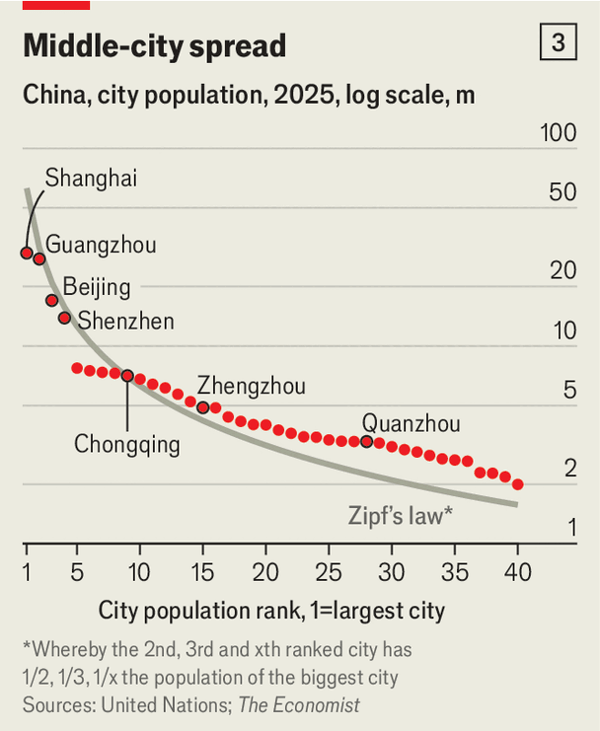
对房地产而言,党刊《求是》1月1日文章称仍需每年新建1000万—1490万套住房,而研究机构假设按国内口径城镇化率在2026—2030年每年提高0.7个百分点、每年新增约730万城市人口,但联合国预测城镇化率仅会在2030年代升至83.8%后见顶。结构性需求仍来自城市人口重排与居住改善:近40%的城市家庭人均居住面积不足30平方米、约7%不足20平方米;同时中国城市规模分布偏离“齐普夫定律”,而珠三角(广州—深圳—香港)高铁联结的城市群合计约7200万人口被估计更接近该规律。

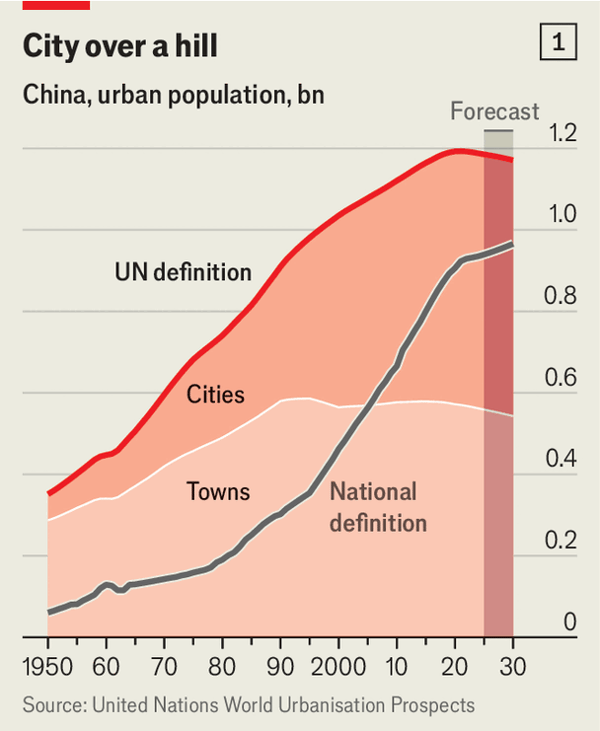
Official statistics put China’s urban population above 943m in 2024, up 100m in seven years; after the workforce peaked in 2016 and the population began shrinking six years later, planners still expect the urbanisation rate to rise from almost 67% to nearly 70% by 2029, adding about 30m urban residents before 2030. Meanwhile, what counts as “urban” has changed at least six times since the 1953 census, complicating comparisons and trend reading.
Under a UN-consistent standard (a 1km-by-1km grid; “cities” require ≥50,000 people with adjacent cells at ≥1,500/km², and “towns” require ≥5,000 at ≥300/km²), China’s urbanisation is 83.7% rather than 67%, and the urban headcount already peaked in 2021 and is projected to fall by more than 13m from 2024 to 2029. On this basis China has 2,000+ cities, Guangzhou ranks second and Beijing third; India overtook China’s urban total in 2022, and India is now less than one-sixth truly rural by the same definition.
For property, a Jan 1 Qiushi article argues China still needs 10m–14.9m new homes a year, while one industry model assumes the national-definition urbanisation rate rises 0.7 percentage points annually in 2026–2030, adding about 7.3m urbanites a year—but UN projections suggest the rate merely edges to 83.8% in the 2030s and then stops. Demand may shift toward replacement and space upgrades: nearly 40% of urban households have under 30 m² per person, and about 7% have under 20; city-size ranks also deviate from Zipf’s law, while the Pearl River Delta cluster (Guangzhou–Shenzhen–Hong Kong) is estimated at 72m, closer to that pattern.
Source: It’s not just China’s total population that’s falling
Subtitle: The number of people in China’s towns and cities is in decline
Dateline: 1月 08, 2026 07:16 上午 | Hong Kong